
Designers often face a single specification slot and two resin-based seamless systems: terrazzo poured flooring and epoxy. Both use a resin binder. The real differences lie in aggregate content, film thickness, and performance envelope. One system carries stone chips and a thick matrix; the other ranges from a thin coating to a troweled mortar. Architects weigh performance, application fit, compliance, and cost against the project at hand. G·ONE supplies precast terrazzo and UHPC alongside poured-system expertise. That position supports a vendor-neutral comparison, so readers can match material to project rather than to a sales pitch.

Key Takeaways
- Poured terrazzo uses a thick resin binder with stone chips, giving it deep design and long life.
- Epoxy flooring ranges from thin coatings to thick mortars, offering fast installation and budget options.
- Choose terrazzo for high-traffic, design-focused spaces like lobbies and retail stores.
- Choose epoxy for industrial areas, back-of-house zones, and projects with tight schedules.
- Always test samples and mockups early to ensure the floor meets design and performance needs.
Terrazzo Poured Flooring And Epoxy Defined
What Is Poured Terrazzo
Poured terrazzo is a seamless floor system built from a resin binder and decorative stone. Workers mix a resin matrix — epoxy, polyurethane, or polyester — with marble chips, glass, or recycled aggregate. They pour the blend in place, then grind and polish it to a flat, seamless surface. The result is a dense, continuous terrazzo floor with no visible joints across the field.
The National Terrazzo and Mosaic Association (NTMA) separates terrazzo into two matrix families. Cementitious terrazzo uses a cement binder; epoxy terrazzo uses a resin binder. Poured-in-place terrazzo sits in the resin family when the binder is epoxy. Designers should confirm the binder type early, because it drives cure time, thickness, and substrate requirements.
What Is Epoxy Flooring
Epoxy flooring covers a family of resin systems, not a single product. Thin-film coatings apply at low build over prepared concrete. Self-leveling epoxy flows out to a uniform film and suits clean, light-traffic interiors. Troweled mortar epoxy carries heavy aggregate loading and stands up to impact and thermal shock in industrial settings.
The two terms overlap, and that overlap confuses specifications. Epoxy terrazzo is a terrazzo system with a resin binder and a high aggregate load, mixed and finished on site. A plain epoxy coating contains little or no stone chip. Both cure as a seamless surface, yet they serve different performance envelopes. Poured terrazzo floors reward projects that need design depth and long service life. Standard epoxy coatings reward fast schedules and tight budgets. Specifiers who treat the two as interchangeable risk mismatching material to traffic and design intent.
Poured Terrazzo vs. Terrazzo Tile
Precast Tile And Joint Lines
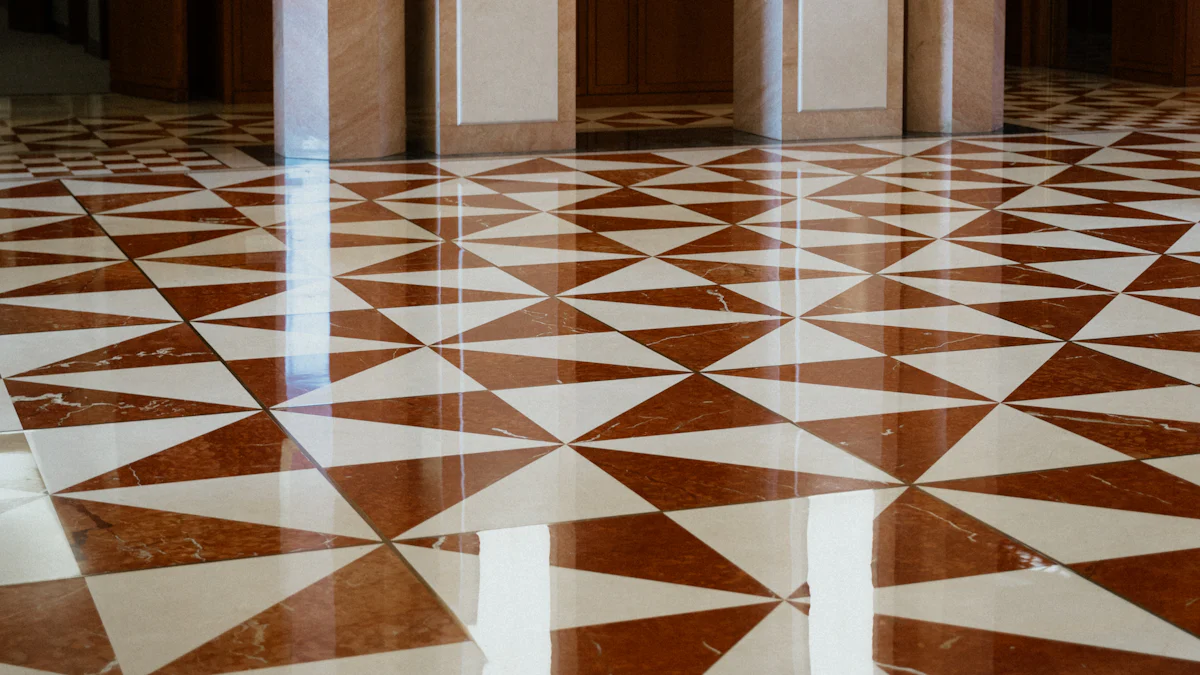
The poured terrazzo vs. terrazzo tile decision starts with how each format reaches the site. Workers mix and finish poured-in-place terrazzo on site, then grind and polish the field into one continuous surface. Precast terrazzo tile arrives as factory-cast units. NTMA guidance treats both as legitimate terrazzo, yet the formats differ in build-up and in the joints they leave behind.
Site-poured terrazzo poured flooring carries a thicker matrix and a heavier aggregate load. Precast tile runs thinner and lighter, which suits retrofit work and elevated slabs with limited load capacity. Joint lines mark the clearest visual split. A poured floor reads as a single seamless plane. Tile shows a grid of joints that designers either hide or turn into a deliberate pattern.
When Each Format Fits
Poured terrazzo suits large, uninterrupted fields where the design calls for seamless flow. Precast tile fits projects with tight schedules, weight limits, or phased occupancy. G·ONE’s regular, recycled, and mosaic terrazzo tiles offer a precast alternative when poured installation is not feasible. The range includes custom colors, aggregate blends, and CNC fabrication for complex shapes and edge details.
Both formats share the same design language, so terrazzo flooring and terrazzo tile can coexist across one project. A lobby may take a poured field while elevator cabs and stair treads take precast units. Early coordination between the two formats keeps color and aggregate blends consistent. Designers should confirm joint layout and unit dimensions with the supplier before they lock the specification.
Composition And Build-Up
Binders And Aggregates
The binder decides how a terrazzo system behaves. Poured terrazzo uses a resin matrix — epoxy, polyurethane, or polyester — and each resin brings its own cure profile and chemical resistance. Epoxy terrazzo dominates interior work for its strength and color stability. Cement terrazzo uses a cement binder and suits projects that prefer a mineral matrix.
The aggregate carries the visual identity. Workers blend marble chips, glass, or recycled stone into the matrix at a high load, and that stone content gives terrazzo its depth and wear surface. A terrazzo aggregate blend also sets the color palette and the chip density a designer sees in the finished floor. Standard epoxy coatings, by contrast, hold little or no stone. Their aggregate content stays low, so the resin film itself takes the traffic. That single difference in aggregate loading explains much of the gap in appearance and service life between the two systems.
Thickness And Weight
Build-up follows binder and aggregate load. A poured terrazzo floor carries a thick matrix over the substrate, and the stone content adds mass. The system therefore demands a sound, well-prepared base and a structure rated for the added dead load. Designers should confirm slab capacity early, especially on elevated floors and retrofit work.
Epoxy systems span a wide range of build. Thin-film coatings add minimal thickness and weight, which suits existing slabs with little spare capacity. Self-leveling and troweled mortar grades build higher and carry more material. Weight tracks thickness in both families, so the specification should state the build-up explicitly. A clear build-up schedule lets the structural and finishing teams plan substrate prep, cure windows, and transitions at the same time.
Performance Comparison
Durability And Wear
Wear resistance separates the two systems more than any other property. A terrazzo poured flooring system carries a high aggregate load, so the stone chips form the traffic surface. The resin holds the chips in place, and the stone absorbs abrasion. That structure gives poured terrazzo strong durability under sustained foot traffic in lobbies, concourses, and retail floors. Standard epoxy coatings hold little stone, so the resin film itself takes the wear. Thin-film grades suit light traffic; troweled mortar grades handle heavier industrial loads.
Impact behavior follows the same logic. A thick terrazzo matrix spreads point loads across the aggregate bed, which resists chipping and denting. Epoxy systems vary widely here. A thin coating offers little cushion against dropped tools or heavy carts. Mortar-grade epoxy performs better in impact-heavy areas.
Stain resistance depends on the sealer and the finish, not on the binder alone. Both systems cure as a seamless surface with no grout lines to trap soil. Epoxy terrazzo and standard epoxy coatings resist most common spills, yet strong solvents and concentrated chemicals demand a check against the resin’s chemical profile. Repairability differs. Workers can patch a small area of terrazzo floors and blend the repair into the field. Coating repairs show more readily because the film thickness is low.
| Property | Poured Terrazzo | Epoxy Systems |
|---|---|---|
| Wear resistance | High, stone takes the traffic | Low to high, depends on grade |
| Impact | Good, thick aggregate bed | Limited in thin film, better in mortar |
| Stain resistance | Good with proper sealer | Good, resin-dependent |
| Repairability | Patchable, blends into field | Visible patches in thin coats |
Maintenance And Repair
Routine care for both systems stays simple. Damp mopping with a neutral cleaner removes daily soil. Designers should plan a periodic re-polish or sealer refresh, and the interval depends on traffic. Terrazzo flooring holds its appearance well because the aggregate runs through the full depth. A worn spot reveals fresh stone after grinding and polishing.
Long-term repair profiles diverge. Poured terrazzo allows local grinding and re-polishing, which restores the surface without a full replacement. Epoxy coatings wear as a film, so recoating becomes the standard repair path. Heavy abrasion can expose the substrate once the film thins. Specifiers who weigh durability and maintenance together should match the repair strategy to the owner’s facilities team. A site with in-house stone care fits terrazzo; a site with coating experience fits epoxy. Early planning of the durability and maintenance routine protects the investment in either system.
Design Flexibility In Terrazzo Flooring
Color, Aggregate, And Pattern
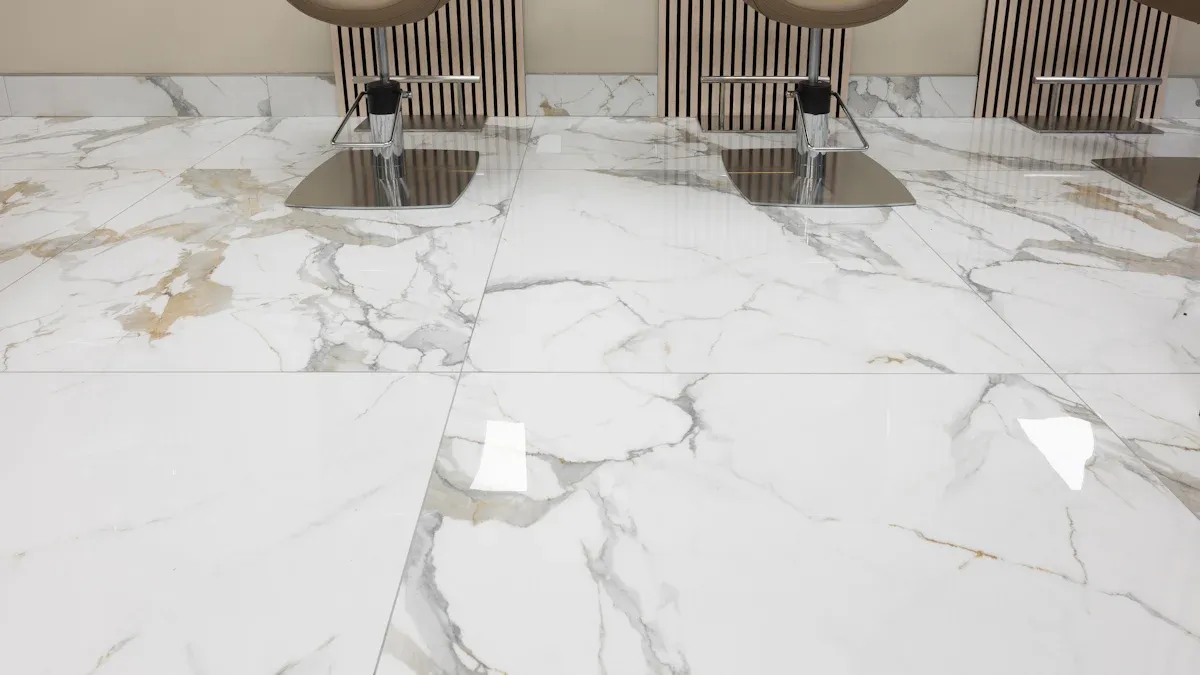
Terrazzo gives designers a wide design range. The matrix accepts pigment in almost any hue, and the stone chips set the visual character. Workers can place logos, wayfinding arrows, and artwork directly into the field. Pattern control comes from divider strips and chip placement, so a floor can carry a border, a graphic, or a full-field composition.
The aggregate choice drives the look. A fine chip reads as a quiet, uniform surface. A large chip gives depth and movement. Recycled glass adds sparkle, and marble brings a classic tone. Terrazzo aggregate selection also sets chip density, which changes how busy or calm the floor appears. Custom colors and patterns let a project match a brand palette or a historic reference. Each blend should be proven in a physical sample before the specification is locked.
Sheen And Texture
Finish selection changes how a terrazzo floor performs and feels. A high polish reflects light and lifts a lobby. A honed finish softens glare and suits quieter interiors. A matte surface hides scuffs in heavy-traffic zones. Texture options range from a smooth polish to a lightly etched surface for slip resistance.
G·ONE supports this stage with custom color, aggregate, surface-finish, and mould capabilities. The team also offers design lookbooks as a resource for sample development. Designers can request samples that combine a chosen pigment, chip blend, and sheen in one panel. That panel then guides the mockup and the final specification. Terrazzo floors built this way carry a design intent that survives from drawing to installation.
Application Fit
Interior And Exterior Use
Interior projects give both systems room to perform. Poured terrazzo shines in lobbies, concourses, and retail floors where design depth and long service life matter. Epoxy systems fit back-of-house areas, service corridors, and industrial floors where fast turnaround and chemical resistance drive the choice. Designers should match the system to the traffic profile and the visual expectations of each space.
Exterior use demands more caution. Standard epoxy coatings degrade under UV exposure and temperature swings, so they rarely suit exposed outdoor slabs. Poured-in-place terrazzo can work outdoors when the binder and sealer are rated for weather exposure, yet freeze-thaw cycles and direct sun still test the system. Designers should confirm exterior ratings with the supplier before they specify either system for an open-air application.
Substrates And Schedules
Substrate condition decides feasibility. Both systems demand a sound, clean, and dry concrete substrate with proper profile and moisture control. A weak or contaminated slab will fail under either finish, so site testing comes first. Poured terrazzo carries a thicker build-up and adds dead load, which makes slab capacity a key check on elevated floors. Epoxy coatings add little weight and suit retrofit work with limited structural reserve.
Schedules diverge sharply. Epoxy systems cure fast and allow quick return to service, which suits phased occupancy and tight timelines. Terrazzo installation takes longer because the matrix must cure before grinding and polishing. Designers should build that cure window into the program and coordinate it with other trades. Early consultation with the contractor protects both the schedule and the finish quality.
Compliance And Standards
NTMA And Slip Resistance
Specifiers should anchor the terrazzo specification in NTMA guidance. The National Terrazzo and Mosaic Association publishes installation and material standards that cover resin and mineral-matrix systems. These standards give contractors and designers a shared reference for mix design, substrate prep, and finishing. A specification that cites NTMA standards reduces disputes at handover and gives the contractor a clear benchmark. The standards also define acceptable tolerances for the finished plane.
Slip resistance matters most on wet or public floors. Designers should request a tested slip-resistance rating for the finished surface and match it to the space. A polished terrazzo floors finish suits dry lobbies; a honed or etched finishraises traction in entries and washrooms. The finish choice should appear in the specification alongside the test method. Early agreement on the rating protects both the owner and the installer.
VOC And EPD Documentation
Indoor air quality drives many material choices today. Resin binders release volatile organic compounds (VOCs) during cure and after. Designers should confirm that the selected system meets the project’s VOC limit and request cure-time data. Terrazzo offers an indoor air quality benefit: the seamless surface traps no allergens, dust, or mold in grout lines. That point supports the material in hospitals, schools, and other sensitive spaces. A sealed, joint-free field also simplifies cleaning routines.
Environmental documentation strengthens the specification. An Environmental Product Declaration (EPD) reports a product’s environmental impact in a verified format. Recycled-content options, including recycled glass and stone, reduce demand for virgin material. G·ONE supplies environmental documentation and recycled terrazzo ranges to support this stage. Designers can pair an EPD with a recycled aggregate blend and cite both in the submittal. Cement terrazzo also fits projects that prefer a mineral binder with documented content. Together, these documents let the team defend the material choice to clients and reviewers.
Cost And Life-Cycle
First-Cost Drivers
The price picture begins with the binder and aggregate package. A poured terrazzo system carries a high stone load, and the aggregate selection drives the material price. Exotic chips and custom pigments raise the cost of materials and installation above a standard blend. Epoxy systems span a wide price band too. A thin-film coating prices far lower per square foot than a troweled mortar grade. Designers should request a line-item breakdown from each supplier before they compare bids. A standard blend keeps the number predictable.
Labor and substrate prep often outweigh the material line. Poured terrazzo demands skilled crews for mixing, pouring, grinding, and polishing, and that craft labor lifts the installation cost. Epoxy installation moves faster and needs less specialized finishing, which shortens the schedule. Designers budgeting for a terrazzo project should price the mockup, the cure window, and the substrate repair alongside the floor itself. A clear build-up schedule keeps the estimate honest. Phased occupancy adds another variable to the program.
Life-Cycle Value
The expected lifespan favors the thicker system. A poured terrazzo floor carries stone through its full depth, so grinding and re-polishing restore the surface after years of traffic. That repair path extends service life without a full replacement. Epoxy coatings wear as a film, and recoating becomes the standard repair. Each recoating cycle adds expense and disrupts occupancy. The owner’s facilities team should review that path early.
Life-cycle value also counts maintenance labor and downtime. Terrazzo holds a polish for long intervals under heavy traffic, which trims routine care. A joint-free field simplifies cleaning in both systems. A polished field also resists staining, which cuts emergency cleaning calls. Owners should weigh first price against the repair profile and the service life of each option. The lower initial bid does not always deliver the lower long-term cost. Early consultation with the contractor clarifies both figures.
Use Cases In Practice
Where Poured Terrazzo Excels
Hotel lobbies, luxury retail boutiques, and public landmarks give terrazzo poured flooring its strongest stage. These spaces carry heavy foot traffic and a high design expectation at the same time. A poured terrazzo field delivers both. The stone chips run through the full depth, so the surface keeps its look after years of use. Designers can place a logo or a wayfinding pattern directly into the floor. That control turns the surface into part of the brand experience.
G·ONE’s materials appear in commercial hotel lobbies, luxury retail boutiques, striking exterior facades, and public landmarks. The team supports each project with a collaborative process. Designers request samples, review a mockup, and confirm a quotation before the specification is locked. This sequence lets the project team test color, aggregate blend, and sheen in the real space. A proven mockup reduces risk at handover and gives the installer a clear benchmark.
Where Epoxy Excels
Industrial floors and back-of-house areas reward epoxy systems. Service corridors, loading zones, and production halls need fast turnaround and chemical resistance more than design depth. A self-leveling or troweled mortar epoxy cures quickly and returns the space to service. Thin-film grades suit light-traffic utility rooms and storage areas. These spaces rarely justify the craft labor and cure window of a poured terrazzo installation.
Epoxy also fits tight programs. A phased renovation may need a floor back in use within days, and epoxy meets that demand. The same logic applies to kitchen and bathroom floors in commercial settings, where a seamless, cleanable surface matters. Designers should still match the grade to the traffic. A thin coating will not survive heavy cart traffic, and a mortar grade will. Early consultation with the supplier clarifies the right grade for each zone.
Selection Guide
The final choice follows the project, not the product. A handful of project traits point clearly toward one system, and the rest of the decision follows from them.
Choose Terrazzo When
Terrazzo rewards projects with a long horizon and a visible design role. A hotel lobby, a luxury retail floor, or a public landmark carries heavy foot traffic and a high aesthetic expectation at once. A poured field meets both demands. The stone chips run through the full depth, so the surface keeps its character after years of use. Grinding and re-polishing restore a worn area without a full replacement, and that repair path extends service life.
Design intent favors terrazzo too. Pigment, aggregate blend, divider strips, and sheen give architects fine control over pattern and color. A logo or wayfinding graphic can sit directly in the floor. That control turns the surface into part of the brand experience rather than a neutral backdrop.
The specification also needs the right site conditions. The slab must carry the added dead load of a thick matrix, and it must be sound, clean, and dry. The program must allow a cure window before grinding and polishing. The owner’s facilities team should be ready for stone care rather than coating work. A honed or etched finish raises traction at entries and washrooms, so the slip-resistance rating should appear in the specification. Designers should prove the blend in a physical sample and a site mockup before the specification is locked. Where poured work is not feasible, precast terrazzo tile keeps the same design language on stairs and elevator cabs. Terrazzo also suits schools and hospitals, where a sealed, joint-free surface supports indoor air quality.
Choose Epoxy When
Epoxy fits projects where speed and budget drive the decision. A phased renovation may need the floor back in service within days. A self-leveling or troweled mortar epoxy cures fast and meets that demand. Thin-film grades add little weight, which suits retrofit work on slabs with limited structural reserve.
Industrial and back-of-house zones reward epoxy as well. Service corridors, loading areas, and production halls need chemical resistance and impact tolerance more than design depth. The grade must match the traffic. A thin coating will not survive heavy cart traffic; a mortar grade will. Commercial kitchens and bathrooms also suit a seamless, cleanable epoxy surface.
Cost also points to epoxy in the right setting. A thin-film system prices far below a poured terrazzo field, and the faster installation shortens the program. That lower entry price suits utility spaces where the floor serves function alone. The owner should still weigh the recoating cycle against the service life of each option, and confirm the resin’s chemical profile against expected spills.
A simple rule helps at the schematic stage. Specify terrazzo for design-forward, long-life, high-traffic public spaces. Specify epoxy for fast-turnaround, budget-sensitive, and industrial areas. Both systems are valid specifications. The two systems can also share one building, with each material serving the zone it fits best. Early consultation with an NTMA-certified contractor and an experienced supplier validates samples, mockups, and site conditions before the team commits.
Both systems remain valid specifications. Project type, traffic, substrate, and budget decide the match. Designers specify poured terrazzo for design-forward, long-life, high-traffic public spaces. They specify epoxy for fast-turnaround, cost-sensitive, and industrial areas. Poured-in-place terrazzo rewards a longer program and a facilities team ready for stone care. Epoxy rewards speed and a tight budget.
Early consultation protects the decision. NTMA-certified contractors and experienced suppliers such as G·ONE validate samples, mockups, and site conditions before the specification is locked. That step confirms the terrazzo blend, the installation window, and the substrate readiness. A proven mockup reduces risk at handover. The right terrazzo floor follows from evidence, not assumption.
FAQ
Which binder suits a poured terrazzo floor?
Epoxy binders dominate interior work for strength and color stability. Polyurethane and polyester offer alternatives with their own cure and chemical profiles. Designers should confirm the binder early, because it drives cure time, thickness, and substrate requirements. The NTMA separates cement-matrix and epoxy-matrix terrazzo, so the specification should name the family.
How thick does a poured terrazzo system build up?
Build-up follows the binder and the aggregate load. A poured terrazzo floor carries a thick matrix over the substrate, and the stone content adds mass. Designers should confirm slab capacity on elevated floors and retrofit work. The specification should state the build-up explicitly so structural and finishing teams can plan together.
Does a polished terrazzo floor meet slip-resistance needs?
A high polish suits dry lobbies. A honed or etched finish raises traction at entries and washrooms. Designers should request a tested slip-resistance rating for the finished surface and match it to the space. The finish choice and the test method belong in the specification.
Can crews repair a damaged terrazzo floor?
Yes. Workers can grind and re-polish a worn or damaged area, and the repair blends into the field because the aggregate runs through the full depth. That repair path extends service life without a full replacement. Care and installation basics should reach the owner’s facilities team at handover.
Why prove a terrazzo blend in a mockup?
A physical sample confirms pigment, chip blend, and sheen in one panel. A site mockup then tests the blend under real lighting and traffic. G·ONE supports this stage with custom color, aggregate, and finish capabilities. A proven mockup reduces risk at handover and gives the installer a clear benchmark.