
Continuous improvement through rigorous evaluation defines modern construction. When you evaluate terrazzo options for high-traffic commercial spaces, you must carefully balance binder chemistry, traffic demands, timeline, and budget. You can choose real precast terrazzo tile with epoxy terrazzo binders or select poured-in-place terrazzo systems. Alternatively, high-performance terrazzo porcelain stoneware offers quick installation for fast-track projects.
Key Takeaway: Authentic precast terrazzo delivers an exceptional service life exceeding 40 years without replacement cycles. This durability vastly outperforms traditional ceramic or mid-grade porcelain tile options over long-term project lifecycles.
| Flooring Category | Initial Outlay (sq. ft.) | Estimated Service Life | 50-Year Replacement Count |
|---|---|---|---|
| Mid-Grade Porcelain | $7 – $13 | 15–25 Years | 2–3 |
| Authentic Terrazzo | $12 – $23 | 40+ Years | 0 |
As an industry leader, G·ONE provides high-quality terrazzo and custom architectural surfacing solutions. You will find that our products achieve superior performance and design flexibility. Architects and designers rely on precise engineering for every commercial design project. This comprehensive resource serves as your ultimate guide to terrazzo material selection, ensuring complete terrazzo specification compliance across modern architecture.
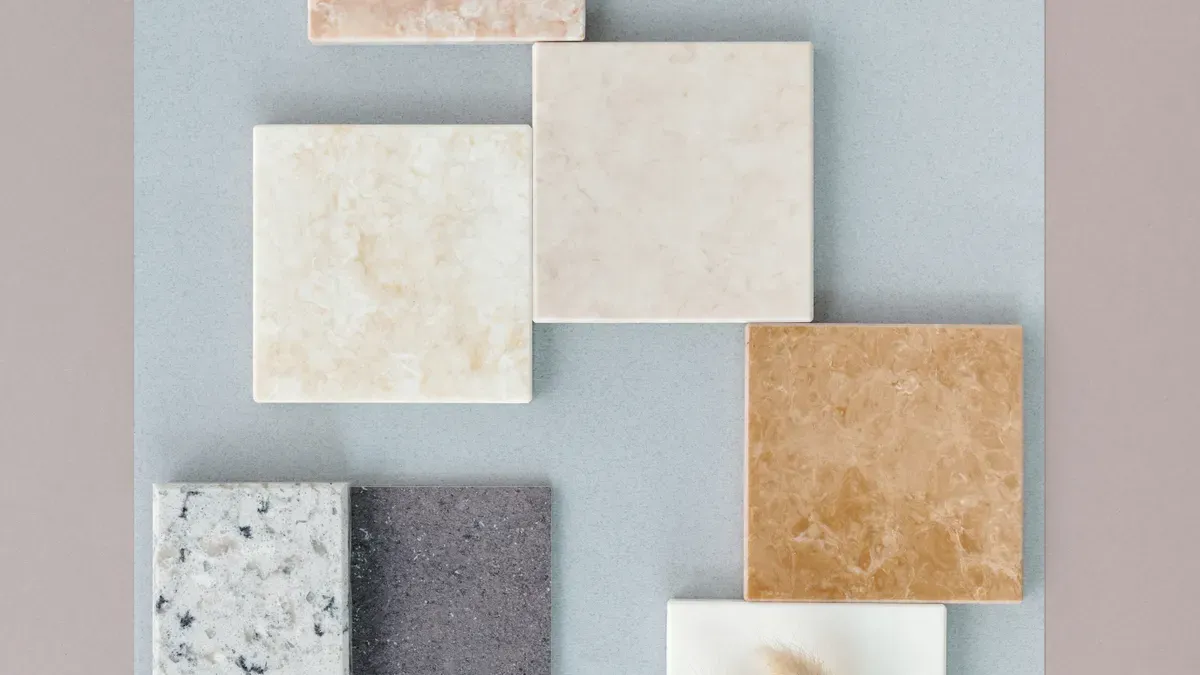
Key Takeaways
- Authentic precast terrazzo lasts over 40 years and easily outperforms standard porcelain tile.
- Thin-set epoxy terrazzo offers vibrant colors and low weight for interior commercial floors.
- Cementitious terrazzo handles outdoor weather, freeze-thaw cycles, and ground moisture very well.
- Terrazzo-look porcelain tile provides quick installation for fast projects with tight budgets.
- Proper concrete subfloor preparation prevents cracks and preserves your floor investment over time.
- Using recycled glass aggregates in terrazzo helps projects earn valuable LEED green building credits.
Material Systems: Real Terrazzo Tile vs. Porcelain
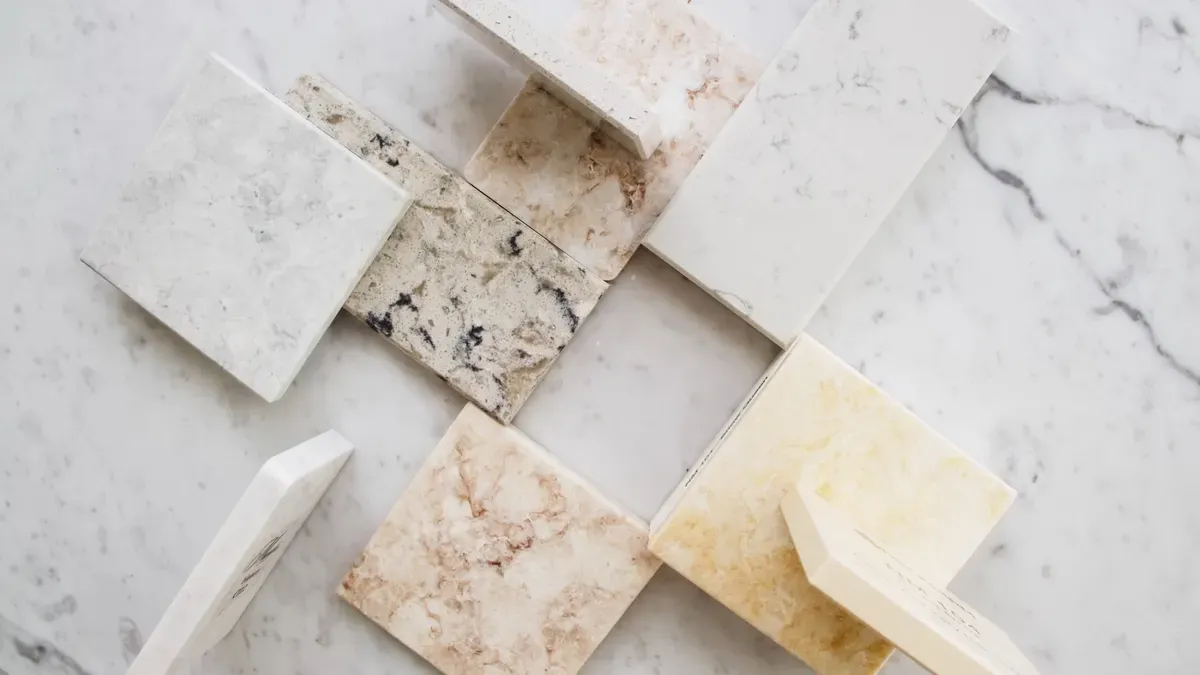
You must select the correct material matrix when designing commercial spaces. You can choose real precast binder systems or select porcelain alternatives. Both options serve specific structural demands, timelines, and design aesthetics.
Thin-Set Epoxy Resin Systems
Epoxy matrix systems revolutionized interior architectural design. They combine resin binders with marble, glass, or granite aggregate chips.
Tensile Strength and Low Weight Profile
Precast epoxy terrazzo panels offer high flexural and tensile strength. A standard 3/8-inch thickness weighs only 4.5 pounds per square foot. This lightweight composition reduces dead load on structural subfloors. You can install precast epoxy terrazzo over existing concrete slabs without retrofitting the foundation.
💡 Design Advantage: G·ONE manufactures precast epoxy terrazzo tiles with extreme dimensional accuracy. You achieve tight grout lines and smooth surfaces across large interior floors.
Traditional poured-in-place terrazzo requires extensive on-site grinding and long curing delays. In contrast, precast tiles accelerate construction schedules significantly.
Chemical Resistance and Color Vibrancy
Epoxy resin provides a non-porous matrix background. This non-porous nature grants epoxy terrazzo exceptional resistance to harsh chemicals, oils, and acids. Commercial kitchens, healthcare facilities, and laboratories benefit immensely from this sanitary material.
Furthermore, epoxy terrazzo binders accept limitless pigment formulations. You can specify bright white, deep black, or brilliant chromatic shades. The synthetic resin holds matrix colors indefinitely without fading under heavy interior foot traffic.
| System Property | Thin-Set Epoxy Terrazzo | Cementitious Terrazzo |
|---|---|---|
| Standard Thickness | 3/8 inch (9.5 mm) | 1/2 inch to 3 inches |
| Weight per Sq. Ft. | ~4.5 lbs | ~9.5 to 25 lbs |
| Color Matrix Choices | Unlimited vibrant colors | Natural earthy tones |
| Chemical Resistance | High | Moderate (requires sealers) |
Cementitious Matrix Systems
Cementitious matrix systems use portland cement or hydraulic cement binders. These traditional formulations excel in demanding environments.
Exterior Performance and Thermal Stability
When analyzing epoxy vs cement systems, outdoor environmental exposure determines your final selection. Cementitious systems withstand harsh weather, freeze-thaw cycles, and direct solar heating. Epoxy terrazzo can yellow or degrade under intense UV radiation. Therefore, you should specify hydraulic cement matrix terrazzo for outdoor plazas, exterior walkways, and open-air concourses.
Cementitious matrices match the thermal expansion coefficients of underlying concrete slabs. This thermal stability prevents delamination during extreme temperature swings. Unlike poured-in-place terrazzo, precast cement tiles arrive pre-cured, minimizing structural cracking risks on site.
Moisture Vapor Emission Tolerance
Concrete slabs emit moisture vapor as they cure. Excess moisture vapor creates osmotic blistering beneath impermeable epoxy coatings. Cementitious matrices remain vapor-permeable. Moisture passes safely through the material without damaging the bond layer.
[Moisture Vapor] ---> [Cementitious Matrix] ---> [Safe Evaporation]
You can specify cementitious systems for ground-level slabs lacking vapor barriers. This vapor tolerance simplifies subfloor preparation for complex terrazzo installations. Consequently, you protect your floor investment against moisture-induced failure.
Terrazzo-Look Porcelain Stoneware
High-performance porcelain tile offers an alternative surfacing solution for tight timelines and restricted budgets.
Water Absorption and Zero-Permeability Ratings
Engineers manufacture porcelain stoneware using ultra-fine clays fired at intense heat. This process creates a dense tile with a water absorption rate under 0.5 percent.
- High density resists water penetration completely.
- Porous staining agents cannot sink into the tile body.
- Specifiers get authentic visual aesthetics in a standard terrazzo tile format.
Porcelain terrazzo tiles allow rapid installation using standard thin-set mortars. Commercial flooring contractors complete fast-track retail renovations without specialized grinding equipment.
High Scratch Resistance and Hardness Metrics
Porcelain stoneware ranks extremely high on the Mohs hardness scale. It offers exceptional resistance against deep scratches, heavy rolling loads, and impact wear.
While epoxy terrazzo allows customized aggregate mixes, porcelain options provide uniform factory patterns. High-traffic transit hubs often combine precast epoxy terrazzo in focal lobbies with porcelain in utility corridors.
Modern porcelain flooring options are suitable for a wide range of applications due to their consistent thickness and low maintenance needs. You can maintain a cohesive design language throughout your building envelope. Proper material selection ensures long-term success for all your terrazzo installations.
Selection Criteria: How to Guide for Architects
You must analyze several structural and technical factors when specifying precast terrazzo tile for commercial applications. This how to guide for architects outlines key performance parameters for high traffic areas like airports, transit hubs, and educational institutions.
When designing high-traffic transportation hubs, you should prioritize specific performance criteria:
- Abrasion and Wear Resistance: Select proper aggregate densities and binders to endure heavy foot traffic while preserving surface integrity.
- Slip Resistance: Specify customized surface finishes to achieve required traction without sacrificing aesthetic clarity.
- Structural Load Parameters: Evaluate tile thickness, reinforcement options, and backing systems matched to your project load requirements and substrate parameters.
Sizing, Thickness, and Formats for Terrazzo Tiles
Selecting appropriate dimensions for precast terrazzo tiles directly impacts both structural integrity and visual continuity across your floor plan.
Standard Precast Formats vs. Large Slabs
Standard square precast terrazzo tiles typically measure 12×12 inches, 16×16 inches, or 24×24 inches with a standard 3/8-inch thickness. These modular units offer easy handling during floor installation.
Large-format precast slabs extend up to 4×8 feet or 5×10 feet. These large panels minimize visible joint lines. They provide a continuous aesthetic similar to poured-in-place terrazzo without requiring long on-site curing delays. However, large slabs require specialized lifting equipment and strict floor flatness.
Calibrated Edges and Dimensional Tolerances
Precise sizing prevents uneven vertical edges between adjacent units. G·ONE produces precision-calibrated terrazzo tiles with strict dimensional tolerances within ±0.5 mm.
💡 Specification Tip: Precision calibration allows you to specify tight 1/16-inch grout joints. Tight joint profiles enhance visual seamlessness and prevent dirt accumulation in busy commercial settings.
Advanced factory grinding ensures uniform tile thickness across every production lot. This consistency speeds up field placement and delivers a flat final floor surface.
Structural Load and Substrate Deflection
Your terrazzo specification must account for dead loads, live dynamic traffic, and subfloor movement capabilities.
Thin-Bed Applications vs. Heavy-Duty Formats
Thin-bed epoxy terrazzo tile formats weigh approximately 4.5 pounds per square foot at 3/8-inch thickness. You can install these lightweight tiles directly over structural concrete using thin-set epoxy adhesive.
[Thin-Set Epoxy Mortar] + [3/8" Epoxy Terrazzo Tile] = Low-Profile Interior Floor
Heavy-duty commercial applications require thicker 1/2-inch or 3/4-inch cementitious terrazzo tiles. These thicker tiles resist heavy rolling loads, such as forklift operations and baggage carts.
Floor Substrate Deflection Requirements
Concrete subfloors flex under structural loading. You must verify floor stiffness before installing rigid tile systems.
- Standard Tile Deflection Limit: Specify a maximum deflection of L/360 for standard precast units under total design load.
- Large-Format Deflection Limit: Require a stricter deflection limit of L/720 for large-format terrazzo slabs to prevent cracking.
Proper deflection planning prevents micro-fracturing across the epoxy resin matrix over decades of continuous use.
Divider Strips and Control Joints
Metal divider strips serve both functional and aesthetic roles in precast tile layouts. They control structural movement and define clean visual boundaries.
Zinc, Brass, and Aluminum Strips
You can choose from several metal alloys for divider strips:
| Metal Alloy | Best Application | Visual Characteristic |
|---|---|---|
| Zinc | Standard interior commercial floors | Neutral silver appearance |
| Brass | Premium architectural spaces | Warm metallic finish |
| Aluminum | Dry interior applications only | Cost-effective clean edge |
Do not specify aluminum strips for exterior cementitious installations because wet cement reacts chemically with aluminum.
Expansion Joint Placement and Crack Isolation
You must honor all underlying concrete expansion joints. Never lay precast epoxy terrazzo directly over working structural joints without proper joint treatment.
Place movement joints directly over subfloor stress points. Install elastomeric crack isolation membranes over non-structural substrate cracks. This practice protects your finished floor from reflective cracking caused by building settlement. Correct joint placement ensures a durable terrazzo specification that matches the longevity of poured-in-place terrazzo systems.
Aesthetic Flexibility and Custom Design Options
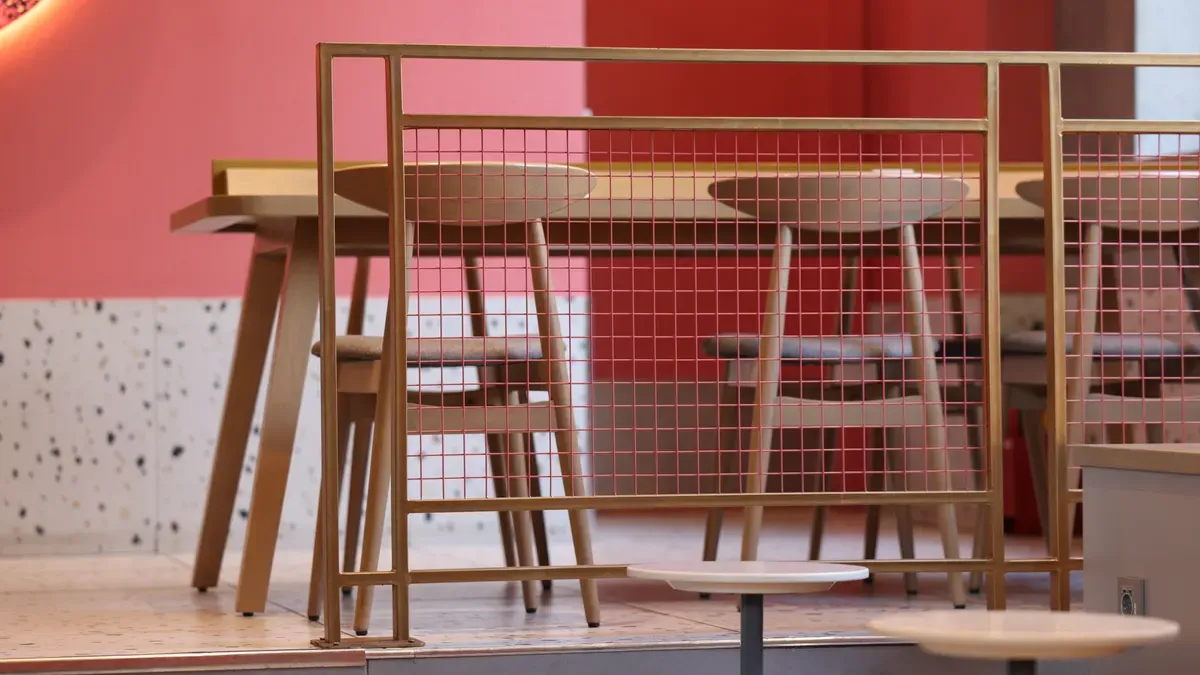
You can unlock creative freedom with terrazzo. Architects and designers choose this timeless and versatile material to craft distinctive, memorable spaces.
Aggregates: Marble, Quartz, Glass, and Mosaics
Aggregates define the surface texture and visual depth of your floor.
Natural Stone Hardness and Aggregate Density
You can specify natural marble, granite, or quartz chips to boost mechanical strength. High aggregate density ensures even surface wear across heavy foot-traffic areas.
Recycled Glass and Decorative Mirror Inlays
Recycled glass and mirror chips reflect ambient light efficiently. These modern choices expand your design options for bright, reflective accents.
Terrazzo-Look Mosaic Tile Applications
Precast mosaic tile formats bring intricate geometric motifs to vertical and horizontal surfaces. You achieve modern aesthetics in demanding commercial applications without slow jobsite assembly.
Custom Pigments and Matrix Colors
Advanced matrix chemistry grants you absolute control over your color palette.
Architectural Color Matching Capabilities
G·ONE provides a wide range of color options to match exact brand guidelines. Modern epoxy matrix formulationsoffer a wider range of color options than standard concrete mixtures.
Pigment Stability under UV Exposure
Inorganic mineral pigments protect outdoor installations from UV degradation and color fading through specific mechanisms:
- UV Radiation Absorption & Impermeability: Mineral pigments possess high resistance to ultraviolet light, allowing them to absorb UV rays and shield the underlying matrix.
- Weather & Light Resistance: Inorganic pigments demonstrate fast color stability under intense sunlight and variable atmospheric conditions.
- Thermal & Environmental Stability: Inherent chemical purity ensures long-term color retention when exposed to severe weather elements.
Sustainable Design and LEED v4.1
You can earn valuable green building points through eco-friendly material specifications.
Post-Consumer Recycled Content Credits
Terrazzo contributes to Environmental Product Declarations (EPDs) within Building Product Disclosure and Optimization credits through its resource-efficient manufacturing process. Utilizing locally obtained materials minimizes transport emissions, while integrating eco-friendly compositions like recycled glass reduces overall environmental impact.
- Verified Recycled Content: Incorporating aggregates made from recycled glass, mirror, porcelain, or concrete qualifies terrazzo for the Sourcing of Raw Materials credit under the Building Product Disclosure and Optimization category.
Low-VOC Emissions and EPD Transparency
Precast tiles emit zero volatile organic compounds after factory curing. Designers quickly verify material safety through complete environmental documentation:
| LEED Credit Sub-category | Option & Strategy | Qualification / Documentation |
|---|---|---|
| Sourcing of Raw Materials | Option 2: Leadership Extraction Practices | Recycled Aggregates |
| Material Ingredients | Option 1: Material Ingredient Reporting | Health Product Declaration (HPD) |
| Environmental Product Declarations | Option 1: Environmental Product Declaration | Environmental Product Declaration (EPD) |
Technical Terrazzo Specification and Installation
You must evaluate structural concrete substrates before starting any tile setting process. A rigorous technical framework guarantees a long-lasting floor assembly.
Substrate Prep and Moisture Mitigation
Proper concrete subfloor preparation protects your project from bond failure and dynamic slab movement.
Moisture Vapor Barriers and RH Testing
Always test subfloor concrete for relative humidity (RH) following ASTM F2170 standards. High moisture emissions damage your terrazzo installations over time. You should apply a high-performance moisture vapor barrier when relative humidity levels exceed 80 percent.
[Concrete Slab (RH > 80%)] ---> [Epoxy Vapor Barrier] ---> [Low-Profile Epoxy Terrazzo]
This vapor barrier blocks moisture and preserves the bond under thin-set epoxy terrazzo systems.
Membrane Systems for Crack Isolation
Concrete slabs move and develop stress cracks over time. You must apply elastomeric crack isolation membranes directly across non-structural cracks. This fluid-applied membrane absorbs lateral subfloor movement. Consequently, you prevent reflective cracking across the finished floor surface.
💡 Pro Tip: Apply a full-coverage membrane across high-risk concrete subfloors to protect thin-bed epoxy terrazzo applications against stress fractures.
Mortar Systems and Adhesive Selection
Selecting the correct bond mortar ensures physical adhesion between the precast terrazzo matrix and structural substrate.
Polymer-Modified Thin-Set Mortars
Cementitious precast systems require high-strength polymer-modified thin-set mortars. These mortars offer excellent flexural strength for standard cementitious terrazzo tiles. They accommodate minor structural vibrations in commercial flooring applications.
Epoxy Adhesive Systems for Non-Porous Substrates
Thin-set epoxy terrazzo requires 100 percent solids epoxy adhesive systems. Epoxy adhesives bond exceptionally well to non-porous concrete subfloors.
| Adhesive Category | Recommended Substrate | Bond Strength |
|---|---|---|
| Polymer-Modified Mortar | Porous Concrete Slabs | High Flexural Shear |
| 100% Solids Epoxy | Smooth Non-Porous Concrete | Superior Tensile Bond |
This specialized adhesive creates a continuous chemical bond. Your installers can set epoxy terrazzo panels directly over sealed concrete with minimal installation thickness.
Surface Sealers, DCOF, and Maintenance
Surface finishing treatments define both visual performance and public safety parameters. Proper specification prevents costly rework during project handoff. A detailed specification guides the installation team through every jobsite phase.
Factory Pre-Polished vs. Site Finishing
You can specify pre-polished precast epoxy terrazzo units to accelerate project delivery. Factory polishing ensures consistent sheen and eliminates jobsite grinding dust. However, installers refine joint transition areas on site using fine-grit diamond pads. This final touch gives your epoxy terrazzo layout a smooth floor finish.
Penetrating Sealers and Slip Resistance
Every project specification requires strict compliance with dynamic coefficient of friction (DCOF) standards. You must write a complete terrazzo specification that requires an ANSI A137.1 or ANSI A326.3 rating of 0.42 DCOF or higher for wet commercial surfaces.
You can easily specify terrazzo floors with penetrating inorganic sealers to enhance stain resistance. These breathable sealers fill microscopic pores across the epoxy terrazzo floor while maintaining crucial surface traction.
To ensure seamless compliance, review your project terrazzo specification against standard industry guidelines. A complete terrazzo specification protects your client and maintains lasting aesthetic value for all terrazzo installations. Proper installation parameters always yield flawless epoxy terrazzo surfaces and durable epoxy terrazzo performance.
Project Feasibility: Lead Times, Costs, and Lifecycle
You must evaluate project schedules, initial budgets, and long-term operating costs when choosing terrazzo options.
Lead Time Comparison: Precast vs. Porcelain
Manufacturing timelines vary greatly between precast formats and factory-stocked tile options.
Manufacturing Timelines for Custom Precast
Custom precast epoxy terrazzo requires dedicated production cycles. Factory teams formulate unique resin colors and aggregate blends for your authentic terrazzo designs. Manufacturing custom epoxy terrazzo units usually takes 3 to 4 months. Architects must account for these production windows during early project planning.
Quick-Turnaround Options for Fast-Track Projects
Stock porcelain offers rapid material delivery for urgent construction schedules. Distributing facilities stock standard porcelain tile formats for immediate jobsite shipping. You can choose porcelain options to complete fast-track commercial developments without manufacturing delays.
Initial Material and Installation Economics
Upfront project expenditures depend heavily on material choices and field assembly methods.
Material Cost per Square Foot Breakdown
Real epoxy terrazzo requires a higher upfront material investment than standard porcelain flooring options. Premium resin matrices and natural aggregate selections increase initial material costs. However, precast epoxy terrazzo delivers superior visual depth and structural integrity.
Labor Efficiency in Modular Tile Installation
Precast modular terrazzo tile units simplify jobsite labor demands. Local setting contractors install modular units using standard adhesive methods. You avoid the extensive grinding machinery required for poured-in-place terrazzo applications. Consequently, modular formats streamline field installation and reduce overall labor hours across complex terrazzo installations.
Long-Term Durability and Lifecycle Cost Analysis
Evaluating total lifecycle value highlights the financial advantages of high-performance epoxy terrazzo systems.
Expected Service Life Exceeding 40 Years
High-density epoxy terrazzo delivers an exceptional operational lifespan exceeding 75 to 100 years in heavy foot-traffic commercial environments. This long lifespan creates a reliable 40-year replacement cycle that easily outlasts conventional materials. Traditional poured-in-place terrazzo provides similar long lifespan performance, but precast epoxy terrazzo panels accelerate project handoff schedules.
💡 Lifecycle Value Note: A single epoxy terrazzo floor installation lasts for the entire operational life of a commercial building. You avoid costly floor teardowns and material replacements every decade.
Maintenance Cost Reductions and ROI
Non-porous epoxy terrazzo finishes resist harsh chemicals, dirt, and severe wear. You can clean this floor surface using neutral daily cleaners without expensive specialized treatments. Seamless epoxy terrazzo surfaces reduce long-term maintenance costs significantly. Architects gain significant long-term return on investment over the floor lifecycle.
G·ONE serves as your single-source provider throughout the design process. Our team supplies custom sampling, technical specification sheets, and comprehensive warranty backing for your project.
Evaluate material composition, size options, lead times, and installation parameters to streamline your selection. Choosing precast terrazzo tile or high-grade porcelain ensures you meet exact project demands. Authentic terrazzo guarantees a long lifespan, while porcelain supports fast construction schedules.
💡 Partner with G·ONE: G·ONE provides architectural guidance, custom sampling, and compliant systems for any commercial design.
This ultimate guide to terrazzo simplifies your project workflow. We invite architects and designers to request technical submittal packages, BIM objects, and physical samples today. Our technical team helps designers execute a flawless terrazzo specification.
FAQ
What is the main structural difference between precast terrazzo tile and terrazzo-look porcelain?
Precast terrazzo tiles blend authentic stone or glass chips inside a real epoxy or cement matrix. In contrast, manufacturers create porcelain tiles by printing terrazzo patterns onto ultra-dense ceramic bodies. Precast tiles allow deep custom designs, while porcelain offers fast installation.
How do you choose between thin-set epoxy and cementitious terrazzo tile systems?
💡 Quick Decision Guide: Choose thin-set epoxy systems for interior projects needing vibrant colors and light structural loads. Select cementitious systems for exterior applications, heavy moisture exposure, or harsh weather conditions.
Can you install precast terrazzo tile over existing concrete subfloors?
Yes, you can install thin-set precast tiles directly over concrete slabs. However, you must verify subfloor conditions first. Test the concrete for relative humidity levels and structural deflection. Always apply crack isolation membranes to protect your finished floor surface.
What dynamic coefficient of friction (DCOF) rating should you specify for commercial safety?
| Application Area | Required Minimum DCOF Standard | Recommended Surface Treatment |
|---|---|---|
| Dry Commercial Interiors | 0.42 (ANSI A137.1 / A326.3) | Standard Factory Polish |
| Wet / High-Traffic Spaces | > 0.42 | Penetrating Anti-Slip Sealer |
You must specify a wet DCOF rating of 0.42 or higher to meet standard commercial building codes.
Why does authentic precast terrazzo require longer lead times than porcelain tile?
Factory craftsmen custom blend pigments and aggregates to match your precise aesthetic vision. Casting, curing, and precision grinding require dedicated manufacturing cycles. This specialized process takes 3 to 4 months, whereas distributors stock standard porcelain tiles for immediate delivery.
How does terrazzo perform in sustainable design programs like LEED v4.1?
- You earn raw material credits by using post-consumer recycled glass or stone aggregates.
- Zero VOC emissions improve interior air quality significantly.
- Environmental Product Declarations (EPDs) provide complete material transparency for easy points.