
Terrazzo tile is a precast composite of aggregates, binder, and pigment. Manufacturers mix these ingredients, cast them into slabs, cure, cut, and polish the result. The finished surface delivers durability, aesthetic versatility, and design flexibility in one material. Architects and designers specify terrazzo for commercial lobbies, retail spaces, and facades because it withstands heavy traffic and holds a consistent look across large areas. Brands such as G·ONE produce precast terrazzo, recycled terrazzo, mosaic terrazzo, and UHPC panels. Each option serves different project conditions. Designers who understand the composition and performance of terrazzo tile floor and decor can specify with confidence.

Key Takeaways
- Terrazzo tile offers durability and design flexibility for high-traffic commercial spaces.
- Choose the right terrazzo system: cementitious for exteriors, epoxy for fast projects, precast for consistency.
- Customize terrazzo with colors, aggregates, and patterns to match your brand and design vision.
- Proper substrate preparation and regular maintenance ensure terrazzo floors last for decades.
- Plan early for cost, lead time, and sustainability documentation to keep your project on track.
What Is Terrazzo Tile And Why Specify It?
Composition And Manufacturing Basics
Precast terrazzo begins with three ingredients: aggregates, a binder, and pigment. Aggregates are the visible chips — marble, granite, glass, or other stone. The binder holds the chips together, and pigment sets the background color. Each ingredient shapes the final look. Aggregate size and color drive the visual character, and the binder determines strength. Manufacturers weigh and mix these components in controlled ratios. The terrazzo mix then goes into molds or slab forms.
Casting comes next. The wet terrazzo settles into the form, and the manufacturer cures it until the binder hardens fully. Workers then cut the cured terrazzo block into tiles or panels of the specified size. Polishing follows. Grinding heads expose the aggregate and bring the terrazzo surface to the chosen sheen. This sequence gives every terrazzo tile a dense, uniform body. The factory controls each step, so the terrazzo stays consistent from batch to batch. Precast production moves the messy work off site. Crews receive finished tiles ready to install.
Performance Benefits For Commercial Projects
Wear resistance tops the list for high-traffic spaces. The hard aggregate and dense binder resist abrasion from foot traffic, carts, and luggage. A terrazzo floor keeps its appearance through years of heavy use. Long service life follows from the same structure. The color runs through the full thickness of the terrazzo, so surface wear does not expose a different layer beneath.
Low maintenance suits commercial operations. Routine cleaning with neutral products keeps terrazzo flooring looking fresh, and periodic polishing restores gloss. Stains wipe away before they set. Architects value design continuity across large areas. Precast terrazzo floor tiles come in consistent lots, so a lobby, corridor, and retail zone can share one visual language. Designers can carry that language onto walls and reception counters. A terrazzo project therefore gains a unified palette from floor to detail.
Terrazzo Tile Types And Technical Fit
Cementitious, Epoxy, And Precast Systems
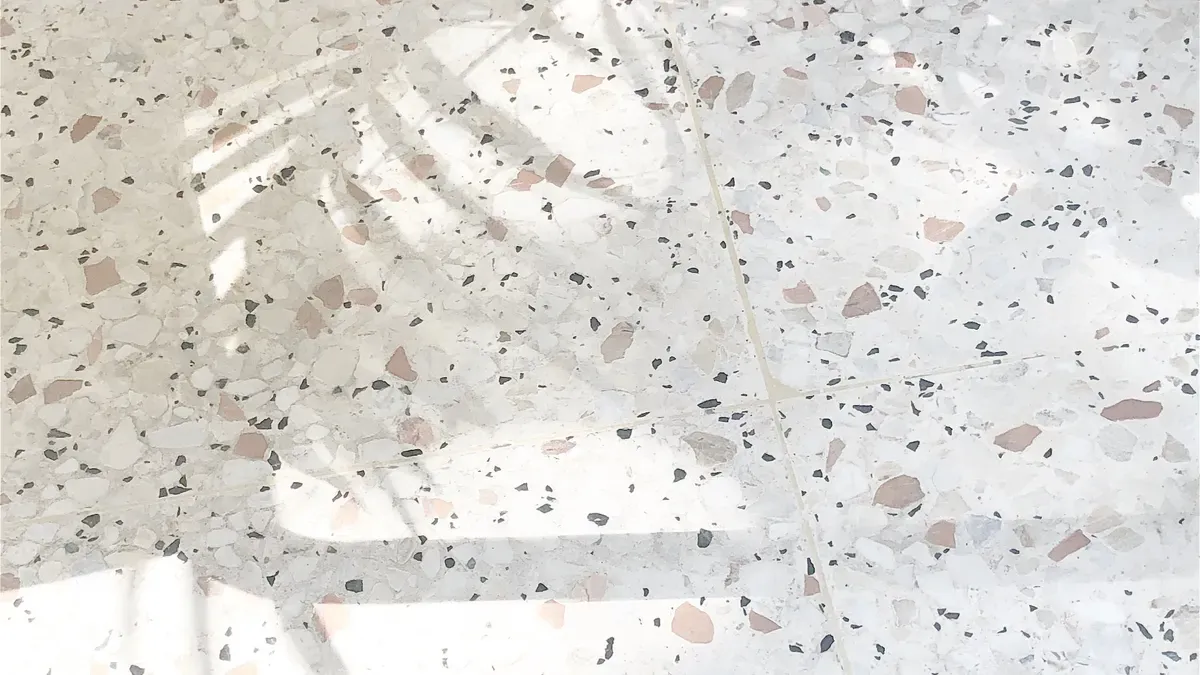
Three systems dominate the market, and each suits different project conditions. Cementitious terrazzo uses a cement binder. It cures slowly, needs moisture during curing, and builds a thick profile. Designers choose it for exterior work and projects that value traditional craft. Epoxy terrazzo uses a resin binder instead of cement. The epoxy cures fast, forms a thin profile, and accepts a wide pigment range. An epoxy terrazzo floor suits fast-track interiors and spaces with tight floor build-up. Poured in place terrazzo mixes and cures on site, so it fits complex rooms with curves and drains. Precast terrazzo arrives as factory tiles. The factory controls curing, and crews install the tiles over a sound substrate. Precast suits projects that need consistent lots and predictable schedules.
| System | Cure Time | Thickness | Substrate Requirements | Best Fit |
|---|---|---|---|---|
| Cementitious | Slow, moisture-cured | Thick profile | Sound, stable base | Exteriors, traditional work |
| Epoxy | Fast | Thin profile | Clean, dry, sound base | Fast-track interiors |
| Precast | Factory-controlled | Tile thickness | Flat, level substrate | Large areas, tight schedules |
Poured in place terrazzo demands careful site coordination. The epoxy terrazzo floor option reduces downtime on occupied buildings. Precast terrazzo floor tiles simplify quality control. Each system earns its place when the project conditions match its strengths.
Authentic Terrazzo Vs. Terrazzo-Look Porcelain Tile
Lead time separates these two options most sharply. Authentic terrazzo vs. terrazzo-look porcelain tile often comes down to schedule. True terrazzo can take three to four months from order to delivery. Terrazzo-look porcelain tile ships faster from stock. A project with a compressed timeline may favor terrazzo-look porcelain. A project with a longer runway can plan around authentic terrazzo.
Customization range differs as well. Authentic terrazzo accepts custom pigments, aggregate blends, and thickness choices. Designers can tune the terrazzo to a precise palette. Terrazzo-look porcelain prints a surface image onto a porcelain body. The terrazzo-look porcelain tile offers a curated range of patterns. Terrazzo-look porcelain works well for budget-sensitive rooms and quick renovations. Authentic terrazzo serves signature spaces where the material itself carries the design intent.
Installation demands also diverge. Terrazzo or terrazzo-look tile both need a flat substrate, yet the terrazzo flooring system adds curing and polishing steps. Terrazzo-look porcelain follows standard tile installation. A terrazzo project with a landmark lobby justifies the longer cycle. A terrazzo or porcelain tile decision for a back-of-house corridor may favor speed. Designers should weigh the terrazzo-look porcelain tile against authentic terrazzo early. That comparison protects both the schedule and the design vision.
Design Possibilities For Terrazzo Tile Floor And Decor
Color, Aggregate, And Pattern Customization
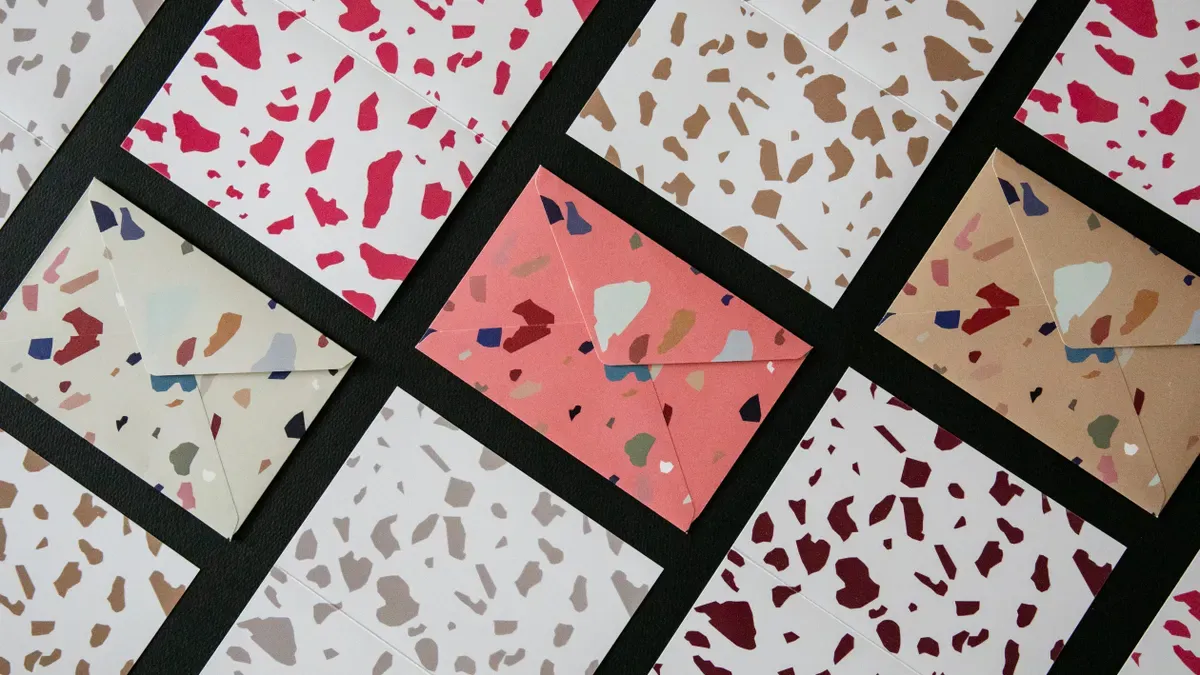
Terrazzo design in 2026 leans toward three directions: large-format layouts, expressive stone aggregates, and earthy color palettes. Large-format terrazzo tiles reduce grout lines and let one field flow across a lobby or showroom. Expressive aggregates bring movement and depth to the surface. Earthy palettes — clay, sand, olive, and warm gray — ground the material in natural tones. Designers can combine these directions to match a client’s brand.
G·ONE supports this work through a full customization program. Color matching lets a design team tune the background pigment to a paint chip, fabric, or brand guide. Aggregate selection covers natural stone and marble in many sizes and hues. Macro-chip terrazzo creates bold, visible statements, while micro-chip blends read as fine texture. The choice between macro-chip and micro-chip terrazzo patterns shapes the scale of the room. Designers can also specify dimensions, thickness, and surface finishes, from matte to high polish. Custom molds extend the same palette to UHPC components.
Pattern customization goes further. A terrazzo design can divide a floor into zones, trace a logo, or frame an entry. The same terrazzo design language carries into terrazzo tile bathrooms and terrazzo kitchen floors, where smaller formats and slip-aware finishes serve wet areas. A single terrazzo project can therefore hold one coherent palette from the main floor to the private rooms.
Walls, Facades, And Coordinated Elements
Terrazzo tile floor and decor no longer stops at the ground plane. Precast panels climb walls, wrap reception desks, and clad facades. Large-format terrazzo floor tiles translate well to wall fields, where fewer joints keep the surface calm. UHPC panels bring the same aggregate palette to exterior facades with high strength and weather resistance. Coordinated elements — stair treads, thresholds, and counter fronts — tie the scheme together.
The terrazzo floor sets the base tone, and wall panels echo it at a different scale. A designer might run macro-chip terrazzo across a feature wall and a micro-chip blend across the adjacent floor. This pairing adds depth without visual noise. Terrazzo floor tiles in a corridor can repeat the aggregate of a facade panel, so the interior and exterior read as one composition.
Terrazzo-look porcelain offers a complementary path. Terrazzo-look porcelain tile ships fast and suits tight budgets. Terrazzo-look porcelain works well in back-of-house zones and quick-fit retail. Authentic terrazzo remains the choice for signature surfaces. Designers who plan both materials early can balance ambition and schedule. The terrazzo tile floor and decor scheme then holds together across every surface the client sees.
Installing And Maintaining Terrazzo Floor Tiles
Substrate Preparation And Installation Best Practices
A sound substrate decides the fate of any terrazzo installation. The base must sit flat, stable, and free of cracks, dust, and curing compounds. Crews check moisture levels before they set any terrazzo floor tiles. A flat substrate keeps lippage low and protects the bond. Contractors then dry-fit panels and confirm layout lines against the drawings.
Installation methods vary by system. Poured in place terrazzo cures on site, so crews control mixing, placement, and polishing in sequence. Precast terrazzo floor tiles arrive finished and demand precise setting beds. Large-format tile installations need extra care with adhesive coverage and joint alignment. Epoxy terrazzo suits fast schedules, and epoxy systems tolerate thin build-ups. Both epoxy and cementitious routes require clean, primed surfaces. A terrazzo project with complex geometry may favor poured in place terrazzo for seamless curves. Terrazzo-look porcelain follows standard tile practice and offers a faster path on tight timelines.
Long-Term Care And Maintenance Protocols
Routine care keeps terrazzo flooring sharp for decades. Neutral cleaners and microfiber mops handle daily soil. Spills wipe up promptly before they set into the surface. A terrazzo floor resists abrasion well, yet grit still dulls the finish over time. Entry mats trap debris before it reaches the terrazzo.
Periodic polishing restores gloss on terrazzo floors. Crews use diamond abrasives matched to the surface finish. Epoxy surfaces need gentler pads than cementitious terrazzo. Sealer refresh cycles depend on traffic and the chosen finish. A written maintenance plan protects the terrazzo installation and extends its service life. Facility teams should log cleaning products and polishing dates. That record supports warranty claims and budget planning. Terrazzo-look porcelain needs only standard tile care, which suits lean operations. Either way, early planning pays off.
Cost, Lead Time, And Regulatory Compliance
Budgeting And Value Engineering
Four factors drive terrazzo installation cost: aggregate type, thickness, customization, and installation method. Exotic stone chips raise material cost, and thicker panels add weight and freight. Custom color matching and custom molds add fabrication time. The installation method matters too. Poured-in-place epoxy systems demand site labor and curing windows, while precast terrazzo floor tiles shift work to the factory. Designers should price these variables together, not in isolation.
Value engineering works best when the team protects the surfaces clients touch. A terrazzo project can hold premium aggregate in the lobby and a simpler blend in back-of-house zones. Terrazzo-look porcelain offers a lower-cost path for secondary rooms. Terrazzo-look porcelain tile also shortens lead time, which matters on fast schedules. Authentic terrazzo can take three to four months, so early ordering protects the program. Weigh upfront spend against lifecycle value. A terrazzo floor resists wear for decades, and that durability offsets the initial outlay.
Sustainability And LEED Documentation With G·ONE
G·ONE builds sustainability into the material itself. Recycled terrazzo incorporates recovered materials into new decorative surfaces, which diverts waste from landfill. The company documents environmental performance through Environmental Product Declarations (EPDs) where available. These documents give project teams verifiable data for green building submissions.
The documentation supports LEED credit submissions. Teams can pair EPDs with material data to build a compliance file early. Early planning keeps the terrazzo specification intact through review. G·ONE also explores recycled resources and advanced processing methods to widen the material’s environmental range. Designers who request documentation at the sample stage avoid surprises later. That habit keeps a terrazzo project on schedule and on budget.
Specification success rests on three decisions. Designers match the terrazzo system to project performance needs, weighing cementitious, epoxy, and precast options against traffic, schedule, and substrate conditions. Terrazzo customization then serves the client’s lifestyle and space function, from aggregate scale to coordinated wall panels. Cost, lead time, and compliance planning belong early, not after drawings freeze.
Samples, quotations, and technical guidance confirm the specification before construction documents are finalized. Experienced suppliers such as G·ONE provide all three. Teams can compare authentic terrazzo against terrazzo-look porcelain, verify recycled content documentation, and lock the terrazzo tile floor and decor palette. Early confirmation protects the terrazzo floor tiles order. Terrazzo-look porcelain remains a fallback for secondary zones.
FAQ
Which terrazzo system suits a fast-track commercial project?
Epoxy terrazzo cures quickly and forms a thin profile, so it fits compressed schedules and tight floor build-ups. Precast terrazzo tiles also help, because factory curing keeps quality predictable and crews install finished tiles on site. Cementitious terrazzo cures slowly and suits projects with more schedule room.
How long does authentic terrazzo take to arrive?
True terrazzo can take three to four months from order to delivery. Teams should place orders early and protect the program with a buffer. A terrazzo-look porcelain tile ships faster from stock, which helps when the schedule leaves little room for a long fabrication cycle.
Can designers customize terrazzo color and aggregate?
Yes. G·ONE offers color matching, aggregate selection with natural stone and marble, and choices of dimension, thickness, and surface finish. Custom molds extend the same palette to UHPC components. Macro-chip blends create bold statements, and micro-chip blends read as fine texture across a terrazzo floor.
What maintenance does a terrazzo floor need?
Daily care calls for neutral cleaners and microfiber mops, and spills should wipe up promptly. Periodic polishing with diamond abrasives restores gloss. A written maintenance plan protects the terrazzo tile floor and decor investment and extends service life. Terrazzo-look porcelain needs only standard tile care.
Does G·ONE provide sustainability documentation?
G·ONE produces recycled terrazzo that incorporates recovered materials. The company supplies Environmental Product Declarations where available, and that documentation supports LEED credit submissions. Teams should request the files at the sample stage, so the terrazzo specification stays intact through review.