
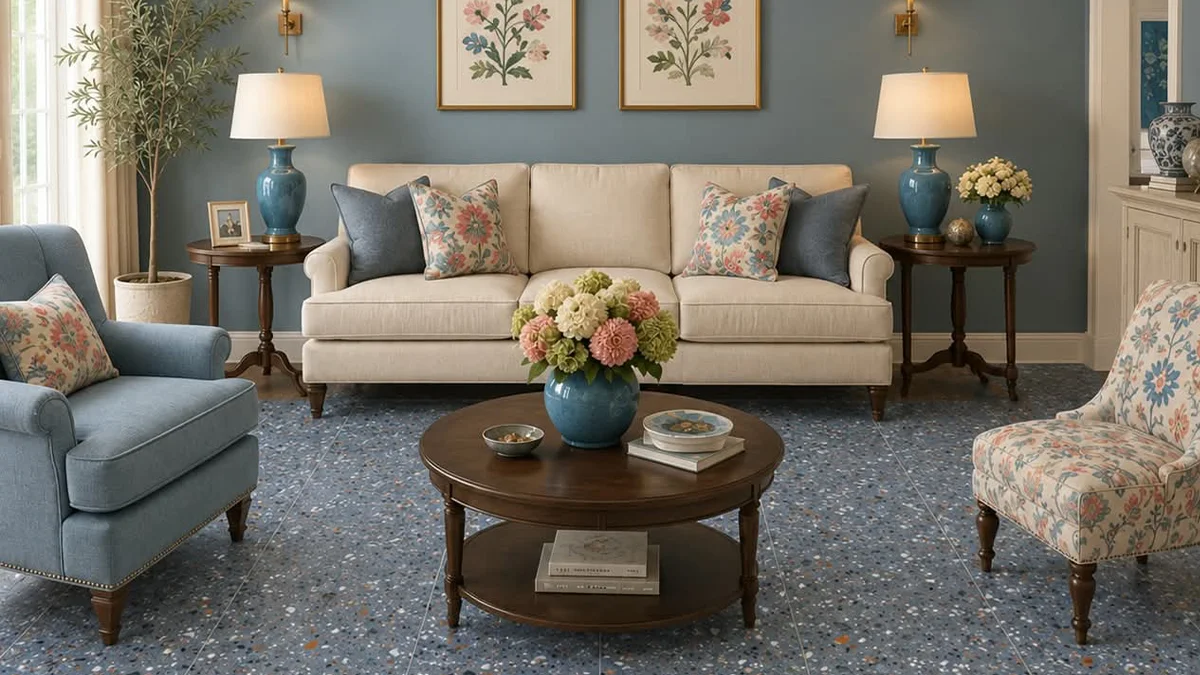
Five factors determine a successful blue terrazzo tile selection: technical performance, application fit, regulatory compliance, cost transparency, and aesthetic verification. You can specify authentic precast terrazzo, where aggregates run through the full body of the tile, or porcelain terrazzo-look, which carries a digitally printed pattern on a ceramic base. Confirming which material you are specifying shapes every later decision, from installation method to repair strategy. Each of the five tips below gives you actionable checkpoints to apply during specification. G·ONE‘s selection resources and sample program can support each step along the way.
Key Takeaways
- Check tile performance: confirm abrasion resistance, compressive strength, and stain resistance before you buy.
- Match tile format and finish to the surface: use thicker tiles for floors, thinner for walls, and choose matte or honed finishes for wet areas.
- Verify compliance documents: request fire test reports, VOC data, and slip resistance results for the exact product.
- Compare costs transparently: include material, installation, maintenance, and lead time in your budget.
- Confirm color consistency: use physical samples, on-site mockups, and dye-lot checks to ensure the blue tone matches your design.
Tip 1: Evaluate Blue Terrazzo Tile Performance
Durability and Wear Resistance
Blue pigments and aggregate composition change how a tile wears compared with neutral terrazzo. Deep blue tones often rely on denser pigment loading, and some pigment systems sit closer to the surface of the matrix. You should confirm that the color runs through the full body of the tile, not just the face. Aggregate choice matters too. Hard marble or granite chips resist abrasion well, while softer decorative chips may show wear sooner in high-traffic zones.
Ask for three performance checkpoints before you approve a blue terrazzo tile for a busy floor. First, request abrasion resistance data from a recognized test method. Second, confirm compressive strength suits the substrate and expected loads. Third, review stain resistance results, especially for light sealers that may react with pigment. Treat these as pass-or-fail gates in your specification, not optional extras.
Slip Resistance and Maintenance
Finish choice drives both traction and upkeep. Polished terrazzo lacks surface texture, so it can be slippery when wet. It works best on walls or dry interior floors. Honed and matte finishes generally offer better grip and suit wet floors more comfortably. Anti-slip additives, grit, or non-slip coatings can raise traction further where needed.
Maintenance needs follow the binder. Cement-based terrazzo needs a final sealer coat after grout cures and periodic resealing. Resin-based terrazzo generally needs no ongoing sealing. Clean with a pH-neutral product and a soft mop, and avoid vinegar, bleach, and ammonia, particularly on cement-based terrazzo with calcareous chips. Over many years, a cement-based floor can be professionally ground and repolished.
Tip 2: Match Format and Finish
Floors, Walls, and Countertops
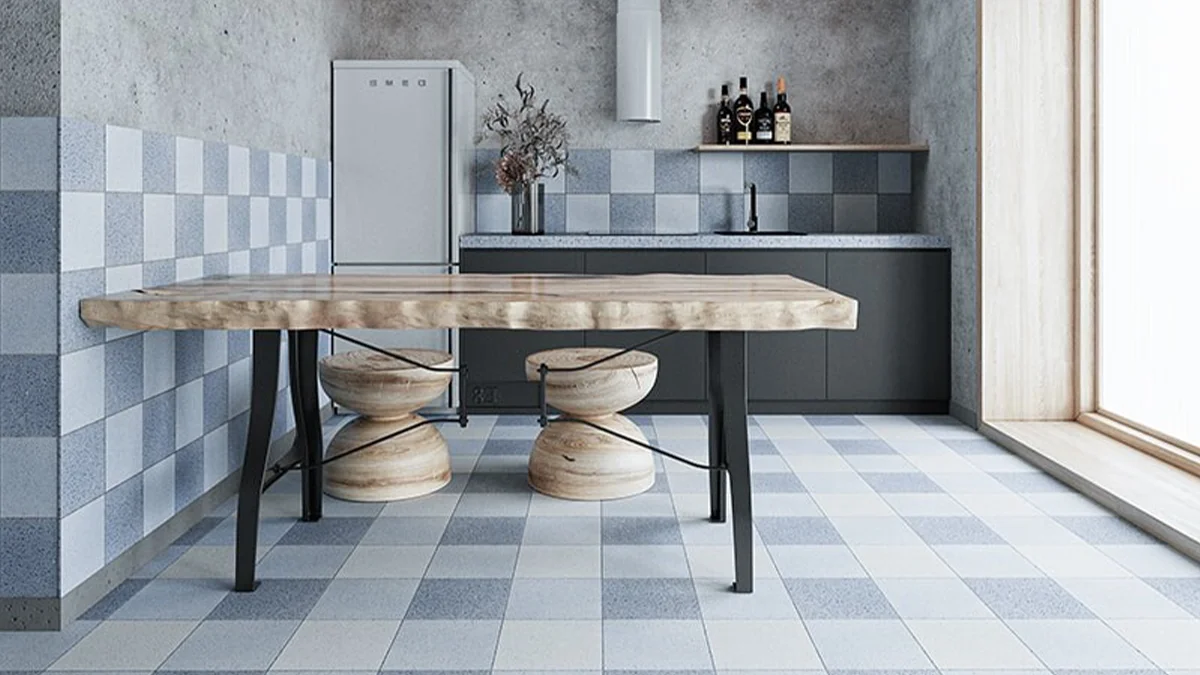
Format, thickness, and finish should shift with the surface you are covering. A floor tile needs enough body to resist point loads and to survive grinding and re-polishing later. A wall or backsplash panel can run thinner because it carries no foot traffic. Countertops sit between the two: they need a dense, stain-resistant face and a thickness that reads as substantial at the edge.
The evidence shows the range in practice. One blue terrazzo tile format runs 8×8 with a 3/8 thickness and a matte finish, while a custom blue floor tile runs 12×12 at 7/8 thick for indoor floors. Large tiles show more of the pattern and leave fewer grout lines, but they demand very flat substrates and careful handling. Smaller tiles install more easily over less-than-perfect floors.
Authentic terrazzo and porcelain terrazzo-look also differ in how they go down. Both need a flat, stiff substrate, an uncoupling membrane where the structure calls for one, full mortar coverage, and a leveling system for large units. Real terrazzo is heavier than porcelain of the same size and may need specific mortars, so the manufacturer’s specification decides. Treat both as valid choices for different project needs.
G·ONE’s customization services let you match format and finish to the application. You can specify colors, aggregates, dimensions, thickness, finishes, and molds, and request samples before you commit.
Wet, Dry, Indoor, and Outdoor Use
Wet areas raise the bar on traction. ANSI A137.1-A326.3 sets a DCOF value of 0.42 as the standard for level interior spaces expected to be walked on when wet. Exterior floors, pool decks, and ramps call for higher values, so confirm the test result against the specific condition rather than the interior minimum.
Finish selection follows the same logic. Matte and honed surfaces suit wet floors and exterior work, while polished surfaces fit walls, backsplashes, and dry interior floors. Match the finish to the exposure, then verify the slip data in writing.
Tip 3: Verify Regulatory Compliance
Fire Ratings and VOC Emissions
Compliance starts with paperwork you can file. Request fire test reports for the exact blue terrazzo tile product, not the general product family. Confirm the report names the testing laboratory, the standard applied, and the tested assembly. A report for a different thickness or finish may not cover your specification. Ask whether the listing covers the intended application, such as a floor, wall, or facade.
VOC emissions data belongs in the same request. Look for test results against a recognized indoor air quality standard, and check that the report covers the sealers and adhesives in your system. Sealers and setting materials can drive emissions as much as the tile body. Where available, an Environmental Product Declaration (EPD) documents environmental performance across the product lifecycle. An EPD supports your sustainability documentation, and it gives you a third-party verified reference for project submittals.
Slip Standards and Accessibility
Slip resistance needs written test results, not a visual judgment of the surface. Request the measured value and the standard it was tested against. For level interior floors expected to be walked on when wet, ANSI A137.1-A326.3 sets a DCOF value of 0.42 as the benchmark. Confirm the tested finish matches the finish you will install, because polished, honed, and matte surfaces produce different results.
Accessibility requirements add a second layer. Confirm that transitions, thresholds, and changes in level meet the accessibility code for your jurisdiction. Check that the slip result applies to ramps and other sloped surfaces, which typically demand higher traction than level floors. Keep your verification neutral across material options. Authentic terrazzo and porcelain terrazzo-look can both meet these requirements when the documentation supports the specified product. Your job is to confirm the evidence, not to assume it.
Tip 4: Compare Costs Transparently
Material, Installation, and Maintenance
A transparent cost comparison starts with three line items, not one. Material cost covers the tile itself, plus trim, thresholds, and any custom molds. Installation cost covers substrate prep, setting materials, labor, and the skill level the product demands. Maintenance cost covers sealers, cleaning products, and periodic re-polishing over the service life.
Authentic precast terrazzo and porcelain terrazzo-look carry different cost profiles across those three lines. The table below shows where each option typically fits best.
| Cost line | Authentic precast terrazzo | Porcelain terrazzo-look |
|---|---|---|
| Material | Higher unit cost; custom blends add to it | Lower unit cost at standard sizes |
| Installation | Heavier units; specific mortars and handling | Lighter units; familiar ceramic methods |
| Maintenance | Cement-based needs sealing; resin-based needs none | No sealing; grout care only |
Lifecycle value rewards a longer view. A cement-based terrazzo floor can be ground and repolished after years of wear, which extends service life without full replacement. Porcelain resists staining with minimal upkeep. Weigh repair strategy and replacement cost alongside the purchase price.
Lifecycle Value and Lead Times
Schedule belongs in the cost comparison. Authentic terrazzo tiles typically require 3–4 months to order, so plan procurement around that window. Porcelain terrazzo-look may suit tighter timelines. Neither path is better in absolute terms. Each fits a different budget and schedule priority.
Build the lead time into your program early. A 3–4 month order window shapes when you finalize colors, approve samples, and release the purchase order. On a fast-track job, that window may push the specification toward porcelain. On a project with a longer runway, authentic terrazzo gives you customization depth that standard porcelain cannot match.
Ask each supplier for a written breakdown of material, installation, and maintenance estimates. Request the lead time in writing too. Compare the totals against your program, not against each other in isolation.
Tip 5: Verify Blue Terrazzo Tile Color Consistency

Samples, Mockups, and Lighting
Each terrazzo tile carries a unique composition of chips, pigment, and matrix. No two tiles are exactly alike, even within a single production run. This variation gives terrazzo its character, but it also means you must verify the visual result before you commit. A photograph or a catalog image cannot show you how the blue reads in your actual space.
Start with a physical sample. Place it against your finishes, your furniture, and your wall colors. View it under the lighting conditions of the installed location, both day and evening. Then build a mockup panel on site. A mockup shows the true pattern density and the joint layout across several tiles. Check the mockup at different times of day and under the specified artificial light. Confirm that the blue tone stays within your design intent in every condition.
By ordering a sample, you can see our terrazzo collections with your furniture and in your own lighting.
G·ONE’s samples, digital catalogs, and design lookbooks give you tools for this verification step. Use the lookbook to narrow the palette, then order physical samples to confirm the final choice.
Batch and Dye-Lot Checks
Production runs vary. Pigment batches and aggregate lots can shift the final blue tone slightly from one order to the next. Confirm the batch and dye-lot reference for your approved sample, and write that reference into the purchase order. Ask your supplier to reserve material from a single lot for the full project where the quantity allows.
Request a batch comparison before shipment. Set the production samples side by side under neutral light and check for tone shift. For phased projects, keep an approved retained sample on file and match every later delivery against it. Record the dye-lot number on each packing list. These checks protect the color consistency of your blue terrazzo tile across the whole installation.
Five checkpoints now frame your selection. Evaluate performance first: confirm abrasion, compressive strength, and stain data, then match finish to slip risk. Match format and finish to the surface and exposure, and treat authentic terrazzo and porcelain terrazzo-look as valid options for different needs. Verify compliance through fire reports, VOC data, and written slip results. Compare costs across material, installation, maintenance, and lead time. Verify color through samples, mockups, and dye-lot checks.
Carry this checklist into your next specification meeting. Ask each supplier for the same documents, then compare answers side by side. Before you commit to any blue terrazzo tile, request samples and mockups through G·ONE to confirm the final choice.
FAQ
Should you choose authentic precast terrazzo or porcelain terrazzo-look for a blue floor?
Both options work. Authentic precast terrazzo gives you full-body color, deep customization, and the ability to grind and repolish the floor later. Porcelain terrazzo-look offers lighter units, familiar ceramic installation, and a lower unit cost at standard sizes. Match the choice to your budget, schedule, and repair strategy.
How long does a blue terrazzo tile order take?
Authentic terrazzo tiles typically require 3–4 months to order. Build that window into your program before you finalize colors and release the purchase order. Porcelain terrazzo-look may suit tighter timelines. Confirm the lead time in writing with each supplier.
What slip resistance does a blue terrazzo tile need in a wet area?
ANSI A137.1-A326.3 sets a DCOF value of 0.42 as the benchmark for level interior floors expected to be walked on when wet. Exterior floors, pool decks, and ramps call for higher values. Request the measured result for the exact finish you will install.
Why do two blue terrazzo tiles from the same order look slightly different?
Each tile carries a unique composition of chips, pigment, and matrix, so no two tiles are identical. Pigment batches and aggregate lots can also shift the tone between orders. Approve a physical sample, record the dye-lot reference, and match later deliveries against a retained sample.
Which documents should you request before approving a blue terrazzo tile?
Ask for fire test reports naming the exact product and tested assembly, VOC emissions data covering sealers and adhesives, and written slip resistance results. Request an Environmental Product Declaration where available. Compare the same documents from every supplier side by side.