
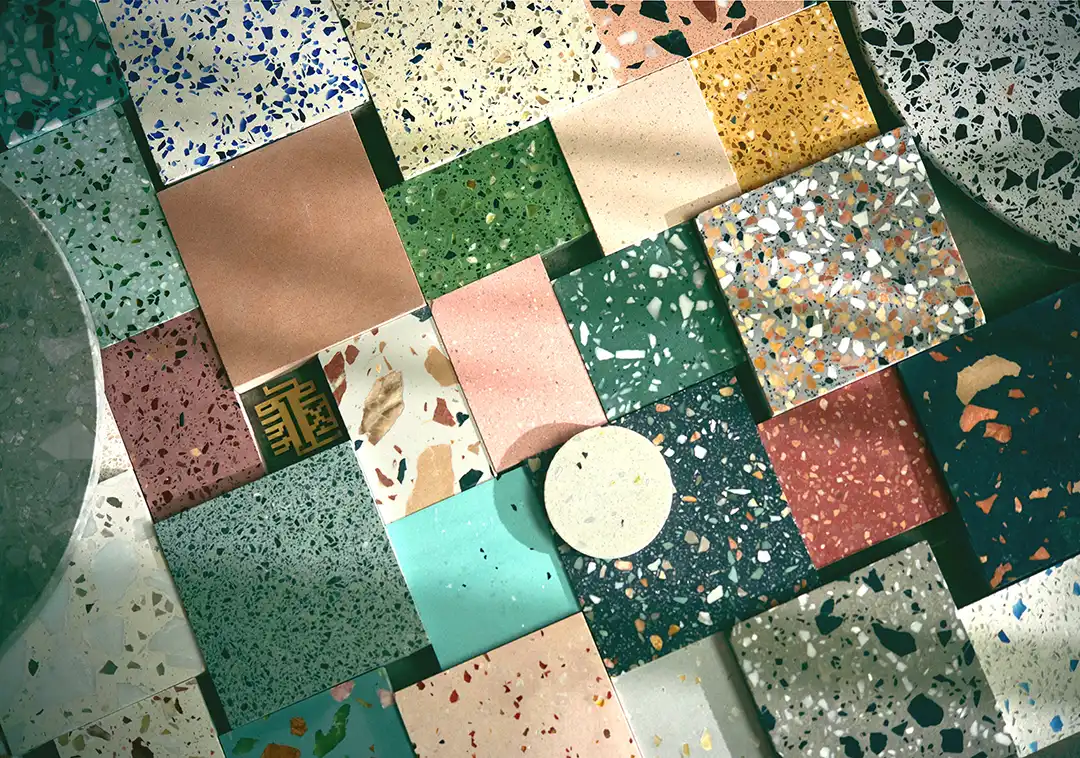
The terrazzo definition describes a composite material that combines marble, glass, stone, or recycled aggregates with a cementitious or epoxy matrix. Workers polish this mixture into a durable terrazzo surface. Terrazzo serves primarily as flooring, yet architects also specify it for wall panels, countertops, and exterior cladding. Designers evaluate terrazzo floors through criteria such as material composition, binder type, durability, maintenance needs, aesthetics, sustainability, and cost. The terrazzo definition remains consistent across applications, but performance varies with aggregate and binder choices. This guide helps architects and designers specify terrazzo with confidence.
Key Takeaways
- Terrazzo combines aggregates like marble or glass with a binder to create a durable, polished surface.
- Choose cement terrazzo for exterior use and heavy loads; epoxy terrazzo for fast curing and vivid colors indoors.
- Terrazzo floors last 40+ years with simple maintenance, saving money over alternatives like vinyl or carpet.
- Design custom terrazzo with recycled glass, metal strips, and logos to enhance branding and wayfinding.
- For outdoor spaces, use rustic terrazzo with a textured surface for slip resistance and freeze-thaw durability.
- Specify terrazzo with low-VOC binders and recycled content to earn LEED credits and support sustainability.
- Always review physical samples and mockups before installation to ensure color, texture, and quality meet expectations.
- Partner with a qualified manufacturer like G·ONE for expert guidance on terrazzo specifications and custom solutions.
Terrazzo Definition: Material Composition and Manufacturing
The terrazzo definition rests on two essential components: aggregates and a binder matrix. Aggregates form the visible chips, while the binder holds them together and determines much of the material’s performance. Manufacturers combine marble, granite, glass, or recycled chips with either a cementitious or resin binder. This composite structure allows terrazzo to serve floors, wall panels, countertops, and exterior cladding. Understanding how these components interact helps architects write a precise terrazzo specification for any project.
Aggregates and Binder Matrix
Aggregates give terrazzo its color, texture, and visual character. The binder locks those chips into a solid, polishable surface. The ratio between the two shapes the final appearance and mechanical properties. A higher aggregate content produces a denser, more expressive surface. A richer binder content improves cohesion and chemical resistance. Designers balance these factors against the demands of each project.
Natural Stone, Glass, and Recycled Aggregates
Natural stone chips remain the most traditional aggregate choice. Marble and stone chips deliver classic veining and a warm, mottled look. Marble chips appear in venetian terrazzo, where workers set large chips by hand for a dramatic effect. Glass chips add translucency and vivid color. Recycled glass is commonly used, with several suppliers providing post-consumer recycled glass. Recycled plastic chips can contain as much as 20% recycled plastic. Salvaged stone or marble from other buildings can be re-crushed and sieved for use in terrazzo. Post-industrial stone left from slab granite and marble processing is also used. A floor made with 100% recycled glass can contain as much as 75% by volume of recycled product. The EU-Life project ‘ECOTILES’ achieved products containing more than 70% waste by including recycled glass and ceramics from urban and industrial wastes and construction and demolition waste. These options let designers meet sustainability goals without sacrificing visual quality.
Cementitious and Resin Matrix Options
The binder choice separates the two main terrazzo systems. Cement terrazzo uses a Portland cement matrix, which cures slowly and offers a matte, traditional finish. Epoxy terrazzo uses a resin binder that cures quickly and delivers superior color consistency. An epoxy terrazzo system also provides strong chemical resistance and a thinner profile. Epoxy terrazzo formulas contain a minimum of 20% and up to a maximum of 80% recycled materials. Cement terrazzo suits exterior applications and heavy structural loads. Epoxy terrazzo excels in interiors where vivid color and tight tolerances matter. Both binders accept the same aggregate types, so the matrix decision often follows performance requirements rather than aesthetics.
Precast Terrazzo and Site-Installed Systems
Manufacturing method shapes lead time, joint appearance, and design freedom. Precast terrazzo panels and tiles are prefabricated and finished in a factory, then shipped to the site. Site-installed seamless terrazzo is mixed and poured on-site, then hand-troweled, cured, ground, and polished. Each approach carries distinct advantages for different project types.
Panels, Tiles, and Seamless Flooring Systems
Precast terrazzo panels and tiles offer faster on-site installation because panels are already made. A terrazzo floor tile or terrazzo tile requires visible grout joints between units. Stocked tiles can ship quickly, but custom products require several weeks of production. Precast units suit custom logos, symbols, and precise or complex areas. Site-installed poured-in-place terrazzo creates a seamless surface with no grout joints; divider strips are used instead. This method suits large open spaces and continuous designs. Poured-in-place terrazzo installations typically carry a shorter lead time of about 4–8 weeks when scheduled with a qualified installer, and material lead time can be about 2–4 weeks. Precast terrazzo installations last roughly 10–15 years due to grout joints, while seamless terrazzo often exceeds 40 years and is repairable at lower cost. Seamless work also offers nearly unlimited design options, including custom graphics and logos.
Grinding, Polishing, and Sealing Processes
Both manufacturing paths rely on grinding and polishing to reveal the aggregate pattern. For site-installed work, crews grind the cured slab in stages, then polish it to the desired sheen. Precast panels receive the same treatment in the factory under controlled conditions. Sealing follows polishing and protects the surface from moisture and stains. A quality terrazzo installation depends on each step. Proper grinding exposes the chips evenly. Careful polishing removes scratches and builds gloss. Sealing closes the surface and extends service life. These processes apply to cement terrazzo and epoxy terrazzo alike, though resin systems typically cure faster and reach final appearance sooner.
Terrazzo Specification: Cementitious, Epoxy, and Rustic Types
A terrazzo specification must match the binder system to the project’s performance demands. The three main families—cementitious, epoxy, and rustic—differ in cure behavior, strength, color control, and surface texture. Each system pairs aggregates with a specific matrix, and that pairing determines how the finished terrazzo performs in service. Designers who understand these differences can write a terrazzo specification that holds up over decades.
Cementitious Terrazzo Systems
Cement terrazzo uses a Portland cement matrix. This traditional system cures slowly, requiring days or weeks before workers can pour the terrazzo topping. The slow cure suits exterior work and heavy structural loads. Cement terrazzo floors develop a matte finish and a warm, classic appearance. The material withstands impacts, steam cleaning, heavy traffic, and point loading well. These traits make cement terrazzo a reliable choice for lobbies, corridors, and public buildings.
Traditional Precast and Thin-Set Applications
Sand-cushion cementitious terrazzo over concrete substrates follows a defined build-up. The cement matrix topping measures 1/2 inch. The sand and cement underbed measures 2 1/2 inches to 3 inches. The minimum total system thickness reaches 3 inches, combining the underbed and topping.
| Component | Specified thickness |
|---|---|
| Cement matrix topping | 1/2″ |
| Sand/cement underbed | 2 1/2″ to 3″ |
| Minimum total system thickness | 3″ (2 1/2″ underbed + 1/2″ topping) |
Thin-set applications reduce this profile for renovation work. Precast cement terrazzo panels offer another path. Factories cast and finish these panels under controlled conditions, then ship them for installation. Precast units suit custom logos and complex areas where site pouring proves impractical.
Epoxy Terrazzo
Epoxy terrazzo uses a resin binder instead of cement. This epoxy terrazzo system cures overnight and is ready for polishing the next day. That fast turnaround supports tight project schedules. An epoxy terrazzo system also delivers higher compressive and tensile strengths than cementitious systems. These properties make epoxy terrazzo floors a strong candidate for commercial kitchens, restrooms, and healthcare spaces.
Resin Binder Performance, Color Consistency, and Chemical Resistance
Color control separates epoxy terrazzo from cement terrazzo. Epoxy terrazzo offers bright and complete color customization. Cement terrazzo provides slightly more limited color options. The resin matrix accepts pigments uniformly, so batches match closely across large areas. Epoxy terrazzo also resists harsh cleaning chemicals well, which suits commercial restroom applications.
| Property | Epoxy Terrazzo | Cementitious Terrazzo |
|---|---|---|
| Color Consistency | Offers bright and complete color customization | Slightly more limited color options |
| Chemical Resistance | Sufficient durability to resist harsh cleaning chemicals (recommended for commercial restroom) | Better at withstanding impacts, steam cleaning, heavy traffic and point loading; no direct chemical resistance comparison provided |
Epoxy terrazzo offers “unlimited matrix colors, color control, resiliency, chemical resistance” and is “excellent for multi-colored patterns and designs.”
Designers who need vivid patterns, logos, or multi-color designs often select epoxy terrazzo for these reasons. The resin binder holds fine aggregates and marble chips in place while preserving sharp color boundaries.
Rustic and Exposed-Aggregate Terrazzo
Rustic terrazzo presents a textured, exposed-aggregate surface rather than a high-gloss finish. Workers wash the surface before full curing to expose the chips, creating a rougher profile. This texture improves slip resistance and suits outdoor terrazzo tile applications. Rustic terrazzo also handles freeze-thaw cycles and wet conditions better than polished interior systems.
Texture, Slip Resistance, and Outdoor Use
The exposed surface gives rustic terrazzo a natural, tactile quality. Designers specify it for pool decks, plazas, walkways, and exterior stairs. The rougher profile meets slip-resistance goals without additional coatings. Rustic terrazzo pairs well with cementitious binders because cement tolerates moisture and temperature swings. Poured-in-place terrazzo in a rustic finish creates seamless outdoor surfaces. Poured-in-place terrazzo also allows custom aggregate blends for regional stone or recycled content. These terrazzo systems extend the material beyond interior floors into site work and landscape architecture.
Terrazzo Floors: Durability, Maintenance, and Performance
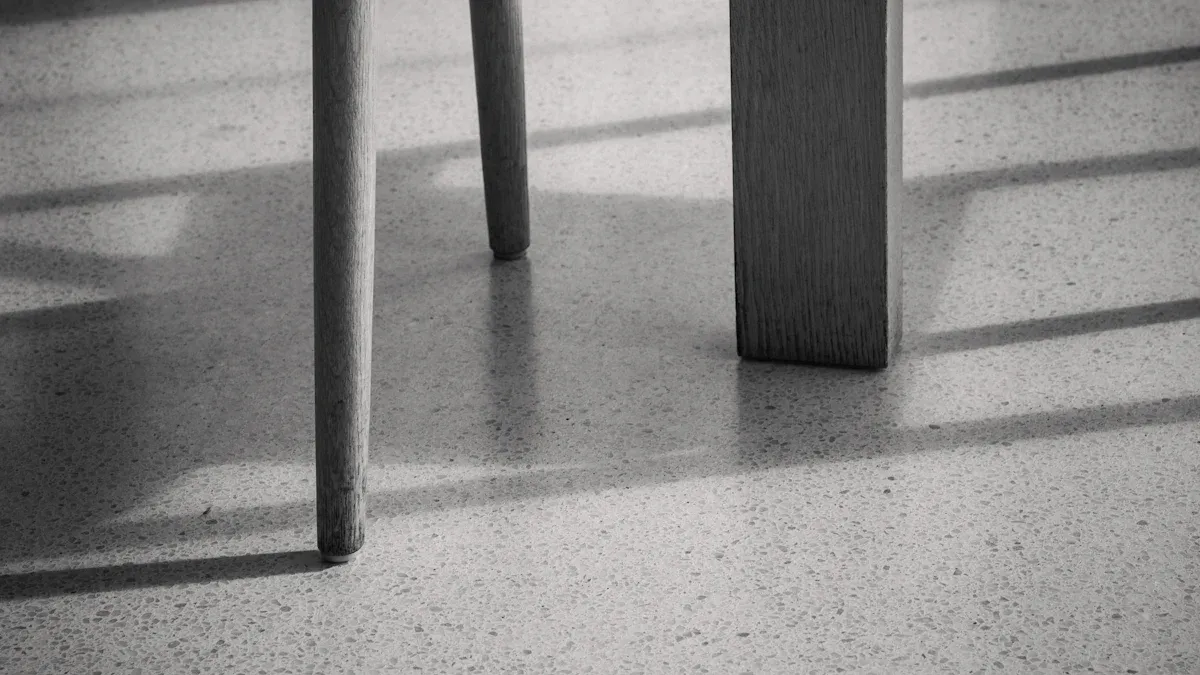
Terrazzo floors perform well in demanding environments because the binder matrix locks aggregates into a dense, wear-resistant surface. Architects specify terrazzo flooring for airports, hospitals, and retail flagships where replacement disrupts operations. A terrazzo floor outlasts most competing finishes by decades. This longevity changes the life-cycle math for any commercial project.
Structural and Wear Performance
Compressive strength and impact resistance determine how terrazzo floors handle heavy loads and dropped objects. Epoxy terrazzo reaches a compressive strength of at least 10,000 PSI according to ASTM C579. This value exceeds most concrete substrates. The resin binder also delivers high impact resistance, which suits spaces with rolling loads or equipment traffic. Cement terrazzo floors offer similar durability through their Portland cement matrix, though the evidence does not provide a specific compressive strength value for that system.
Impact Resistance and High-Traffic Suitability
High-traffic venues need flooring that resists abrasion without frequent replacement. Terrazzo floors meet this demand through their hard aggregate content and polished surface. The expected service life tells the story clearly.
| Flooring Type | Expected Service Life |
|---|---|
| Luxury Vinyl Tile (LVT) | 12–20 years (well-maintained, glue-down commercial systems) |
| Polished Concrete | 20–30 years (with periodic re-burnishing) |
| Terrazzo | 40+ years (with only neutral-cleaner damp mopping) |
A second dataset places terrazzo at 50–100+ years and polished concrete at 20–50+ years with maintenance. Either figure shows a substantial advantage over LVT. A terrazzo floor tile in a hotel lobby may never need replacement during the building’s useful life.
Moisture, Stain, and Chemical Resistance
Epoxy terrazzo floors resist harsh cleaning chemicals well. This property makes them suitable for commercial restrooms and healthcare settings. A bathroom terrazzo floor tile benefits from the resin binder’s tight matrix, which blocks moisture penetration. Cementitious systems tolerate moisture and temperature swings better, which suits exterior and wet-area applications. Both systems resist staining when properly sealed. Designers should match the binder to the chemical exposure expected in each space.
Maintenance and Life-Cycle Care
A terrazzo floor requires less maintenance than many alternatives, but the care program must match the binder type. Workers should identify whether the floor is cementitious or epoxy before selecting cleaners, pads, or restoration methods. Cementitious and marble-containing terrazzo are especially sensitive to acidic chemistry.
Daily Cleaning, Sealing, and Refinishing
Daily care begins with dust mopping or vacuuming to remove abrasive grit. Spot-clean spills with a neutral-pH cleaner diluted in warm water. Damp-mop lightly soiled areas weekly. Machine-scrub heavily soiled zones, rinse with clean water before the floor dries, then buff dry. During the first two to three months after installation, crews should scrub at least twice weekly to control construction dust, then reduce to once weekly depending on traffic. Apply a water-based acrylic sealer according to manufacturer instructions. Strip old sealer and reseal as needed. Avoid all-purpose cleaners, surface waxes, and products containing harsh alkalis, acids, or crystallizing salts.
Joint Repair and Crack Maintenance
A poured-in-place terrazzo floor has no grout joints, which reduces areas where dirt collects. Divider strips control cracking and allow isolated repairs. When cracks appear, crews inject compatible filler and grind the area flush. A poured-in-place terrazzo installation remains repairable at lower cost than full replacement. Polishing, sealing, joint repair, and occasional refinishing all extend the long-term performance of terrazzo.
Aesthetics and Custom Terrazzo Design
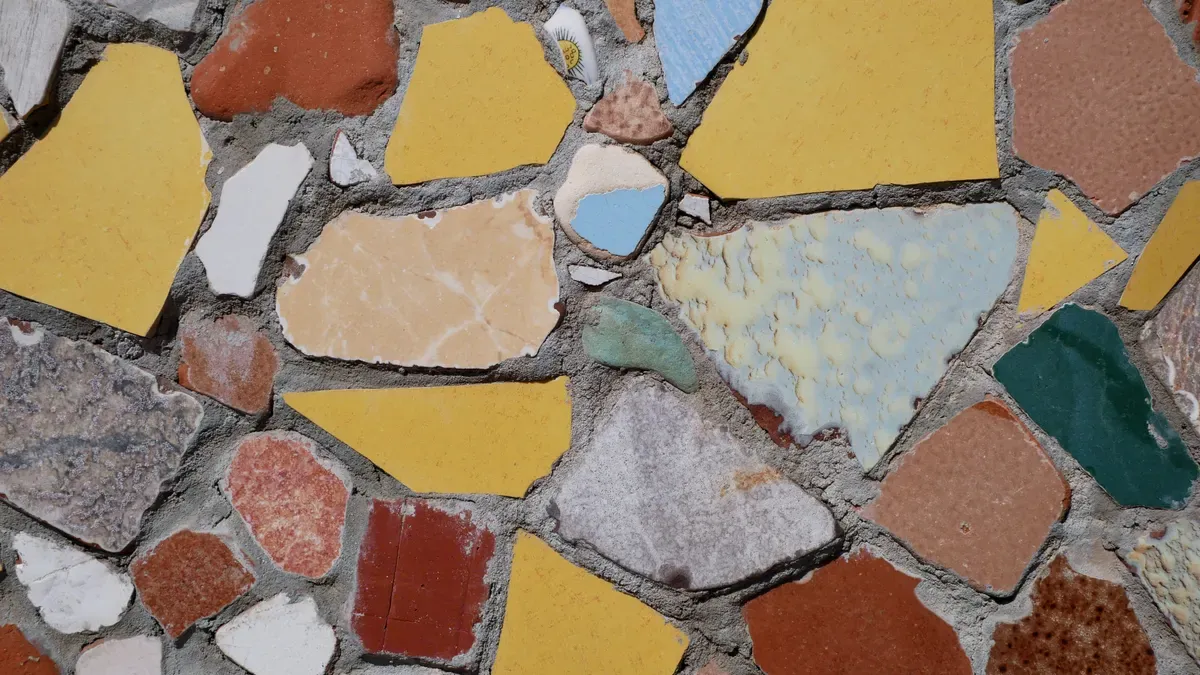
Terrazzo offers exceptional aesthetic flexibility for architects and designers. The material accepts a wide range of aggregates, pigments, and patterns. This versatility allows each project to achieve a distinct visual identity. Designers can tailor terrazzo design to support branding, wayfinding, and spatial organization.
Color, Aggregate, and Texture Selection
Color and texture begin with aggregate selection. Designers choose from marble chips, glass, granite, and recycled materials. Each aggregate type brings unique visual qualities to the surface.
Pigments, Marble Chips, Glass, and Custom Blends
Pigments allow complete color customization within the binder matrix. Epoxy systems offer bright and complete color customization. Cementitious systems provide slightly more limited color options. Marble chips deliver classic veining and a warm, mottled appearance. Glass aggregates add translucency and vivid color. Recycled glass supports sustainability goals without sacrificing visual quality. Custom blends combine different aggregates to create signature looks. Designers can specify aggregate size to control texture, from fine grains to large chips. A terrazzo tile with large marble chips creates a bold, expressive floor. Smaller aggregates produce a subtler, more uniform surface.
Patterns, Inlays, and Spatial Transitions
Patterns transform terrazzo from a simple floor into a design element. Metal or plastic divider strips are set into the primer according to the design layout. These strips control cracking and define design patterns. They also separate color fields and form decorative borders or logos. Precision craftsmanship is required because the divider layout determines the final appearance of the floor.
Metal Strips, Logos, and Wayfinding Elements
Divider strips function as design elements rather than merely functional joints. They are available in metals such as aluminum, brass, and zinc, as well as plastic.
| Divider Strip Material | Design Use | Commercial Application |
|---|---|---|
| Brass, zinc, or aluminum | Define geometric patterns, wayfinding paths, or branded logos directly within the floor surface | Corporate headquarters, boutique hotels, upscale retail environments |
| Metal divider strips | Integrate custom design elements into the floor | Environments where the floor supports brand identity |
Divider strips can be bent to form curved lines that flow seamlessly in any direction. These patterns provide visual cues that navigate people through a building space.
Matching Terrazzo to Project Typologies
Different project types demand different terrazzo design strategies. Hospitality spaces often feature bold patterns and custom logos. Retail environments use terrazzo to reinforce brand identity. Healthcare facilities require hygienic, seamless surfaces with high stain resistance. Non-porous epoxy matrices resist oils, dilute acids, and common cleaning solutions. Seamless finishes eliminate grout joints where dirt and germs accumulate. Schools and universities benefit from durable, easy-to-clean surfaces. Civic spaces use terrazzo to create memorable, enduring floors.
Hospitality, Retail, Healthcare, Education, and Civic Spaces
Each typology shapes the specification. Healthcare projects prioritize safety and compliance. Terrazzo meets ADA slip-resistance standards and achieves Critical Radiant Flux of 0.90 per ASTM E 648. Low VOC formulations support healthier indoor air quality. Hospitality and retail projects emphasize visual impact. Custom aggregates and pigments create distinctive environments. Educational and civic buildings balance durability with aesthetic appeal. Terrazzo floors in these settings withstand decades of heavy use.
Sustainability, Cost, and Life-Cycle Value of Terrazzo
Environmental Attributes and Certifications
Recycled Content, Low-Emission Binders, and Durability
Architects turn to terrazzo because the material carries recycled content without sacrificing lifespan. Terrazzo systems accept post-consumer glass, porcelain, and recycled concrete aggregates. Manufacturers grind these chips into the matrix and combine them with low-emission binders. Zero-VOC epoxy systems keep indoor air clean during installation and long after. A single terrazzo surface can support LEED v4 goals through several pathways. Recycled aggregates satisfy Materials & Resources sourcing credits. Aggregates processed within 500 miles qualify for regional materials credit. Health Product Declarations deliver ingredient transparency. The Green Terrazzo System contains no Red-Listed ingredients.
ReadyRazzo® Tiles contain recycled content and may contribute toward Material & Resources credits through responsible sourcing and waste reduction strategies as part of an overall LEED-certified project.
Durability remains the strongest environmental attribute. A terrazzo surface with a 75–100+ year lifespan avoids the embodied carbon of repeated replacement. Architects can re-polish existing floors instead of tearing them out. This practice earns Building Life-Cycle Impact Reduction credit and lowers demolition waste.
Cost Drivers and Budget Planning
Material, Installation, and Customization Variables
First cost varies with aggregate selection, binder type, pattern complexity, and installation method. Epoxy terrazzo systems command a higher material price but cure overnight and hold color tightly. Cementitious systems reduce binder cost for traditional applications. Custom divider patterns, logos, and wayfinding layouts raise fabrication and labor expense. Precast terrazzo installations lower on-site labor demands, while poured-in-place work requires a skilled crew and a longer schedule. A detailed budget line for each variable prevents surprises.
For commercial terrazzo floors, the price conversation often begins with square footage. That narrow view misses the larger economic picture. Contractors should separate material, labor, and design costs. Designers should ask for unit pricing on every component, from aggregate blends to metal strips. This discipline keeps custom work within budget while preserving the design intent.
Life-Cycle Cost and Long-Term Value
Maintenance Savings and Replacement Avoidance
Life-cycle cost, not first cost, determines true value. NTMA lifecycle data gives epoxy terrazzo an annual maintenance cost of $0.43 per square foot. Carpet costs $1.23 per square foot to maintain. VCT costs $1.18 per square foot. Over 40 years, epoxy terrazzo saves $32.00 per square foot versus carpet and $30.00 per square foot versus VCT. The system also has no replacement cost and a 40-year replacement frequency. Carpet and VCT need replacement every 10 years.
Total 40-year savings reach $34.12 per square foot versus carpet and $21.51 per square foot versus VCT. Annual savings equal $0.85 per square foot versus carpet and $0.54 per square foot versus VCT. That maintenance advantage gives epoxy terrazzo a clear life-cycle edge. A slightly higher first cost disappears over decades of use.
How to Choose the Right Terrazzo for Your Project
A disciplined selection process prevents costly revisions later. Architects and designers should define performance needs first, then review physical samples, and finally confirm details with a qualified manufacturer.
Define Performance, Aesthetic, and Budget Requirements
Traffic level, site conditions, and maintenance capacity drive every terrazzo specification decision. A hospital corridor demands different performance than an office lobby. Designers should document the occupancy type, expected foot traffic, and cleaning schedule before selecting a binder system.
Traffic, Indoor/Outdoor Conditions, and Maintenance Capabilities
Exterior applications require cement-based terrazzo systems. The rustic system with a non-ground, textured surface suits outdoor use. Epoxy terrazzo is not recommended for outdoor exposure. For interior spaces, epoxy terrazzo dominates roughly 90% of terrazzo installations today. It offers high chemical resistance and low maintenance due to its impermeability. Cementitious terrazzo tolerates moisture well and suits below-grade environments. Slip resistance also matters. A properly sealed epoxy terrazzo floor achieves a Static Coefficient of Friction of 0.6 or higher, meeting ADA recommendations for level surfaces. The final sealer, not the material, determines slip resistance. Designers should match the rating to the space type, from office spaces at P2/R9 to swimming pool surrounds at P5/R12.
Review Samples, Mockups, and Technical Data
An approved physical sample serves as the quality standard for the entire floor. It fixes the aggregate blend, binder color, and intended finish. Terrazzo is a poured decorative material, so natural variation in aggregate distribution should be expected across a field.
Aggregate Blends, Color Matching, and Compliance Documentation
Where a project requires greater certainty at scale, such as large public floors or color-critical programs, a larger mockup can be specified. This placement is reviewed under actual project conditions. Mockups add fabrication and schedule cost, so whether one is included is a scope decision made in the terrazzo specifications. Every worker assigned to the project must prepare a mockup panel for each activity they will perform. Workers whose mockups are not approved are barred from the terrazzo work. Approved mockups become part of the work and serve as the quality standard for all similar work.
Partner with a Terrazzo Manufacturer: G·ONE
A qualified manufacturer supports the terrazzo specification process from concept through installation. G·ONE provides tailored consultations, project samples, digital catalogs, and engineering support.
Precast Terrazzo Systems and Custom Solutions
G·ONE offers regular terrazzo for high-traffic commercial flooring and recycled terrazzo with post-industrial recycled materials for LEED credits. Mosaic terrazzo delivers intricate artistic designs. UHPC plates provide high-performance concrete panels for facades and demanding applications. Custom-made solutions let designers tailor colors, aggregate blends, and molds to match any application. A digital lookbook includes brochures and technical specifications. This support helps architects confirm every detail before terrazzo installation begins.
The terrazzo definition centers on aggregates and binder materials. The terrazzo surface lasts decades. Designers choose among cement terrazzo, epoxy terrazzo, and rustic systems. Each serves varying project demands.
Durability, maintenance, aesthetics, sustainability, and life-cycle cost guide specifications. Cement terrazzo provides traditional appeal and exterior resilience. Epoxy terrazzo delivers vivid color control. Epoxy terrazzo also supports fast installation. Terrazzo floors reduce operating expenses through minimal upkeep.
Architects should request physical samples and review mockups before installation. Terrazzo projects demand this verification. A qualified manufacturer such as G·ONE confirms specification details and offers project-specific consultation. Confirming variables early ensures the finished flooring meets design intent and budget.
FAQ
What distinguishes epoxy terrazzo from cement terrazzo?
Epoxy terrazzo uses a resin binder that cures overnight and delivers superior color consistency. Cement terrazzo relies on a Portland cement matrix that cures slowly and offers a matte finish. Epoxy terrazzo resists harsh chemicals well. Cement terrazzo handles heavy impacts and exterior conditions better.
How long do terrazzo floors last compared to other flooring?
Terrazzo floors last 40 years or more with basic maintenance. Polished concrete lasts 20 to 30 years. Luxury vinyl tile lasts 12 to 20 years. This longevity makes terrazzo floors a strong life-cycle investment for commercial spaces.
Can designers use epoxy terrazzo floors outdoors?
No. Epoxy terrazzo is not recommended for outdoor exposure. Exterior applications require cement-based terrazzo systems. The rustic terrazzo system with a textured surface suits outdoor use. This system handles freeze-thaw cycles and wet conditions well.
What maintenance do terrazzo installations require?
Daily care starts with dust mopping to remove abrasive grit. Workers spot-clean spills with a neutral-pH cleaner. They damp-mop weekly and machine-scrub heavily soiled areas. Sealing during initial months protects the surface. Proper care extends service life significantly.
How does venetian terrazzo differ from standard terrazzo?
Venetian terrazzo features large marble chips set by hand for dramatic visual effect. Standard terrazzo uses smaller aggregates mixed throughout the matrix. Both terrazzo systems accept polishing and sealing. The venetian method creates a more expressive, classic appearance.
What is porcelain stoneware terrazzo?
Porcelain stoneware terrazzo describes a ceramic tile product that mimics terrazzo appearance. Manufacturers produce terrazzo-look porcelain stoneware tiles for projects seeking terrazzo aesthetics with different installation methods. These tiles offer an alternative for kitchen terrazzo tile applications and other spaces where traditional terrazzo installation proves impractical.
How do architects write a terrazzo specification?
A terrazzo specification must match the binder system to project demands. Designers document traffic levels, site conditions, and maintenance capacity first. They review physical samples and mockups before finalizing details. A qualified manufacturer confirms specification variables before terrazzo tile or poured-in-place work begins.
What factors drive terrazzo cost?
Aggregate selection, binder type, pattern complexity, and installation method drive first cost. Epoxy terrazzo commands higher material prices but cures overnight. Custom divider patterns and logos raise fabrication expense. Life-cycle savings from reduced maintenance offset the initial investment over decades.