
Terrazzo is a composite material that combines marble, granite, or glass chips with a cement or resin binder. Aggregate, binder, and matrix form its three core components. This ultimate guide to terrazzo helps architects and designers move from a basic definition to confident style selection. The global terrazzo flooring market reached USD 31.26 billion in 2024 and will grow at 5.83% annually through 2034. G·ONE provides precast terrazzo and sustainable building materials that support this selection process. Designers who define terrazzo clearly can specify the right flooring for each project. A solid grasp of terrazzo composition leads to better design decisions.
Key Takeaways
- Terrazzo is a durable composite of aggregates, binders, and surface treatment.
- Choose cementitious terrazzo for outdoors and epoxy terrazzo for indoors.
- Select aggregates and pigments to achieve your desired look and performance.
- Match terrazzo type to your application, budget, and timeline.
- Recycled terrazzo supports green building and earns LEED credits.
What Is Terrazzo? A Clear Definition
Define Terrazzo: Composition and Origins
Terrazzo is a composite material that traditionally combines marble chips with cement. Italian artisans in the 16th century developed this material to reuse stone offcuts from construction sites. They mixed leftover stone fragments with cement and polished the surface smooth. That practical origin explains why terrazzo remains a material of resourcefulness and durability today.
Three main components form every terrazzo system. Aggregates provide the visible chips and the structural body. Binders hold those aggregates together and determine cure behavior. Surface treatment grinds and polishes the finished face to the desired gloss level. Typical aggregates include granite, marble, quartz, shell, and glass. Designers who ask what is terrazzo often discover that the aggregate choice drives the visual character more than any other decision.
Traditional cementitious terrazzo uses a 2:1 ratio of marble aggregate to cement. That recommended ratio of 2 parts aggregate to 1 part cement gives the mix its density and wear resistance. The material accepts a wide variety of aggregates and pigments, so each project can achieve a distinct appearance. This flexibility makes terrazzo suitable for both restoration work and new construction.
Cementitious vs. Resinous Binders
The binder choice separates the two major terrazzo families. Cementitious terrazzo uses a cement matrix with aggregates to form a thick, robust floor. The terrazzo finish concrete is durable, and while its color palette is less varied than epoxy, it produces beautiful earthy tones and can be used indoors or outdoors. Cement systems cure slowly and require substantial thickness.
Epoxy terrazzo uses an epoxy resin binder instead of cement. This binder cures overnight and is ready to polish the next day, while cementitious terrazzo needs approximately 28 days at room temperature. The epoxy resin binder also allows thinner toppings. A maximum thickness of 6 to 8 mm is possible for epoxy systems.
| Terrazzo Type | Thickness Specification | Typical Curing Time at Room Temperature |
|---|---|---|
| Cementitious Terrazzo | Thicker and heavier system | Approximately 28 days |
| Epoxy Terrazzo | Maximum thickness of 6–8 mm | Overnight (ready to polish next day) |
THICKNESS: Nominal 1/4″ or 3/8″ Epoxy Terrazzo topping. 0-1 chip sizes opt.#2 chip for 3/8″.
Color and pattern control differ sharply between the two binders. Epoxy systems offer unlimited custom matrix colors with color control and can create precise color matches to existing design elements. They also allow seamless, free-form patterning without divider strips. Cement-based terrazzo requires divider strips of zinc, aluminum, brass, plastic, or contrasting terrazzo to separate colors. Intricate cement patterns need waterjet-cut strips. For flooring projects that demand tight color matching or complex geometry, epoxy terrazzo usually wins. For exterior flooring and heavy-traffic zones, cementitious terrazzo remains the traditional choice.
The Ultimate Guide to Terrazzo Types
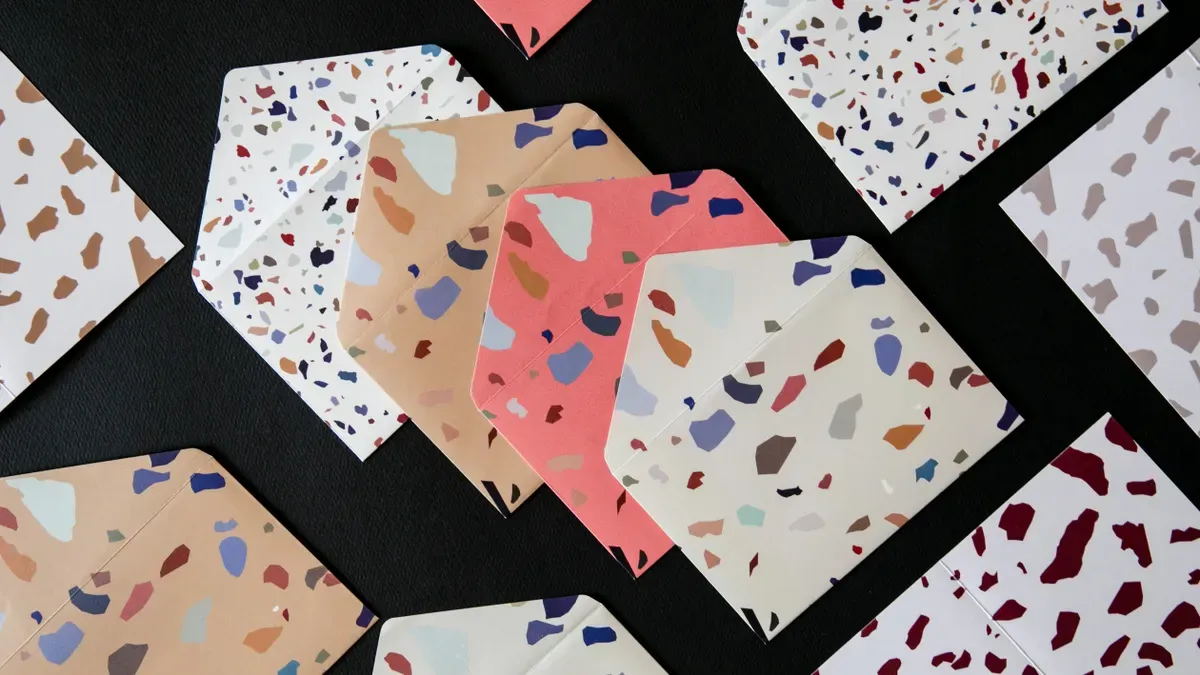
Precast and Site-Cast Terrazzo
Precast terrazzo forms in a factory under controlled conditions. This environment ensures consistent finish quality and precise material ratios. Installation proceeds faster because panels arrive ready for placement. Concord Terrazzo’s precast products typically require 12 to 14 weeks to produce after sample approval. Custom precast tiles may need several weeks depending on order size and customization level. G·ONE offers UHPC Plates as a complementary high-performance option for facades and demanding applications.
Site-cast terrazzo pours in place and polishes on location. This method allows seamless expanses without visible joints. However, curing conditions depend entirely on the job site environment. Cementitious terrazzo cures slowly and requires approximately 28 days at room temperature before polishing. Epoxy terrazzo cures overnight, which makes it suitable for fast-track schedules. Cementitious terrazzo needs divider strips to separate colors, while epoxy terrazzo allows seamless patterns without strips. The choice between systems depends on project priorities. Quality control, installation speed, and finish consistency favor precast. Seamless appearance favors site-cast.
Regular, Recycled, and Mosaic Terrazzo
G·ONE’s product lines cover three distinct types. Regular Terrazzo uses high-quality aggregates to create durable, visually appealing surfaces. This product works well for high-traffic commercial flooring applications. The material provides excellent wear resistance and long-term performance. Architects specify Regular Terrazzo when design calls for a polished, classic finish.
Recycled Terrazzo incorporates post-industrial recycled materials into the matrix. This product supports green building certification goals. Several LEED credits apply to recycled terrazzo installations.
| Certification Category | Name | Description |
|---|---|---|
| LEED Credit | Building Life-Cycle Impact Reduction | Reuse existing terrazzo flooring by re-polishing, earning up to 4 points. |
| LEED Credit | Sourcing of Raw Materials | Use recycled aggregates to document responsible sourcing. |
| LEED Credit | Low-Emitting Materials | Use zero-VOC resins and low-VOC sealers to improve indoor air quality. |
| Certification | GREENGUARD Gold | Certifies low chemical emissions for indoor health. |
Mosaic Terrazzo enables intricate artistic patterns through small tesserae placement. Designers create detailed imagery and complex geometries using this technique.
Maximum chip size that can be used #2
Mosaic tesserae follow established size conventions for different styles.
| Mosaic Style | Tesserae Size (metric) | Tesserae Size (imperial) |
|---|---|---|
| Modern Mosaic | 20mm square | 3/4″ square |
| Byzantine Mosaic | 20mm x 10mm | 3/4″ x 3/8″ |
| Roman Mosaic | 10mm x 10mm | 3/8″ x 3/8″ |
| Micro Mosaic | 5mm x 5mm and less | 3/16″ x 3/16″ and less |
Understanding these different types of terrazzo floors helps architects specify the right material for each project. The combination of aggregates, binder selection, and fabrication method determines the final appearance and performance. Cementitious terrazzo suits exterior zones. Epoxy terrazzo excels in indoor settings with complex color requirements. Each type serves a distinct purpose in the broader flooring landscape.
Key Criteria for Selecting Terrazzo
Aesthetics: Color, Aggregate, and Pattern
Pigment choice shapes the long-term appearance of any terrazzo design. Inorganic pigments hold color far better than organic compounds in wet or sunlit conditions. One industry study notes that inorganic pigments maintain their color, while organic compounds whiten or fade over time when exposed to oxidizers. Inorganic green, for example, withstands over 3000 hours of continuous exposure without fading. Organic green typically fades within one to three years. Designers should specify inorganic pigments for exterior terrazzo floors and any surface near treated water.
Aggregate size drives the visual scale of the pattern. Standard terrazzo uses #1 and #2 chips. Venetian terrazzo uses oversized aggregates from size 3 through size 8, which increases floor thickness and cost. Pattern options include random, Venetian, and palladiana. Random patterns scatter chips evenly. Venetian patterns place large chips in a dense matrix. Palladiana patterns use irregular slab fragments for a broken, dramatic look.
Performance: Durability and Slip Resistance
Wear resistance and slip resistance determine where a terrazzo floor performs best. A durable, long-lasting surface suits high-traffic zones such as lobbies and retail corridors. ASTM D2047 covers slip resistance testing for polished indoor flooring, and its scope explicitly includes terrazzo. Architects can cite this standard when specifying safe walking surfaces. Low maintenance requirements also matter. Terrazzo floors need only periodic polishing to retain their gloss. Maintenance and care routines stay simple compared to many other flooring options.
Long-term weatherability depends on binder selection. Epoxy terrazzo performs well indoors, while cementitious systems suit exterior applications. Architects and designers can acquire terrazzo samples to review colors and pair them for upcoming projects. G·ONE offers digital catalogs and design lookbooks as resources for material selection. These tools help teams compare aggregates, pigments, and finishes before finalizing a specification. Balancing durability, aesthetics, and sustainability early in the process prevents costly changes later.
Matching Terrazzo to Applications
Terrazzo Floor Applications
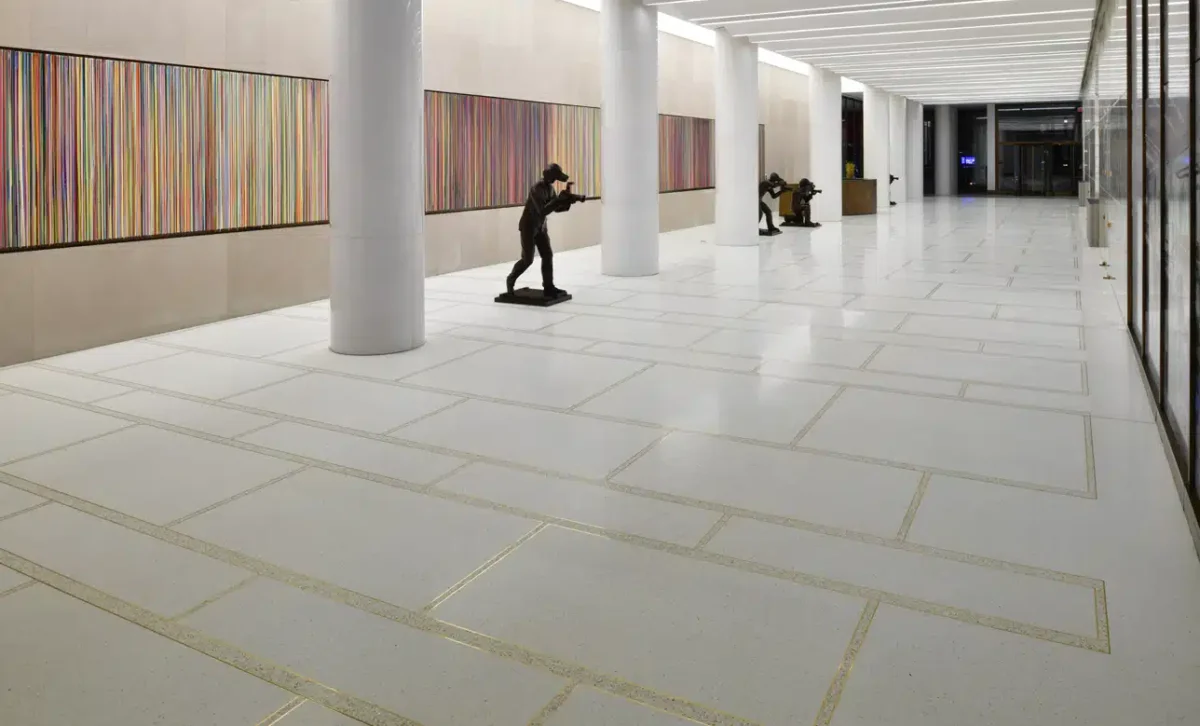
Terrazzo flooring excels in high-traffic commercial and public spaces. Hotel lobbies, luxury retail boutiques, and public landmarks rely on terrazzo floors for their wear resistance and visual impact. These environments demand a surface that withstands constant foot traffic without losing its polish. Terrazzo flooring meets that demand. Architects specify terrazzo as flooring for airport terminals, museums, and corporate headquarters. The material handles heavy loads and resists scratches. Designers value terrazzo floors for their seamless appearance and low maintenance. A terrazzo floor in a hotel lobby keeps its gloss for decades with routine care. Terrazzo installation in these settings requires careful planning. Terrazzo flooring installation crews must control curing conditions and aggregate placement. The finished terrazzo floor becomes a defining feature of the space.
Walls, Countertops, and Facades
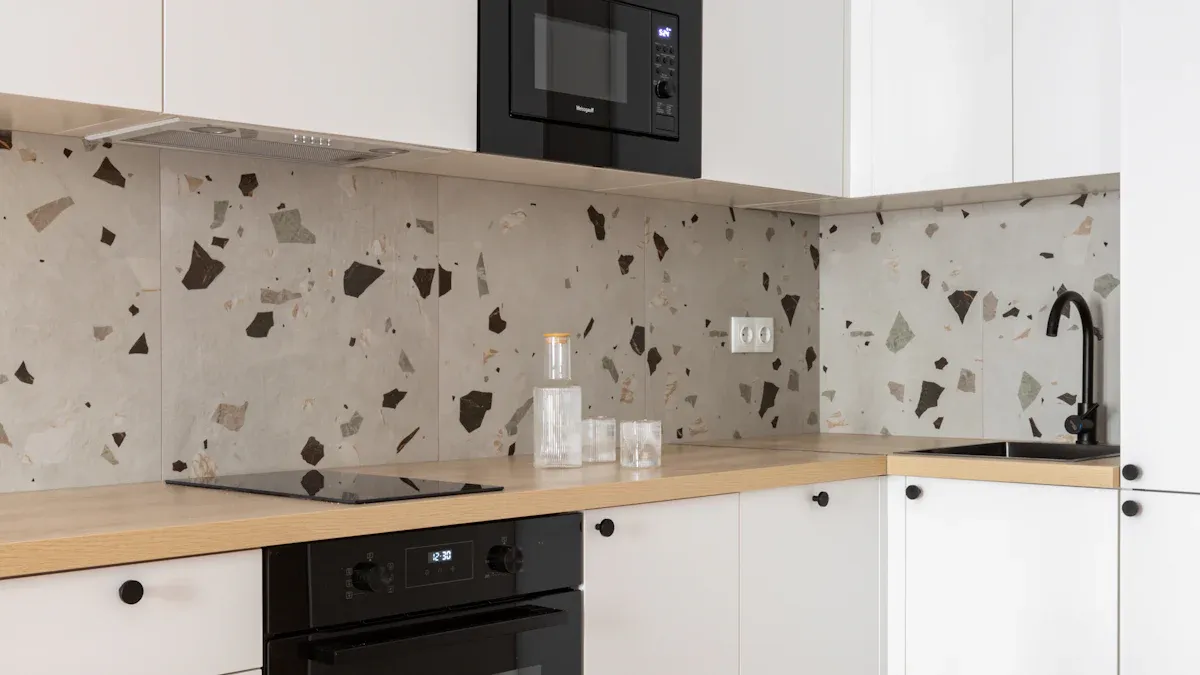
Wall panels, countertops, and exterior facades each demand different terrazzo properties. Interior wall panels use thin, lightweight terrazzo sections. Countertops need a dense, non-porous surface that resists stains and heat. Exterior facades require weather resistance and structural strength. G·ONE’s UHPC Plates provide exceptional durability for facades and demanding applications. These ultra-high-performance concrete panels handle extreme weather without cracking or fading. Designers can pair UHPC Plates with terrazzo for a cohesive look.
Application dictates binder choice, thickness, and finish. Epoxy binders suit interior walls and countertops because they cure fast and allow thin toppings. Cementitious binders work better for exterior facades and heavy-duty flooring. Thickness varies from thin epoxy toppings to thick cementitious systems. Finish ranges from matte to high-gloss depending on the desired effect. G·ONE offers custom-made solutions for tailored colors, aggregate blends, and molds. This flexibility lets designers match terrazzo to any application. Commercial and public spaces benefit from terrazzo that meets both aesthetic and performance goals. The right terrazzo design balances visual appeal with functional requirements.
How to Choose Your Terrazzo Style
Budget, Timeline, and Sustainability
Budget shapes every terrazzo decision. Precast terrazzo carries higher upfront material costs but reduces on-site labor and waste. Site-cast terrazzo lowers material expenses yet demands more skilled installation time. Aggregate rarity drives price significantly. Standard marble chips cost far less than exotic shell or imported glass. Custom molds for mosaic terrazzo add tooling expenses that standard patterns avoid. Architects who define terrazzo specifications early can compare these variables before construction begins.
Timeline considerations follow a similar logic. Precast terrazzo panels typically require 12 to 14 weeks for production after sample approval. Site-cast cementitious terrazzo needs approximately 28 days of curing at room temperature before polishing. Epoxy terrazzo cures overnight and allows fast-track schedules. Terrazzo flooring installation sequencing matters greatly. Crews must coordinate terrazzo work with other trades to avoid damage to finished surfaces. A terrazzo flooring installation in a busy commercial project demands careful phasing.
Sustainability and terrazzo now intersect through measurable standards. Recycled terrazzo incorporates post-consumer glass and post-industrial stone. This approach earns recognition under green building programs.
| LEED Credit Category | Contribution from Recycled Terrazzo | Points |
|---|---|---|
| Material Resources (MR 4.1/4.2) | Incorporates post-consumer glass and post-industrial stone | 2 |
| Regional Materials (MR 5.1/5.2) | Aggregates sourced within 500 miles | 2 |
| Indoor Emitting Materials (EQ 4.1) | Zero-VOC resins satisfy low-emission requirements | 1 |
| Total | 5 |
The manufacturer supplies Environmental Product Declarations and Health Product Declarations for its terrazzo line, which support LEED v4 credit compliance, along with recycled content documentation for material resource credits.
G·ONE embraces a “Small actions, big impact” philosophy. This commitment drives eco-friendly manufacturing across all product lines. Designers who prioritize sustainability and terrazzo performance find recycled options that meet both goals.
From Sample to Specification with G·ONE
The path from concept to specification follows a clear sequence. G·ONE offers tailored consultations that help architects and designers match terrazzo to project requirements. Project samples let teams review aggregate blends, pigment choices, and finish levels in person. Expert engineering support ensures that specifications align with structural and performance needs.
This process begins with a design brief. The G·ONE team reviews application, traffic load, and aesthetic goals. Next, the team prepares custom samples that reflect the proposed terrazzo design. Designers evaluate these samples under actual lighting conditions. Adjustments to aggregate size or matrix color happen at this stage. Once approved, G·ONE produces the specified terrazzo under controlled factory conditions.
The final specification package includes technical data, maintenance guidelines, and installation recommendations. This documentation supports durability and long-term performance. Architects gain confidence that the specified terrazzo will meet both visual and functional expectations. The step-by-step approach turns a broad material category into a precise, project-ready solution. Terrazzo floors specified through this method deliver consistent results across every application.
Terrazzo combines aggregates, binders, and surface treatment into one durable composite. Architects and designers who define terrazzo through composition, binder type, and application gain a reliable design framework. The process moves from aesthetics and performance criteria to application matching, then to budget, timeline, and sustainability review. This repeatable method replaces guesswork with evidence. Project-specific choices outperform trend-driven ones. Terrazzo flooring for a hotel lobby demands different specifications than terrazzo flooring for a retail boutique. Each space sets its own requirements. G·ONE supports this journey with tailored consultations, project samples, and sustainable terrazzo solutions. Their team helps specifiers move from sample to final specification with confidence. Small actions, big impact.
FAQ
How long does terrazzo take to cure?
Curing time depends on the binder. Cementitious terrazzo needs approximately 28 days at room temperature before polishing. Epoxy terrazzo cures overnight and is ready to polish the next day. Project schedules should account for these differences.
Can terrazzo be used outdoors?
Yes. Cementitious terrazzo suits exterior applications because it handles weather and heavy traffic well. Epoxy terrazzo performs best indoors. G·ONE’s UHPC Plates offer exceptional weather resistance for facades and demanding exterior conditions.
What aggregates work in terrazzo?
Common aggregates include granite, marble, quartz, shell, and glass. Aggregate size ranges from fine chips to oversized Venetian aggregates. The aggregate choice drives the visual character of the finished terrazzo surface more than any other decision.
How does terrazzo support sustainable design?
Recycled terrazzo incorporates post-consumer glass and post-industrial stone. This approach earns LEED credits for material resources and indoor air quality. G·ONE follows a “Small actions, big impact” philosophy through eco-friendly manufacturing across all product lines.
What is the difference between precast and site-cast terrazzo?
Precast terrazzo forms in a factory under controlled conditions. This method ensures consistent finish quality and faster installation. Site-cast terrazzo pours in place and allows seamless expanses without visible joints. Each method suits different project priorities.