
How do you select the right green terrazzo tile for a sustainable project? Start with a focused checklist: verified certifications like LEED, high recycled content, low VOCs, design flexibility, and proven durability. These criteria form the basis for a solid specification. Each criterion directly impacts sustainability ratings and longevity. Architects and designers rely on this framework to ensure environmental performance and aesthetic quality. This approach streamlines material selection and aligns with green building goals. These tiles combine recycled aggregates and low-VOC binders for healthier indoor spaces. The following sections unpack each factor in detail, providing practical steps for specifying these tiles.
Key Takeaways
- Check certifications like LEED and Cradle to Cradle to ensure sustainability.
- Choose tiles with high recycled content and low VOCs for better indoor air.
- Match performance needs like slip resistance and strength to your project.
- Request physical samples early to test color and texture under real light.
- Plan for lead times and maintenance to keep floors beautiful for decades.
What Makes Green Terrazzo Tile Sustainable
Composition and Eco-Friendly Benefits
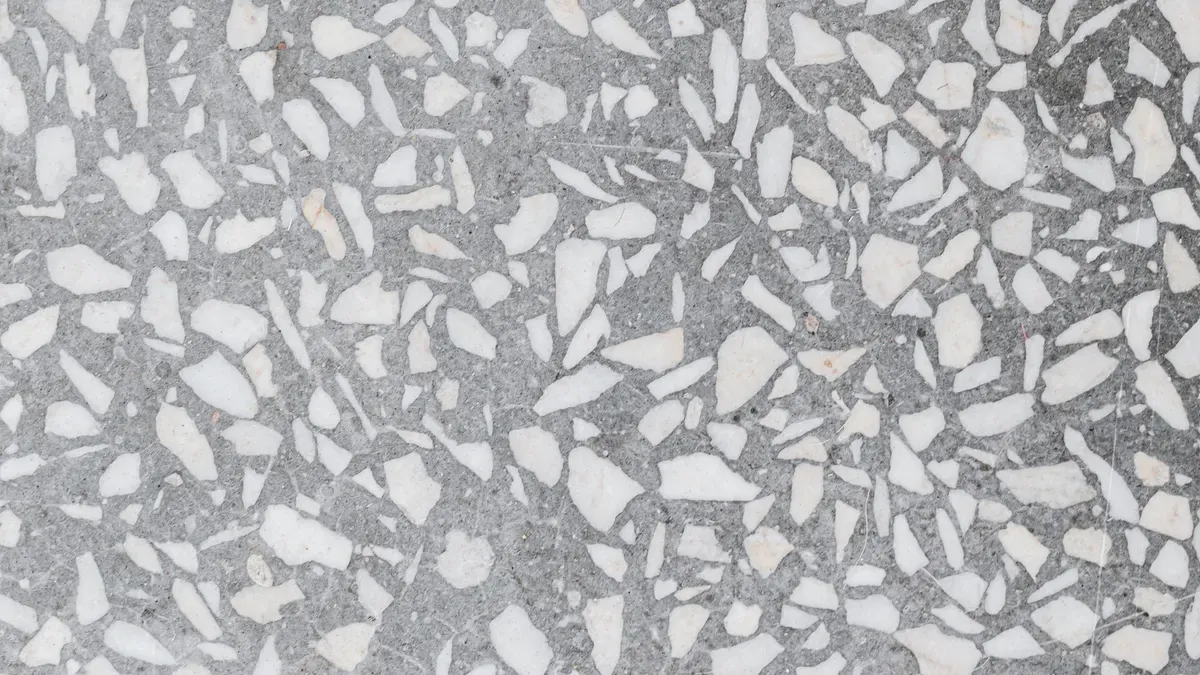
A green terrazzo tile is a precast terrazzo product that replaces virgin materials with recycled aggregates and cement alternatives. Understanding what is terrazzo in its sustainable form means recognizing how terrazzo material composition shifts toward post-consumer and post-industrial waste streams. Manufacturers source aggregates from mixed marble scraps, recycled glass chips, granite, quartz, plastic debris, oyster shell, and salvaged stone. These materials replace quarried virgin stone and reduce landfill waste.
Factory-produced terrazzo tiles offer consistent quality control that site-cast installations cannot match. Precast slabs and tiles cure in controlled environments, which minimizes waste and ensures uniform density. This production method also allows you to specify exact recycled content percentages for your project. The eco-friendly benefits extend beyond waste diversion. Green terrazzo tile reduces the carbon footprint tied to raw material extraction and transport.
Recycled Content and Low-VOC Impact
Recycled content and low volatile organic compound (VOC) binders work together to improve both environmental ratings and indoor air quality. A floor containing 100% recycled glass can contain as much as 75% recycled product by volume. This high recycled content directly supports LEED credits under the Materials and Resources category. The credit is based on the dollar value of the raw material.
| LEED Credit | Recycled Content Requirement | Points Awarded |
|---|---|---|
| MRcr4.1 | 10% recycled content | 1 point |
| MRcr4.2 | Additional 10% (20% total) | 1 additional point (2 points total) |
Low-VOC binders in modern terrazzo systems prevent harmful off-gassing after installation. You protect building occupants from respiratory irritants and unpleasant odors. This matters for schools, hospitals, and offices where indoor air quality affects daily health. Terrazzo floors with low-VOC formulations contribute to a healthier indoor environment without sacrificing durability. When you specify precast terrazzo products with verified recycled content and low-VOC binders, you meet sustainability goals and create safer spaces.
Specification Guide for Architects: Key Criteria
Certifications That Ensure Environmental Performance
You need third-party certifications to verify a product’s sustainability claims. LEED v4 and v4.1 remain the most widely referenced green building rating system in North America. A green terrazzo tile contributes to LEED credits through recycled content, regional materials, and low-emitting materials. Each ton of recycled aggregate you specify diverts waste from landfills and reduces embodied carbon. The Materials and Resources category awards points when you achieve 10% recycled content and an additional point at 20%. Low-VOC binders also support Indoor Environmental Quality credits. Cradle to Cradle Certified offers another rigorous standard. This certification evaluates material health, material reutilization, renewable energy use, water stewardship, and social fairness. Products that achieve Cradle to Cradle Silver or Gold status provide documented proof of safe chemistry and circularity. When you review product documentation, look for Environmental Product Declarations (EPDs) and Health Product Declarations (HPDs). These documents disclose the full life cycle impact and chemical composition of the terrazzo material. Architects who specify certified products simplify the documentation process for project certification. You can confidently allocate points without chasing paperwork at the end of construction. G·ONE‘s terrazzo products undergo rigorous testing and align with these certification frameworks. You receive the technical data you need to support your sustainability narrative. These terrazzo tiles meet the highest standards for environmental performance.
Performance Requirements for Terrazzo Floors
Performance specifications matter just as much as environmental credentials. You must evaluate slip resistance, compressive strength, and stain resistance before selecting a product. For wet areas such as entry foyers, food courts, and toilet facilities, the minimum dynamic coefficient of friction (DCOF) per ANSI A326.3 is 0.42 wet. This threshold ensures safe footing under wet conditions. Precast terrazzo tiles achieve compressive strengths around 14,000 psi (approximately 96.5 MPa). This value far exceeds the requirements for heavy commercial flooring applications. The material also delivers flexural strength of 4,500 psi and tensile strength of 4,800 psi. These properties explain why terrazzo floors exhibit the best crack resistance of any flooring system. Additionally, the water absorption rate reaches only 0.56%. This resists moisture penetration and staining. The material density of 2.62 g/cm³ contributes to its durability and long service life.
You also need to choose between cement-based and epoxy-based terrazzo. Each binder system offers distinct advantages for interior use. A terrazzo floor performs differently depending on the binder you select.
| Performance Factor | Cement-Based Terrazzo | Epoxy-Based Terrazzo |
|---|---|---|
| Thickness | Thicker system including setting bed | As thin as 8.0 mm after grinding |
| Curing Time | Up to 7 days | Approximately 24 hours |
| Weight | Heavier; must factor into structural design | Lighter; reduces load concerns |
| Crack Resistance | Susceptible to shrinkage cracking during drying | Dimensionally stable; less susceptible to cracking |
| Stain Resistance | Requires regular sealing | Less porous finish; better stain resistance |
| Moisture Tolerance | Good at handling moisture vapor transmission | Few concerns on moisture vapor transmission |
Cement-based terrazzo excels in impact and point load resistance. It handles steam cleaning and heavy traffic well. Epoxy-based terrazzo offers a thinner profile and faster installation. It also achieves a higher gloss finish. Your project requirements determine the right choice. G·ONE provides both systems and supports you with technical specifications including dimensional tolerances and stone and surface specifications. Request product data sheets early to verify that the selected tile meets your specific performance requirements for terrazzo floors. This specification guide for architectsprovides the framework you need to select the right terrazzo material for your project. Always test physical samples against your project’s traffic loads and moisture conditions. A proper specification accounts for every variable from installation method to long-term maintenance.
Terrazzo Tiles in Architectural Design
Color, Pattern, and Customization
Terrazzo tiles in architectural design offer unmatched creative freedom. You control pigment selection, aggregate selection, and custom molds to achieve a distinct visual identity. Choose from recycled glass chips, marble fragments, or porcelain to create a signature blend. The terrazzo material accepts both bold and subtle color palettes. A monochromatic scheme with fine aggregates produces a refined, understated floor. A mix of large and small chips in contrasting hues delivers dramatic visual energy. Surface finishing also shapes the final appearance. A polished finish reflects light and deepens color saturation. A honed or matte finish offers a softer, more tactile surface. These finish options let you tailor the tile to your project’s mood and function.
Balancing Aesthetics with Warmth
Terrazzo can appear visually cold because of its stone-based composition and glossy surface. You can offset this effect by pairing terrazzo tiles with materials that introduce warmth and texture. Consider these strategies:
- Pair green terrazzo tiles with washed oak furniture to add warmth and softness.
- Incorporate wrought iron details for rustic, cozy character.
- Use natural fabrics to make the space feel curated yet comfortable.
- Place plants and herbs around the terrazzo flooring so the greens complement and enhance each other.
These combinations create balance. The cool tones of the terrazzo floor ground the space. The warm elements soften the overall impression. Architects who test these pairings early avoid costly design revisions later. Nothing beats seeing the material onsite. Order physical samples and view them under your project’s actual lighting conditions. Natural daylight reveals aggregate colors differently than artificial light. A sample viewed in the morning may look entirely different by afternoon. This step ensures your vision translates accurately from concept to installation.
Practical Factors for Specifying Terrazzo Tiles
Lead Times, Pricing, and Sampling
True terrazzo typically requires a lead time that varies by manufacturer; consult with your supplier for accurate timelines. Standard tile pricing varies; request a quote from suppliers. These figures help you build accurate project timelines and budgets. You should request physical samples early in the design phase. Custom sample production involves hand-pouring and grinding, which takes about two weeks. Stocked samples offer immediate shipment for client meetings while custom samples are produced.
| Aspect | Details |
|---|---|
| Custom sample production | Made to order; poured and ground by hand; typically takes about 2 weeks |
| Stocked samples | Limited inventory of popular samples available for immediate shipment |
| Ordering channel | Samples available via Material Bank for overnight delivery |
| Specifier inputs – resin | Epoxy tinted with liquid dispersion; color matching to major paint companies |
| Specifier inputs – aggregate | Selection from natural marble, recycled glass, porcelain, and oyster shells |
| Design session | Specifiers schedule a design session for custom mix development |
You can request samples through Material Bank for overnight delivery. These samples let your design team examine color accuracy, texture, surface finish, and thickness before finalizing project specifications. Architects who order samples early avoid costly delays later.
Installation and Maintenance Best Practices
Proper installation ensures your terrazzo floors perform as specified. Substrate flatness must be maintained; self-leveling compound may be required if irregularities are present. For large-format tiles, use a flexible adhesive and apply the double-buttering method. These installation requirements prevent air pockets and ensure proper adhesion.
Follow these steps for successful installation:
- Prepare the subfloor: ensure it is even, in good condition, and fully cured.
- Apply high-quality thin-set mortar evenly using a trowel.
- Wet the back of each tile with a sponge, then apply thin-set to the back.
- Press tiles into place using only the palm of your hand.
- Place tiles in small sections at a time.
- Wipe off residual thin-set immediately.
- Allow thin-set to cure before sealing and grouting.
Maintenance preserves the low-VOC properties of your terrazzo floors over time. Use water-based sealers, which offer high performance with zero VOC levels. Apply only sealers recommended for terrazzo; never use all-purpose sealers. Clean the polished floor with fresh water and neutral cleaner, let it dry completely, then apply thin coats of sealer using a microfiber pad. New terrazzo floors require two or more coats of sealer, providing good sheen for about 45 to 60 days. For high-traffic areas, reapply 1–2 times per year with 2–3 coats. Keep dust and dirt off the floor through routine dust mopping. Use floor mats inside entryways to trap loose particles. Avoid harsh chemicals, acidic or alkaline substances such as bleach, ammonia, and vinegar. A neutral cleaner with microbial enzymes breaks down contaminants without leaving residue. These installation considerations and maintenance practices extend the life of your flooring investment.
Real‑World Applications and Case Studies
Commercial and Hospitality Projects
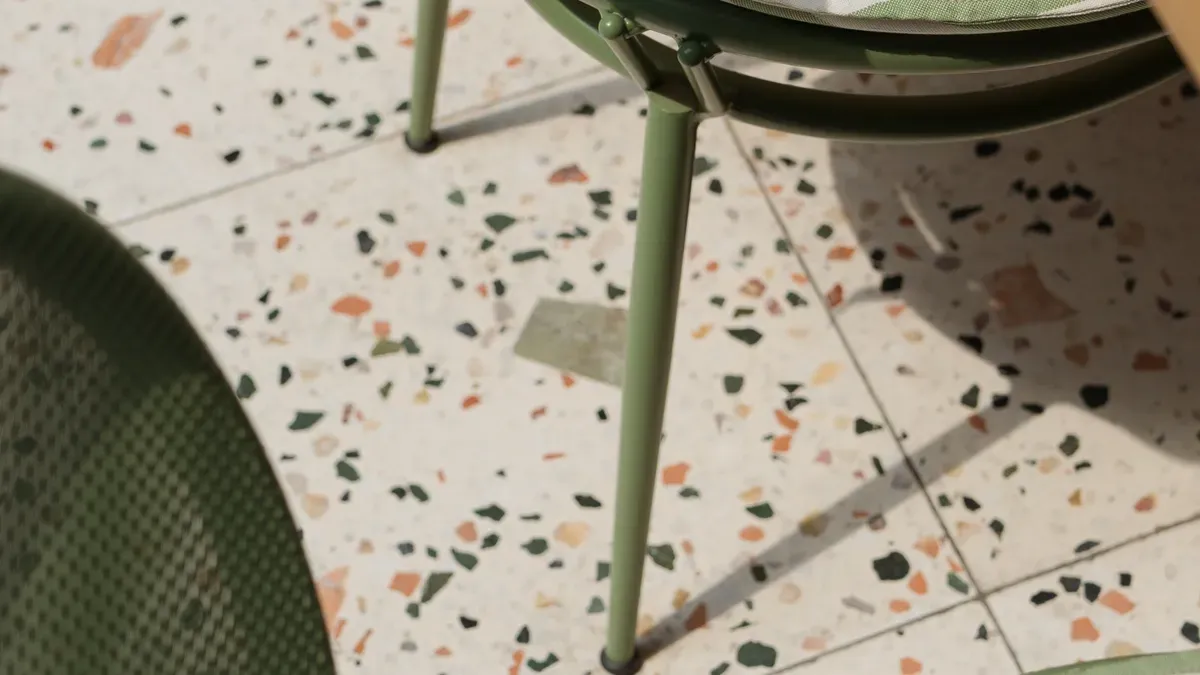
Real projects prove the value of sustainable materials in demanding environments. Hotel lobbies receive heavy foot traffic from check-in queues, luggage carts, and daily cleaning routines. One hospital installation demonstrates what you can expect. The terrazzo floors remained structurally intact and visually clean for decades. Maintenance involved only daily dust mopping and damp mopping. Compare this to commercial-grade carpet tiles. Carpet wears out faster in high-traffic areas. It traps moisture and stains. Luxury vinyl tile handles high foot traffic and resists moisture, but terrazzo offers superior longevity. A properly installed terrazzo floor can last for decades.
Restaurant kitchens demand floors that withstand frequent cleaning with commercial disinfectants. Epoxy terrazzo meets this challenge. Its smooth surface makes cleaning and disinfection easier. It reduces the chance for pathogens to remain on the floor. The seamless finish resists stains and supports hygienic environments. This material also reduces reliance on harsh cleaning chemicals. You create a healthier indoor environment. The durability of terrazzo reduces replacement frequency. Fewer replacements mean less waste and a lower carbon footprint over the building’s life.
G·ONE’s Sustainable Terrazzo Installations
G·ONE delivers these benefits through its recycled terrazzo line, UHPC panels, and custom solutions. These materials serve high-traffic spaces globally. Hotel lobbies, luxury retail boutiques, and public landmarks all feature G·ONE’s terrazzo floors. Each installation balances aesthetic impact with sustainability. You specify exact recycled content percentages to meet LEED targets. You choose aggregate blends that create a unique visual identity. The material’s compressive strength and stain resistance ensure long-term performance.
Commercial floor cleaning services can safely clean many flooring types, including terrazzo, tile, and natural stone.
This fact matters for maintenance planning. You can specify routine cleaning procedures without special equipment or harsh chemicals. The smooth surface of terrazzo tiles makes daily upkeep simple. G·ONE provides technical specifications to support your project documentation. You receive the data needed for LEED submissions and maintenance manuals.
These projects demonstrate that sustainable design does not require compromise. You achieve durability that spans decades. You achieve aesthetics that define a space. The green terrazzo tile you specify meets green building goals without sacrificing either quality. The applications and layouts vary, but the performance remains consistent. Specify G·ONE and you build for the long term.
Follow these four steps for a successful specification.
- Verify certifications and recycled content percentages to earn LEED credits.
- Align performance with project needs, such as slip resistance for wet areas.
- Request physical samples to test color and texture under actual lighting.
- Account for lead times and budget early in the planning phase.
Choose a manufacturer offering both customization and sustainability. G·ONE delivers tailored terrazzo solutions without compromising environmental goals. The tile meets your design vision and green building targets. Architects benefit from a partner who understands both aesthetics and performance. Remember: small actions create a big impact.
FAQ
What Is Terrazzo?
Green terrazzo tile combines recycled aggregates with low-VOC binders. This precast material provides high compressive strength and supports LEED credits. You gain durability and design flexibility for sustainable projects.
How Are Terrazzo Floors Made?
Manufacturers cast precast tiles in controlled environments. They use recycled glass and marble with cement alternatives. The process minimizes waste and ensures uniform density. You specify exact recycled content percentages for your project.
How Long Does a Terrazzo Floor Last?
A properly installed terrazzo floor lasts for decades. This longevity reduces replacement frequency and lowers the carbon footprint of your building project.
Can You Install Terrazzo in Wet Areas?
Yes. The material achieves a DCOF of 0.42 wet per ANSI A326.3. This ensures safe footing in entry foyers, food courts, and restrooms where moisture exists.
How Do You Maintain Terrazzo Floors?
Clean with pH-neutral products. Avoid bleach, ammonia, and vinegar. Dust mop daily. Reseal high-traffic areas one to two times per year. This preserves the finish and low-VOC properties.