
A specification that performs in a luxury retail flagship or hotel lobby shares one trait: every choice traces to documented evidence. The right terrazzo pavers pair wear resistance with a format suited to the traffic, a code-compliant slip rating, and a cost model that holds over the life of the space. Four decision filters separate a durable specification from a compromised one: performance, application fit, compliance, and cost. You examine each through specification-ready criteria. The comparison covers precast pavers alongside adjacent options such as porcelain tile that mimics aggregate patterns, showing where each fits best. G·ONE supplies precast and UHPC concrete systems across these categories, so you compare options by project fit, not preference.

Key Takeaways
- Use four filters in order: performance, application fit, compliance, and cost.
- Match the paver to the traffic: precast terrazzo handles point loads; porcelain suits service areas.
- Check slip, fire, and ADA compliance with test data for the finished surface.
- Model lifecycle cost, not just upfront price, to save money over time.
- Request samples and documents early to avoid late changes and redesigns.
Terrazzo Selection Criteria for Luxury Spaces
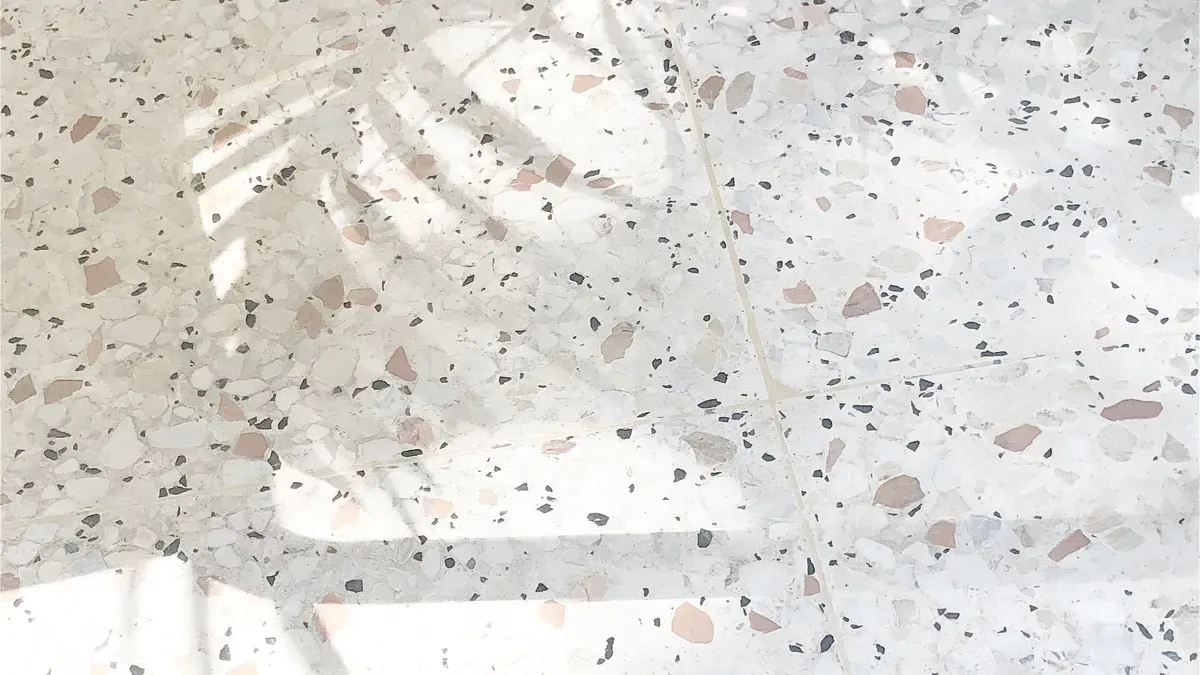
Performance, Fit, Compliance, Cost
You apply the four filters in a fixed order, because each one narrows the field for the next. Performance comes first: abrasion resistance, slip rating, and load capacity decide whether a surface can survive a flagship store or a lobby at all. Application fit comes second, since traffic patterns and format needs vary between a boutique entrance and a hotel arrival zone. Compliance follows, covering slip classifications, fire ratings, and accessibility transitions. Cost closes the sequence, and you model it over the full service life rather than the purchase order.
The order matters in luxury settings. A hotel lobby never closes, so wear and maintenance costs compound daily. A retail flagship concentrates point loads on small floor areas, which stresses edge quality and surface hardness. Skipping straight to price reverses the logic and usually forces a redesign later.
Building a Shortlist
Start with the client’s aesthetic brief, then translate it into material candidates before any technical review. Pull reference boards for color family, aggregate scale, and finish sheen. Match each direction to a family: precast terrazzo pavers, poured-in-place terrazzo, or terrazzo-look porcelain tile. This step keeps the shortlist visual and fast.
Next, test each candidate against the four filters in a simple matrix. List the performance targets, the application demands, the compliance checkpoints, and a lifecycle cost band. A candidate that fails any filter leaves the list. G·ONE supports this stage with samples, so you can compare aggregate blends and edge profiles against the client’s palette. The result is a shortlist of three to five options, each already screened for technical viability. Your technical review then confirms details instead of starting from scratch. This approach also protects the architectural intent, because every option on the list can actually perform.
Technical Performance of Terrazzo Pavers
Abrasion, Slip, and Load Ratings
You judge a floor surface on three measurable fronts: how fast it wears, how well it grips, and how much load it carries. Each material family answers these differently.
| Criterion | Precast terrazzo pavers | Poured-in-place terrazzo | Terrazzo look porcelain tile |
|---|---|---|---|
| Abrasion | Dense cementitious matrix with hard aggregate; high wear resistance under point loads | Good wear performance; cure depends on site conditions | Very hard glazed or full-body surface; stain- and wear-resistant porcelain |
| Slip | Tunable through finish and aggregate; confirm rating per zone | Finish applied on site; rating varies by contractor | Factory-controlled finish; consistent rating batch to batch |
| Load | Thickness set at casting; strong under concentrated loads | Bonded to substrate; performance tied to the slab | Thin profile; relies on substrate and adhesive system |
Precast pavers fit best where point loads concentrate, such as display plinths and checkout zones. Poured-in-place terrazzo suits large uninterrupted fields. Porcelain fits where a thin, factory-finished surface is the priority.
Aggregate size drives paver thickness. Larger chips need a deeper matrix to hold them, so the paver grows. Standard-size aggregates are typical for epoxy terrazzo floors, which keeps sections moderate.
G·ONE documents engineered wear resistance and long-term weatherability for its precast systems. That evidence lets you compare claims rather than assume them.
Maintenance and Long-Term Wear
Daily cleaning decides how a lobby floor looks after five years. Sealed precast pavers take neutral cleaner and periodic re-sealing. Poured-in-place floors need the same care plus attention to joints. Porcelain needs little beyond routine mopping, which explains its appeal in back-of-house zones.
Repair strategy separates the options. You can lift and replace a single damaged paver without touching its neighbors. Poured floors demand patching that must match the surrounding cure. Porcelain chips are hard to disguise, though replacement is straightforward.
Specify the maintenance regime in the submittal package. State the cleaning chemistry, the re-sealing interval, and the replacement stock you hold on site. This step protects the client’s investment and gives the facilities team a clear plan.
G·ONE’s precast terrazzo and UHPC concrete systems carry documented strength and durability data. Cementitious terrazzo tiles from the same family share that performance profile. Together they give you a defensible basis for long-term wear claims. The durability story rests on evidence, not marketing language.
Application Fit for Retail and Hotel Pavers

Traffic Patterns and Design Flexibility
Retail floors concentrate stress. Shoppers cluster at display plinths and checkout counters, so point loads land on small areas again and again. Hotel lobbies spread wear across the whole floor. Guests arrive in mixed footwear, and luggage carts roll through continuously. You match the material to the pattern, not the other way around.
Format choice carries the design intent. Precast terrazzo pavers, slabs, steps, and caps let you hold one visual language from the entrance to the elevator lobby. Square edges give crisp joints and clean transitions. G·ONE supports custom colors and sizes, aggregate blends, and CNC cutting with edge processing, so the format follows the drawing. These pavers also suit high-traffic projects where replacement stock must match the original run.
Acoustics, Comfort, and Tile Alternatives
Hard surfaces reflect sound. A stone-like floor in a lobby amplifies footsteps and cart wheels, so specify an underlayment or acoustic backing where noise matters. Underfoot comfort follows the same logic. Thicker pavers on a resilient setting bed feel warmer and quieter than a thin bonded surface.
Terrazzo look porcelain tile earns its place where its fit is strongest. The practicality of porcelain shows in back-of-house corridors, stockrooms, and service zones, where a thin factory-finished tile keeps installation simple. For the public floor, precast terrazzo and architectural concrete systems deliver the depth and repairability that luxury spaces demand. Concrete architectural pavers and hydraulically pressed concrete pavers offer further options for exterior approaches and plazas. Weigh each family against the zone it serves, and the specification writes itself.
Regulatory Compliance for Terrazzo and Tile
Safety Codes, Fire Ratings, and ADA
Compliance review starts with the floor’s slip performance. You confirm the slip-resistance classification for each zone against the local building code and the project’s insurance requirements. Entrance areas and wet zones demand a higher rating than dry display floors. Request test data for the finished surface, not the raw material.
Fire ratings come next. You verify the surface burning characteristics of the terrazzo and the tile assembly, and you confirm the classification against the occupancy requirements of the space. Interior finishes in a hotel lobby or retail flagship must satisfy the code official who reviews the submittal.
Accessibility closes the safety review. You detail level transitions at every threshold, and you specify detectable warning ada pavers at stair edges, platform edges, and curb ramps. Truncated domes must meet the ADA Standards for Accessible Design for size, spacing, and contrast. Confirm local amendments, since some jurisdictions add requirements beyond the federal baseline.
Documentation for Submittals
A complete submittal package protects the schedule. You request product data sheets, slip test reports, fire test reports, and shop drawings that show edge profiles and transition details. Add maintenance instructions and a replacement stock plan.
Environmental Product Declarations belong in the package too. G·ONE can provide EPDs for its architectural terrazzo and concrete systems, so the project team holds third-party environmental data during review. These documents support green building credits and give the architect a defensible record.
Build a compliance checklist before you release the specification. Mark each item as verified, pending, or missing. This habit catches gaps early, when samples and test reports are still easy to obtain.
Cost Analysis and the Modern Terrazzo Tile Collection
Upfront Cost Drivers
You control upfront cost through five levers. Paver format and thickness set the raw material volume, and larger formats with greater sizes and thicknesses raise the unit price. Aggregate selection follows: rare or custom blends cost more than standard chips. Edge processing adds fabrication time, especially for square edges and CNC profiles. Customization of color and mold work carries a one-time tooling charge. Installation method closes the list, since a thick paver on a setting bed demands more labor than a thin bonded surface.
Compare quotes on equal terms. Ask each supplier to price the same format, thickness, and edge detail. This step exposes hidden differences in fabrication and freight. G·ONE provides samples and quotations against your drawing, so the numbers reflect the actual specification.
Lifecycle Value with G·ONE
Lifecycle cost tells the fuller story. Maintenance, refinishing intervals, and replacement rates decide the real expense over a decade of operation. A repairable floor avoids wholesale replacement, and that saving compounds. EPD-backed environmental data supports value engineering, because you can weigh documented impact against cost during review.
The modern terrazzo tile collection gives you a starting point for budget planning. Recycled terrazzo options lower material impact without changing the visual language. Pair these with technical guidance from G·ONE, and you can model cost across the full service life. The modern terrazzo tile collection also pairs well with a porcelain tile collection where a thin factory finish suits service zones. Specify concrete pavers for exterior approaches, and let the concrete and terrazzo families share one modern design language. Request samples early, and the cost model stays grounded in real products.
Final Recommendations for Terrazzo Pavers
A Step-by-Step Selection Path
You now hold the four filters and the evidence behind each one. Run them in sequence on every project, and the specification builds itself.
- Define performance targets. Set abrasion, slip, and load requirements for each zone before you review any product.
- Match application fit. Map traffic patterns and format needs to the right material family.
- Verify compliance. Confirm slip classifications, fire ratings, and ADA transitions against the local code.
- Model lifecycle cost. Compare maintenance, refinishing, and replacement rates over the full service life.
Each step feeds the next. A performance target shapes the shortlist, the shortlist shapes the compliance review, and the compliance review shapes the cost model. Skip a step, and the gap surfaces later as a redesign or a change order.
Matching Paver Format to Project Type
Format follows function. Use pavers and slabs for lobby floors, where large fields carry continuous traffic and demand a consistent visual run. Specify steps and caps at transitions, so thresholds, stair nosings, and level changes hold one material language. Reserve mosaic terrazzo for feature zones, where intricate pattern work draws the eye at an entrance or a branded display area.
Exterior approaches call for concrete pavers, which carry the same design intent into plazas and entry courts. Pair them with interior precast systems, and the project reads as one composition from the street to the reception desk. A thin porcelain tile suits service corridors, where a factory finish keeps installation simple. Weigh each format against its zone, and the drawing stays coherent.
G·ONE supports this path with consultation, project samples, and engineering support. Request samples early, so the client approves aggregate blends and edge profiles before fabrication begins. Bring the engineering team into the compliance review, and the submittal package closes without gaps. This support turns the selection path into a repeatable process for your next retail or hotel project.
The four filters interlock. Performance sets the bar, application fit narrows the field, compliance confirms the choice, and lifecycle cost justifies it. Retail floors stress point loads, and hotel lobbies spread wear across every hour of operation. Each filter answers a different demand.
Apply the step-by-step path on your next project. Request samples and technical documentation early, while the design is still flexible. Early evidence prevents late changes.
Specify terrazzo pavers with confidence. G·ONE stands ready as a resource for EPDs, custom colors and aggregate blends, and engineering support. These pavers reward a careful specification for years.
FAQ
Which terrazzo option suits a hotel lobby with continuous traffic?
Precast terrazzo pavers fit best here. They resist concentrated loads, allow single-unit replacement, and hold one visual language from entrance to elevator. Poured-in-place terrazzo suits large uninterrupted fields. Porcelain tile works well in service corridors, where a thin factory finish keeps installation simple.
How do you confirm slip performance before you specify?
Request test data for the finished surface, not the raw material. Match the slip-resistance classification to each zone and to the local code. Entrance areas and wet zones need a higher rating than dry display floors. Verify the numbers during the compliance review, before you release the specification.
What documentation should accompany a terrazzo submittal?
Ask for product data sheets, slip and fire test reports, shop drawings with edge and transition details, maintenance instructions, and a replacement stock plan. Include Environmental Product Declarations. G·ONE can provide EPDs for its architectural terrazzo and concrete systems, which supports green building credits and gives you a defensible record.
Where does porcelain tile fit in a luxury retail project?
Porcelain earns its place in back-of-house corridors, stockrooms, and service zones. Its factory-controlled finish stays consistent batch to batch, and routine mopping keeps it clean. For the public sales floor, precast terrazzo pavers deliver the depth, repairability, and design continuity that a flagship demands.
How do you keep costs predictable across a terrazzo specification?
Price every supplier on the same format, thickness, and edge detail. That step exposes hidden differences in fabrication and freight. Then model lifecycle cost: maintenance, refinishing intervals, and replacement rates over the full service life. Request samples and quotations early, while the design stays flexible.