
Imagine specifying flooring for a landmark lobby project. Visual impact, durability, and installation efficiency must converge in one material while the schedule tightens. That pressure defines the specification challenge for architects and designers.
How do you choose the right large format terrazzo tile without compromising design intent or performance? The global market for terrazzo flooring, valued at USD 31.26 billion in 2024 with a 5.83% projected CAGR, makes informed decisions more critical than ever.
This guide distills the entire selection process—size, thickness, finish, and application—into a practical framework. G·ONE‘s expertise in large format tile manufacturing informs the guidance, helping you specify with confidence.
Key Takeaways
- Choose large terrazzo tiles (24×24 inches or bigger) to reduce grout lines and create a seamless look.
- Match tile thickness to your project’s needs: epoxy terrazzo is 3/8 inch, cement terrazzo is 1/2 to 1 inch.
- Select finishes like polished for shine or honed for slip resistance, based on the space.
- Prepare the substrate carefully and follow expansion joint guidelines for a successful installation.
- Maintain terrazzo with daily sweeping, weekly mopping, and annual stripping to keep it beautiful for decades.
What Is Large Format Terrazzo Tile?
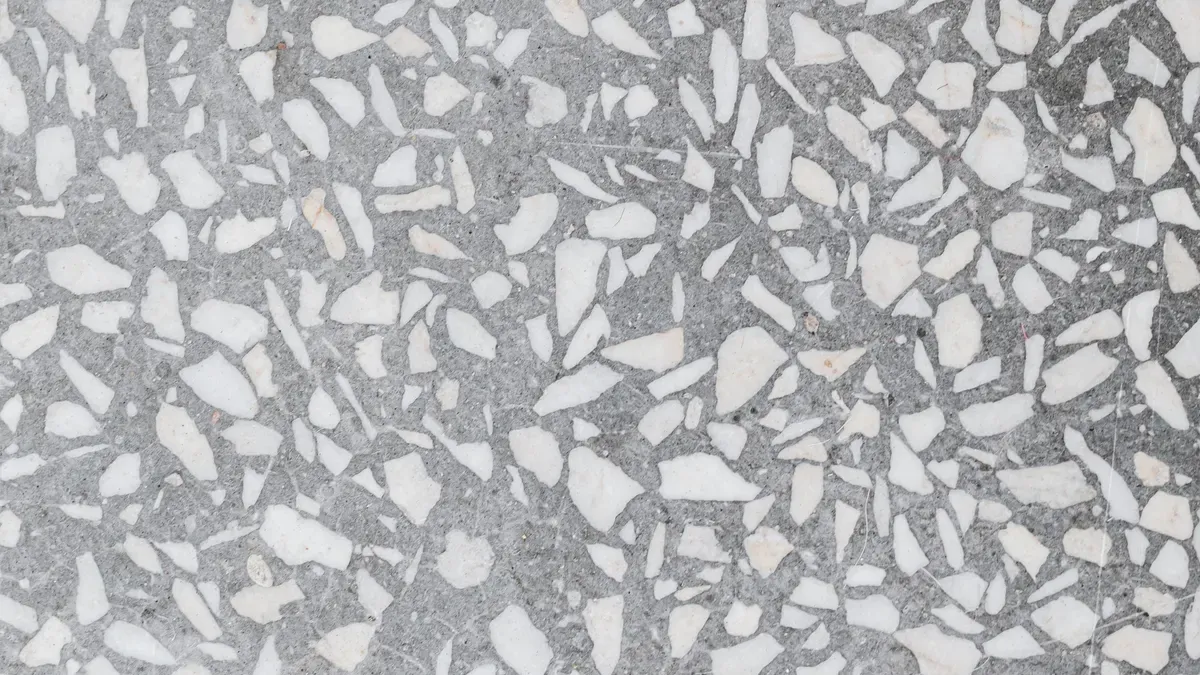
Large format terrazzo tile means terrazzo floor tiles measuring 24 inches by 24 inches and above. These products arrive as individual tiles or large-format slabs. The terrazzo material composition matches poured-in-place systems. G·ONE produces regular terrazzo, recycled terrazzo, mosaic terrazzo, and UHPC plates.
Definition and Key Characteristics
Authentic terrazzo material composition starts with the same mixture used for poured terrazzo floors. The production process follows a clear sequence:
- Marble or glass aggregate binds within a cementitious or epoxy matrix.
- Producers cast the mixture into a tile format.
- The cast tiles cure completely.
- Producers grind and polish the cured tiles so the cut face of the aggregate becomes the finished surface.
- They then apply a natural polish to the hard stone.
This process makes terrazzo tiles genuine stone, not imitation. Factory-produced terrazzo tiles offer a dense surface with high resistance to staining and abrasion. The result lasts for the life of the building. Terrazzo tiles and poured terrazzo share the same material logic. Tiles, however, give you factory precision and faster installation.
Benefits for Modern Projects
Large size floor tiles create fewer grout lines. Oversized tiles reduce joints and produce a nearly seamless plane. That visual flow matches a poured-in-place aesthetic without the onsite complexity.
Factory production also saves schedule time. Unlike poured systems, these tiles require no grinding or polishing at the job site. A rapid-setting adhesive allows foot traffic within 24 hours. This speed matters for commercial interiors and hospitality renovations.
Design flexibility remains a core advantage. You can select standard lines or custom colors, aggregate blends, and mold shapes. G·ONE’s custom-made solutions adapt the tile to your exact palette and pattern. The result is a unique surface for lobbies, retail boutiques, or residential spaces.
With 24-inch and above formats, this size provides structural presence. A large format terrazzo tile performs well under heavy foot traffic while delivering the refined look of authentic terrazzo flooring. When you balance durability, aesthetics, and installation efficiency, these tiles outperform many alternatives.
A Specification Guide for Architects: Selection Criteria
This specification guide for architects breaks down the two decisions that shape every terrazzo installation: size and thickness, and performance. Get these right, and your terrazzo floors will meet both design intent and building code.
Choosing Size and Thickness
You start by matching tile size to the scale of your space. Common formats include 30×30 cm, 40×40 cm, 50×50 cm, and 60×60 cm. Larger rooms often call for bigger formats. A 60×60 cm terrazzo floor tile reduces grout lines and creates a more seamless visual field. Smaller formats suit intricate patterns or spaces with many cuts.
Thickness depends on the terrazzo system. Epoxy terrazzo typically measures 3/8 inch, plus setting material. The overall installed height reaches about 1/2 inch. Cement terrazzo ranges from 1/2 inch to 1 inch, plus setting material. A bonded cement terrazzo system can reach 1.75 to 2.25 inches overall. A sand cushion system approaches 3 inches. These differences affect substrate preparation, transition heights, and load planning.
The table below summarizes common large format options and their thickness ranges.
| Large Size Formats | Thickness Range |
|---|---|
| 120×60 cm | 2–4 cm |
| 100×100 cm | 2–4 cm |
| 120×120 cm | 2–4 cm |
| 80×80 cm | 2–4 cm |
| 90×90 cm | 2–4 cm |
When you select the right size and thickness, you balance visual scale with structural needs. A 120×120 cm tile size works well in open lobbies. A 30×30 cm tile size fits restrooms or detailed border work. Your tile size and thickness choices also influence adhesive selection and expansion joint layout.
Meeting Performance Requirements for Terrazzo Floors
Performance requirements for terrazzo floors center on three criteria: wear resistance, slip resistance, and load-bearing capacity. High-traffic areas demand all three.
Wear resistance determines how well the surface handles constant foot traffic. Terrazzo floor tiles made with hard marble or glass aggregate resist abrasion for decades. The dense matrix prevents surface degradation in entrances, corridors, and shared spaces.
Slip resistance protects building occupants. You specify a finish that meets the required coefficient of friction for your application. Polished surfaces offer a different slip profile than honed or matte finishes. Choose based on location and local building codes.
Load-bearing capacity matters for commercial and institutional projects. A terrazzo floor tile must support expected loads without cracking or deflecting. Substrate condition, adhesive type, and tile thickness all contribute to structural performance.
Epoxy terrazzo at 3/8 inch suits most commercial projects. Installers trowel this thinset system by hand. It performs well in high-traffic commercial environments because of its seamless, durable, and long-lasting properties. For heavier loads or traditional aesthetics, cement terrazzo at greater thickness provides additional structural depth.
G·ONE supports your specification with engineering support and technical specifications. Their team provides performance data, project samples, and guidance on meeting local codes. This support ensures your terrazzo flooring performs as specified for the life of the building.
Design Flexibility in Terrazzo Tiles for Architectural Design
Color, Pattern, and Aggregate Options
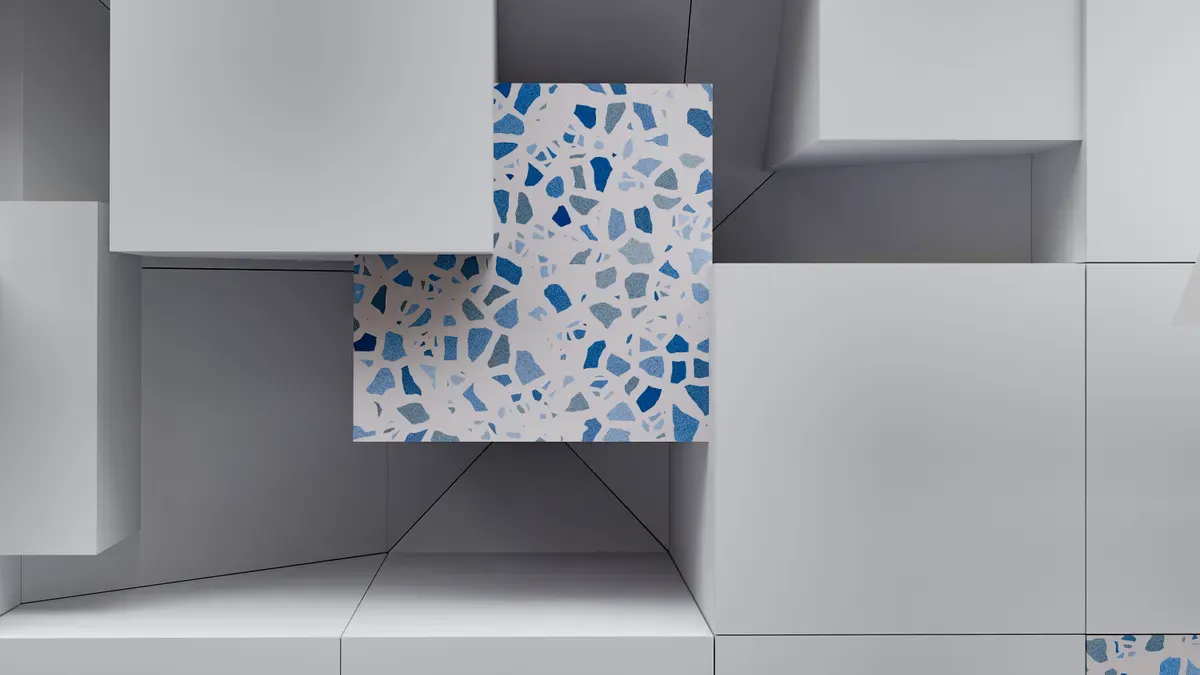
Color and pattern turn a floor into a design statement. Terrazzo tiles in architectural design give you control over every visual variable. You can specify standard prepared formulas or request full custom color matching. Submit a physical sample or a color deck number, and the manufacturer formulates the match for approval. Epoxy binders accept any tint, from neutral earth tones to vivid blues and greens. G·ONE offers custom-made solutions for tailored colors, aggregate blends, and molds. This approach embeds your project’s identity directly into the surface.
Aggregate choice shapes the texture and light response. Marble chips deliver the broadest color range and blend well with resin. Granite, limestone, onyx, and agate can also be crushed into chips. Glass chips add sparkle and come in clear, cobalt blue, amber, or green. Mother of pearl, shell, metal, and mirror fragments produce exotic accents. Recycled glass aggregate supports sustainability as well. For an authentic terrazzo surface, maintain at least 70 percent chip density on the finished face. In dark matrices, limit clear or light-colored glass to a design minimum. Glass aggregate may fracture under certain conditions.
Chip size changes the visual rhythm. Standard mixes use #1 and #2 chips. Venetian styles rely on larger #3 through #7 chips for a bolder, fractured look. Palladiana styles use broken stone pieces for dramatic graphic effects. Aggregate shape matters too. Jaw-crushed chips appear elongated and angular. Cone-crushed chips read rounder and more uniform. You can blend multiple aggregates by color and size. Each ratio totals 100 percent. Warm earthy palettes now dominate residential and hospitality projects. Think cream with terracotta chips, sand with ochre and blush aggregate. Custom samples let you approve the resin color, aggregate blend, and finish before production begins.
Finish Choices and Visual Impact
Finish selection determines the floor’s personality and performance. Consider the visual difference:
| Finish | Visual Effect |
|---|---|
| Polished | High-gloss, mirror-like look that reflects and spreads light. |
| Honed | Low-sheen, matte look with a more relaxed, understated feel. |
A honed finish feels comfortable underfoot. It looks more subdued than a polished surface. Polished surfaces offer a bright, open atmosphere. They also require regular maintenance to hold their gloss. If your space demands safety, choose matte or add an anti-slip treatment.
Matte finishes provide more traction underfoot. This quality makes them ideal for high-traffic areas and wet environments. Anti-slip sealants can further reduce slipperiness when moisture is present. Epoxy terrazzo performs well in high-moisture spaces. Its seamless, impermeable surface resists moisture, staining, and microbial growth. In bathrooms, kitchens, and pool surrounds, a lower-gloss finish balances safety with aesthetics.
Large-format terrazzo tiles now move beyond floors. You can specify them for walls, stair treads, reception desks, and kitchen islands. The reduced grout lines create a cleaner, smoother visual field. Rooms feel larger. You can also pair terrazzo with stone-look or marble-look surfaces. This builds a layered material palette. The trend appears prominently in luxury residences, boutique hotels, and fine dining restaurants. The pattern becomes a defining architectural feature rather than a simple floor covering.
Designers appreciate the range of colors and aggregate blends available. Architects value the combination of durability and design freedom. Terrazzo lasts for decades when maintained properly. Before ordering, request physical samples and engineering details. Confirm the right format, finish, and aggregate blend for your traffic conditions. With proper specification, these surfaces deliver a vibrant, unique look that endures.
Installation and Maintenance
Installation Best Practices
Proper substrate preparation tops the list of installation considerations for large format terrazzo floor tiles. The substrate must be flat to no more than 1/8 inch deviation over any 10-foot span. Large-format tiles are rigid and will not hide dips or humps. You must level low spots with a high-quality self-leveling compound. Wood subfloors need reinforcement to eliminate bounce or deflection. Plywood subfloors require an uncoupling membrane between the plywood and tile to absorb movement and provide a stable, waterproof layer. High moisture in a concrete slab demands a moisture vapor barrier or mitigation system below the tile. This step prevents efflorescence and protects the installation, especially because large-format tile has fewer grout joints for moisture escape.
Expansion joints control movement in terrazzo installation. Follow TCNA EJ171 guidance for maximum spacing.
| Installation Condition | Maximum Expansion Joint Spacing |
|---|---|
| Interior (general) | ~25 ft in each direction |
| Interior exposed to direct sunlight or moisture | 12 ft |
| Exterior fields | 8–12 ft |
Project conditions may require closer spacing. True terrazzo can take 3–4 months to produce. Terrazzo-look porcelain tiles may be a practical alternative when lead time is a concern. G·ONE provides project samples and expert engineering support to ensure your installation requirements are met.
Long-Term Care and Maintenance
Routine care keeps terrazzo flooring performing for decades. After the initial sealing step (strip construction sealer, apply two base coats, then at least two sealer/polish coats), follow this adjustable schedule.
| Frequency | Recommended Action |
|---|---|
| Daily | Sweep or vacuum to remove abrasive grit. |
| Weekly | Damp mop with a pH-neutral cleaner; machine-scrub heavily soiled areas. |
| Monthly | Apply a top coat of sealer to maintain polish depth and shine. |
| Annually | Strip all existing polish and sealer and reapply. |
There is no universal terrazzo cleaning or sealing frequency. Determine daily and periodic cleaning, as well as sealing/refinishing intervals, from the floor’s traffic level, soil load, system and finish, and your desired appearance standard. Monitor the floor for signs that soil control or finish renewal is needed, and confirm any sealing or refinishing intervals with the installer or product manufacturer rather than relying on a generic rule.
You should monitor terrazzo floors for wear and address repairs promptly. Sealing protects the surface from stains. With proper care, terrazzo floors retain their appearance and structural integrity for the life of the building. Review the manufacturer’s specifications for your specific terrazzo system before finalizing your maintenance plan.
Application Recommendations
Terrazzo adapts to nearly every building environment. Your choice depends on traffic levels, hygiene demands, and design language. Match the material to each space. Consider the room size and maintenance budget before you specify.
Commercial and Hospitality Spaces
Large format terrazzo floor tiles dominate commercial projects. You find them in hotel lobbies, luxury retail boutiques, and public landmarks. The Empire State Building and Radio City Music Hall demonstrate their longevity. The Orange County Convention Center installed over 55,000 square feet of custom terrazzo. Airports, theme parks, and schools specify terrazzo floor tiles for constant foot traffic. Restaurants gain return on investment through reduced maintenance costs.
Hospitality projects exploit terrazzo’s design flexibility. The James Royal Palms Hotel in Miami builds its brand identity with patterned surfaces. Mango’s Tropical Cafe in Orlando follows the same approach. For outdoor settings, porcelain stoneware terrazzo tiles extend the material to terraces and open-air commercial zones. Choose a visual stylethat suits the location: minimal with small chips on neutral backgrounds, modern with mixed aggregate and color accents, Mediterranean with warm earthy tones, or creative with bold large fragments.
Residential and Healthcare Environments
Residential interiors benefit from terrazzo floor tile in bathrooms, kitchens, and living areas. Large size formats reduce grout lines and simplify cleaning. Honed finishes provide slip resistance in wet rooms. You can carry the same palette from indoor floors to outdoor terraces.
Healthcare facilities demand hygienic surfaces. Terrazzo floors answer with a nonporous structure. Bacteria, mold, and mildew cannot find a foothold on its dense face. Epoxy terrazzo adds antimicrobial protection appropriate for sterile rooms. Seamless installation removes grout joints where microbes collect. Strong disinfectants will not degrade the surface. Low-VOC resins improve indoor air quality. Daily dust mopping or weekly damp mopping keeps patient rooms, hallways, and restrooms sanitary.
You can coordinate terrazzo floors across indoor and outdoor spaces. Well-maintained terrazzo floors last for decades of service. Terrazzo flooring resists wear in high-traffic corridors and public areas. G·ONE manufactures precast terrazzo for diverse applications, from commercial hotel lobbies to architectural facades. Request project samples and engineering support to validate your specifications.
Choosing the right large format terrazzo tile comes down to size, thickness, performance, design flexibility, and application fit. Get these factors right, and the surface pairs aesthetic versatility with durable performance for decades of service.
This material delivers a seamless visual field with minimal grout lines, decades of wear resistance, and true design freedom. You control colors, aggregates, and finishes to match your vision.
Consult G·ONE for tailored guidance. Their team offers engineering support, project samples, and custom solutions. Explore their collections to see what is possible. Terrazzo continues gaining momentum in contemporary architecture. Its role will only grow as more architects embrace sustainable, high-performance materials.
FAQ
How Long Does Production Take?
True terrazzo tile production takes 3–4 months. Porcelain tile mimicking the look offers a practical alternative for tight schedules.
Which Thickness Should You Specify?
Epoxy terrazzo typically measures 3/8 inch plus setting material. Cement terrazzo ranges from 1/2 inch to 1 inch. Match thickness to load requirements and transitions.
Can These Tiles Work Outdoors?
Yes. You can use porcelain stoneware terrazzo outdoors. It withstands weather and suits terraces, patios, and open-air commercial zones.
How Do You Maintain the Surface?
Sweep daily to remove grit. Damp mop weekly with a pH-neutral cleaner. Apply a sealer monthly. Strip and reapply annually. Adjust frequency based on traffic and appearance.
What Aggregate Density Is Required?
Maintain at least 70 percent chip density on the finished face for authentic terrazzo. This density delivers the visual depth and durability you expect.