
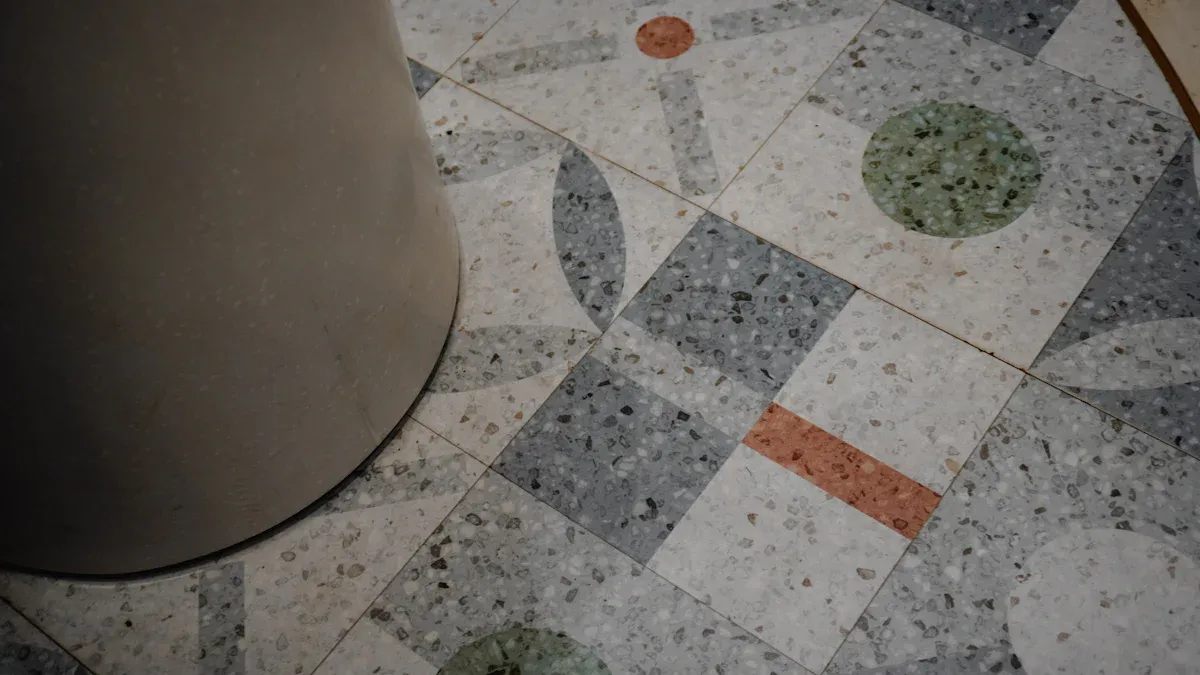
Menconi Terrazzo is a high-performance composite material suited to a range of architectural applications. Selecting it well means evaluating composition, performance, installation, and design flexibility. This guide for architects focuses on the practical decisions you face during specification. You will move through each evaluation area in sequence, with actionable criteria at every step. That structure supports a confident introduction to terrazzo specification. You can weigh epoxy against cement binders, compare poured-in-place systems with precast panels, and judge how each choice fits your project. G·ONE Materials supports the process from sample through schedule, so specifying Menconi Terrazzo stays clear and coordinated.
Key Takeaways
- Choose epoxy terrazzo for lower lifecycle costs and vibrant, consistent colors.
- Match terrazzo performance specs to your project’s traffic and weather needs.
- Select poured-in-place terrazzo for large areas and precast for modular pieces.
- Approve a full-scale mockup early to ensure the final look meets your design.
- Coordinate with suppliers from day one to streamline samples, submittals, and scheduling.
What Is Menconi Terrazzo
Menconi Terrazzo draws on more than 40 years of expertise in terrazzo production. That history gives you a material backed by proven methods and refined craft. The brand also belongs to trade associations that establish national standards for terrazzo floor and wall systems. The National Terrazzo and Mosaic Association, for example, provides complete specifications and color plates to architects and designers at no cost. This affiliation means your project benefits from documented quality benchmarks.
Material Composition
Understanding terrazzo material composition helps you specify with confidence. Terrazzo is a composite system. A binder holds chips of marble, glass, or other aggregates together. Pigments add color, and additives improve workability and durability. You can choose between two binder families. Cement-based terrazzo uses a Portland cement matrix mixed with stone chips. Workers then grind and polish the surface to a smooth finish. Resin-based systems use epoxy resin as the binding agent. Epoxy terrazzo now dominates the contemporary market. It offers a thinner profile and a more refined finish. Resinous binders first appeared in the United States in the 1960s. Manufacturers continue to develop proprietary cement systems that accept a wider range of pigments.
Project Applications
Menconi Terrazzo suits many building types. You can specify it for high-traffic commercial lobbies, luxury retail spaces, and public landmarks. Wall systems and exterior facades also benefit from its durability. The material works wherever you need lasting performance and visual impact. In-stock resin-based collections such as Mosaico, Varieta, Menta, and Rosa give you a practical starting point. These collections let you begin selection without waiting for custom development. From there, you can explore custom blends that match your design intent. The question of how are terrazzo floors made matters less than the outcome you want. Menconi terrazzo delivers a surface that holds up under demanding use.
Terrazzo Specification: Performance Requirements for Terrazzo Floors
A sound terrazzo specification starts with the binder decision. Epoxy vs cement systems differ in cost, planning, and design options. Installation costs are comparable, yet cement systems carry higher labor and material costs. Epoxy terrazzo wins on lifecycle cost. Its nonporous surface eliminates periodic sealing, resists staining, and reduces repair frequency. Cement terrazzo needs more maintenance over time. Design options also diverge. Epoxy terrazzo bonds well with any aggregate type or size and accepts vibrant, consistent pigments. Cement terrazzo limits specialty aggregates and shows slight color variation from water-cement ratios, temperatures, and curing conditions. Plan for these differences early in your terrazzo specification.
Key Performance Criteria
Performance requirements for terrazzo floors rest on three pillars: wear resistance, structural strength, and long-term weatherability. High-traffic environments punish weak surfaces. Mohs hardness and density drive wear resistance, scratch resistance, and lasting durability. Inorganic terrazzo reaches Mohs hardness up to Grade 5, per Wayon, so the surface resists scratches from strollers, carts, heels, and rolling loads. Structural strength matters equally. Cement-based terrazzo offers high compressive strength for heavy foot traffic, while epoxy terrazzo delivers enhanced flexibility, chemical resistance, higher compressive strength, and a thinner profile, according to Andreola Terrazzo. Weatherability decides exterior use. UV-resistant terrazzo retains color without fading, which suits outdoor plazas and facades. Low water absorption of 0.19–0.53% minimizes whitening, blistering, and moisture damage, Wayon reports. Class A fire rating and freeze resistance extend suitability to harsh environments. Specify terrazzo floors with these criteria stated explicitly.
Matching Specs to Application
Application type shapes your terrazzo specifications. Interior floors in lobbies and retail demand wear resistance and easy maintenance, so epoxy terrazzo floors fit well. Epoxy terrazzo floors also suit multi-story buildings because the system weighs 3-4 lbs. PSF versus 18-30 lbs. PSF for cement systems, per Terrazzco. Walls favor thinner profiles and consistent color. Exterior facades need UV stability and freeze resistance. Public landmarks require long-term gloss retention and structural strength. A comparison table helps you weigh thickness, weight, slab flatness, and strip spacing before you commit. G·ONE’s technical specifications and material selection manuals give specifiers documented values for each scenario. Use them to align product data with project demands. This step turns a generic terrazzo specification into a project-specific one.
Installation Methods and Considerations
Installation Approaches
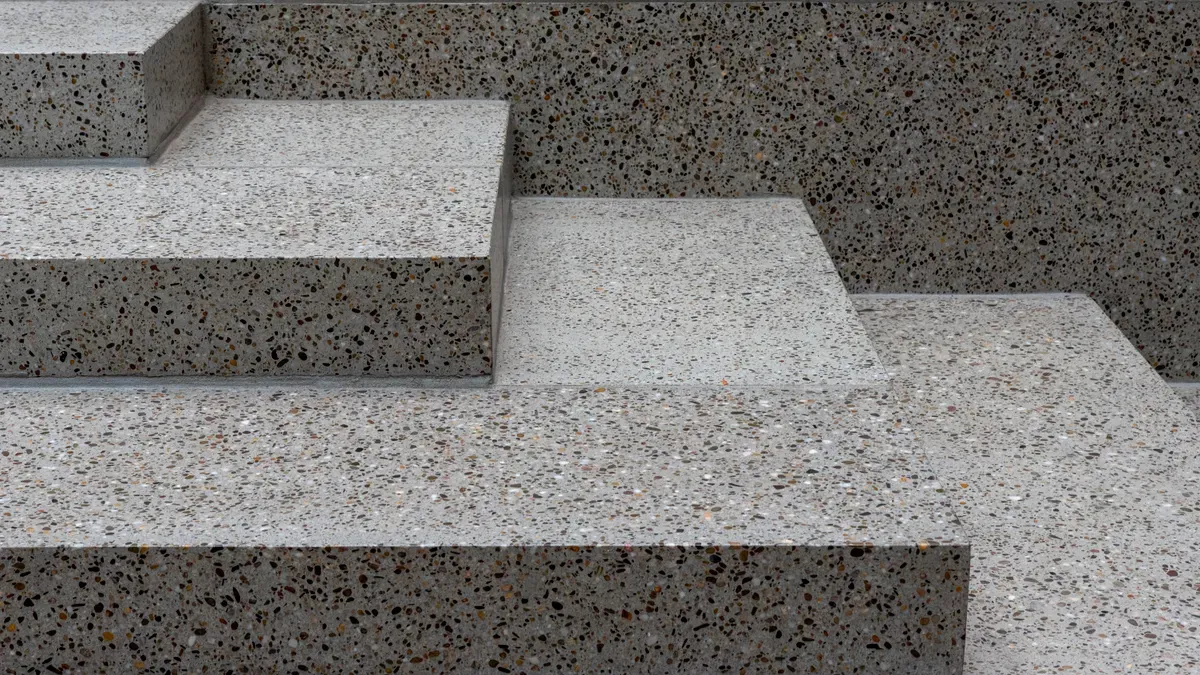
You face a clear choice between poured-in-place and precast systems. Poured-in-place terrazzo goes directly onto the substrate and is polished in place. It excels in expansive, uninterrupted spaces with minimal joints. Precast slabs and tiles are cast in molds off-site, then delivered and installed. This terrazzo format suits stair treads, wall panels, countertops, and modular elements. Factory-produced terrazzo tiles arrive with consistent quality and speed installation with less on-site disruption. Lead times run longer, though, and careful handling prevents transport damage. For large continuous areas, poured-in-place epoxy terrazzo remains the better fit. Epoxy terrazzo cures fast and bonds well to prepared concrete. For smaller modular pieces, precast wins on precision and speed. Choose epoxy terrazzo when you need vibrant pigments and fine aggregates. Epoxy terrazzo also resists staining in busy spaces. Weigh these installation considerations before you commit.
Substrate and Site Coordination
Successful epoxy terrazzo installation depends on substrate readiness. Concrete must be at least 28 days old and structurally sound, per American Concrete Institute guidance. Wide cracks over 1/8 inch signal deeper problems. Moisture testing matters too. Calcium chloride readings above 3 pounds per 1,000 square feet per 24 hours call for a moisture barrier. An epoxy terrazzo system is not breathable, so moisture vapor transmission needs control. Flatness tolerance runs tight at 1/4 inch per 10 square feet for resin systems, per Western States Terrazzo. Epoxy terrazzo needs a clean surface, free of dust, oil, and old adhesive. Epoxy terrazzo tolerates heavy traffic once cured.
Coordinate early with your contractor. Ask when heavy trades leave the floor and whether the building is weather-tight. Schedule epoxy terrazzo floors after overhead work, and complete grinding before fixtures arrive. Epoxy terrazzo floors in lobbies and corridors demand this sequencing. Terrazzo remains a durable choice for demanding sites. Confirm access for grinding and polishing equipment. G·ONE assists with drawings, quantities, fabrication, packaging, and delivery coordination for larger projects. These installation requirements protect your schedule and final appearance.
Terrazzo Tiles in Architectural Design
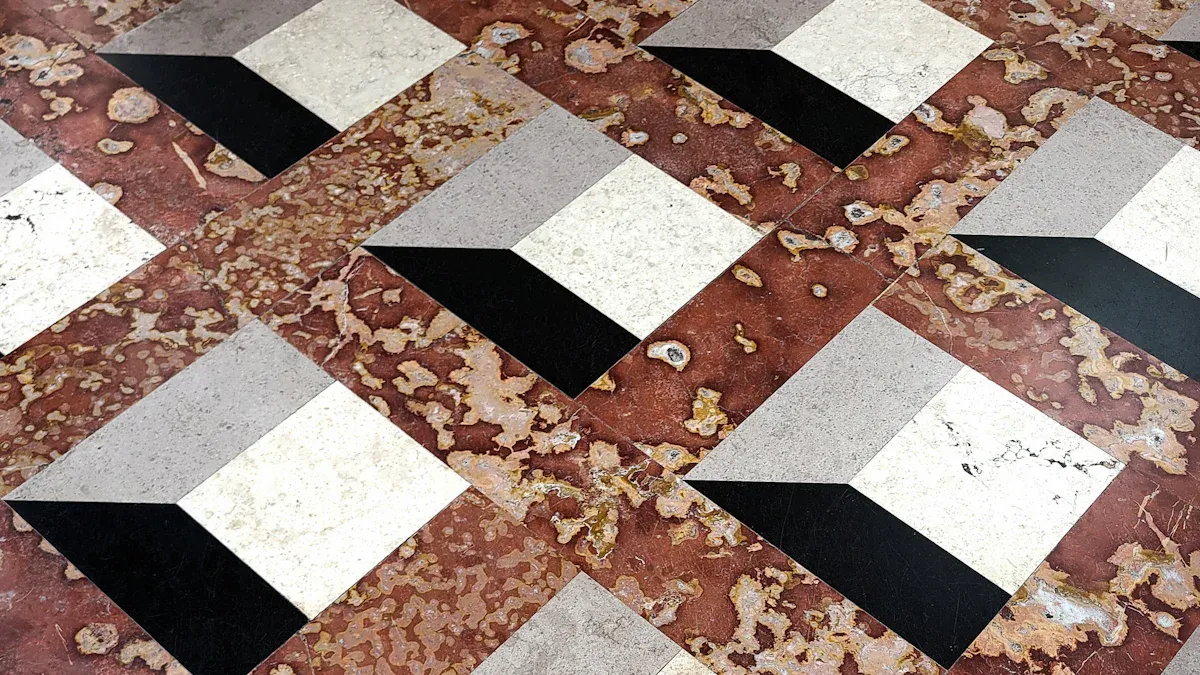
Menconi Terrazzo gives you an unusually wide palette. You can move from subtle monochrome floors to bold, multi-color compositions. Color, texture, and finish options cover the full range, from classic patterns to fully custom designs. This breadth is the heart of terrazzo tiles in architectural design. Each decision shapes how the finished surface reads in a lobby, a corridor, or a feature wall.
Color, Aggregate, and Finish Options
Terrazzo tiles carry imagery as easily as they carry color. You can embed company logos, government seals, school mascots, maps, and artwork directly into floors or walls. Architects first recognized this potential in the 1920s. Beginning in 1924, divider strips gave craftspeople greater control over cracking. Those same strips separated different colors and textures, which made virtually any shape, pattern, or image possible. The National Terrazzo and Mosaic Organization formed in 1923 as demand grew. That legacy still informs how you can use terrazzo tiles today.
Aggregate choice drives the visual character. Marble chips, glass, and specialty blends change scale, reflectivity, and depth. Pigment selection sets the base tone. Finish options range from matte to high polish, and each alters how light moves across the surface. Epoxy terrazzo accepts fine aggregates and vivid, consistent pigments, so detailed graphics stay crisp. Epoxy terrazzo also supports thin profiles for wall applications. Epoxy terrazzo holds color well in high-traffic zones. Epoxy terrazzo suits logo work and fine pattern reproduction. Epoxy terrazzo remains the practical base for most graphic terrazzo tiles.
G·ONE extends this range with custom-made solutions:
- Tailored colors, unique aggregate blends, and custom molds matched to your exact specifications
- Digital catalogs and design lookbooks covering full collections, textures, and technical data
- Feasibility review of color, blend, dimensions, finish, and fabrication details before you finalize a specificationCustom solutionsEffectTailored colors, blends, and moldsCreates distinctive environments
Mockups and Visual Approval
Design flexibility and visual control depend on seeing the material before you commit. Menconi offers custom samples and design workshops. These sessions help you match a unique style and test how pigments and aggregates read at full scale. A small chip looks different across a large floor area. Mockups resolve that gap.
Request a sample early in the design phase. Compare candidate blends under the project’s actual lighting. Review the mockup with the client and the contractor together. Approve the sample, then reference it in the specification. This sequence protects the design intent through fabrication. G·ONE supports the stage with sample availability, quotations, and technical input. Early coordination keeps terrazzo tiles aligned with your drawings and your schedule.
Specification Guide for Architects: Coordinating with Suppliers
Supplier coordination decides whether your terrazzo specification survives contact with the job site. Treat this stage as part of the design work, not an afterthought. A clear process protects your intent from drawing to delivery.
Samples and Submittals
Start with samples. Request in-stock samples of Mosaico, Varieta, Menta, or Rosa to evaluate chip blends, matrix colors, and finishes firsthand. For a unique scheme, request custom samples and design workshops. These sessions let you test pigments and aggregates at full scale before you commit.
The submittal process follows a predictable path, as Concord Terrazzo Company describes it:
- Define the project scope, use, design vision, budget, and timeline.
- Consult on material selection, sample development, and quotations.
- Finalize by approving samples, reviewing specifications, and placing the order.
Early coordination lets you evaluate product suitability before final specification. G·ONE supports this stage with sample availability, quotations, and technical support. We also assist with drawings, quantities, fabrication, packaging, and delivery coordination.
Scheduling and Lead Times
Lead times vary by system. Precast terrazzo tiles need mold time and curing before shipment. Poured-in-place epoxy terrazzo depends on substrate readiness and site sequencing. Share your construction schedule early. That timing lets us align fabrication with your milestones.
G·ONE works closely with architects, contractors, suppliers, and project owners. Together we confirm the right product based on design intent, application, dimensions, and performance requirements. This coordination with terrazzo and marble supply keeps architectural specifications accurate and buildable. Sound terrazzo and marble supply management also protects your terrazzo specifications through bidding and installation. Build supplier coordination into your terrazzo specification from day one. A specification guide for architects should always include this step.
You now have a clear path through Menconi Terrazzo selection. Composition, performance, installation, design flexibility, and supplier coordination each shape the final result. Apply this checklist as you build your terrazzo specification:
- Confirm the binder system and aggregate blend.
- Match wear, strength, and weather data to the application.
- Choose poured-in-place or precast based on scale and site.
- Approve a full-scale mockup before fabrication.
- Lock samples, submittals, and lead times early.
Engage G·ONE Materials at the start. Early contact streamlines samples, submittals, and scheduling. Specifying terrazzo with confidence starts with one conversation.
FAQ
How long has Menconi Terrazzo been produced?
Menconi Terrazzo draws on more than 40 years of terrazzo production experience. That history gives you proven methods and refined craft. The brand also belongs to trade associations that set national standards for floor and wall systems, so your project starts from documented benchmarks.
Which collections can you sample right away?
Start with the in-stock resin-based collections: Mosaico, Varieta, Menta, and Rosa. These let you evaluate chip blends, matrix colors, and finishes without waiting for custom development. Request samples early and compare them under your project’s actual lighting before you commit.
How are terrazzo floors made, and does the process affect my specification?
Crews mix aggregate, pigment, and binder, then place the material and grind and polish the surface. Binder choice changes the outcome. Epoxy terrazzo cures fast and accepts fine aggregates and vivid pigments. Cement systems need more curing control. State the process in your terrazzo specification so the contractor builds to it.
What substrate conditions should you confirm before installation?
Confirm the concrete is at least 28 days old and structurally sound. Check moisture readings and flatness, since resin systems demand tight tolerances. Epoxy terrazzo is not breathable, so moisture vapor needs control. Coordinate sequencing with your contractor so overhead work finishes before floor placement.
Can you embed logos or artwork into the surface?
Yes. You can set company logos, school mascots, maps, and artwork directly into floors or walls. Architects recognized this potential in the 1920s, and divider strips made precise patterns possible. Epoxy terrazzo holds fine detail well. Approve a full-scale mockup before fabrication begins.