
The terrazzo vs quartz decision rests on distinct material properties. Composition, appearance, applications, and price all guide the choice. An epoxy binder with marble or glass aggregates creates one surface. Sand, resin, and pigments form another. Each material delivers a unique aesthetic. Design preferences often decide the winner. This guide walks specifiers through each difference with practical detail and real examples. Confident decision-making requires clear comparisons across every factor. G·ONE supports specifiers as a trusted resource for material selection. The brand offers specification guidance and project expertise for diverse applications. Specifiers gain real confidence through professional support and reliable solutions.
Key Takeaways
- Terrazzo uses cement or epoxy binders with marble and glass aggregates. Quartz uses quartz mineral and resin.
- Quartz provides consistent colors and excellent stain resistance. It never needs sealing.
- Terrazzo suits large floors and walls. It resists scratches and lasts 40 years.
- Terrazzo costs 50 to 100 dollars per square foot. Large spaces gain better long term value from terrazzo.
Composition: Terrazzo and Quartz Compared
Quartz: Engineered Stone
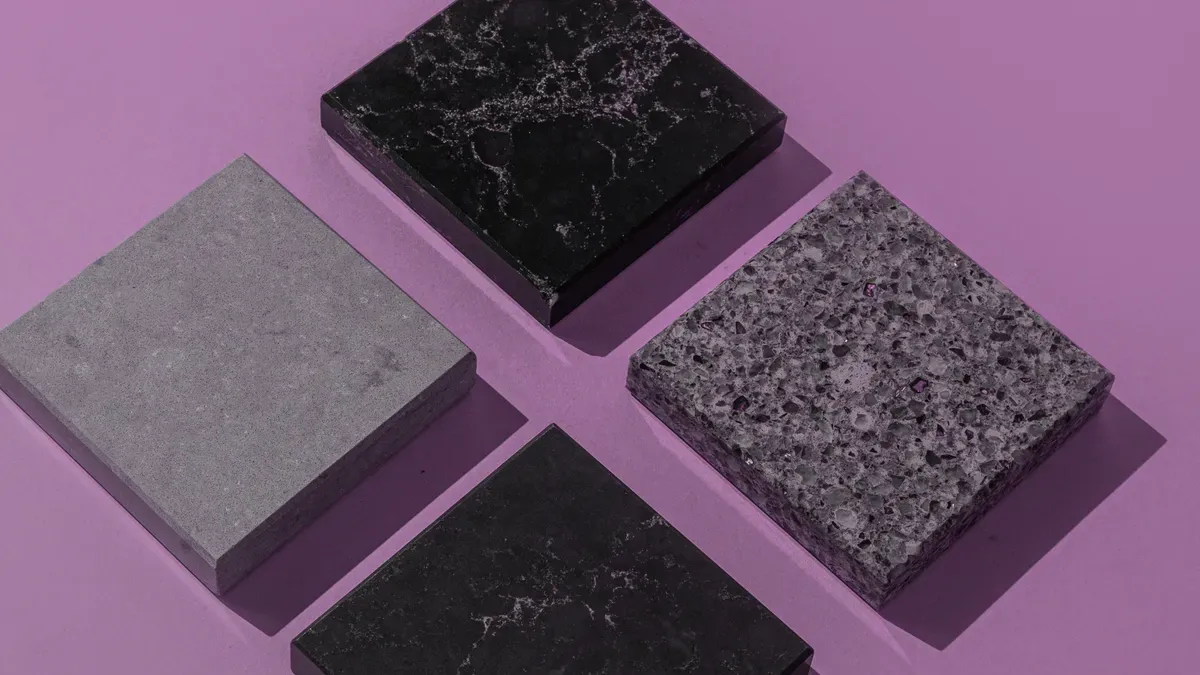
Engineered quartz is a manufactured stone. Quartz stone consists of 93–96% natural quartz mineral by weight. Polyester or epoxy resin and pigments make up the remaining 7–10%. This composition creates a non-porous, consistent surface. Engineered quartz offers reliable performance across many indoor applications.
The resin binder in quartz stone introduces specific sensitivities. Strong acids, alkalis, and harsh cleaners can degrade the resin permanently. Sudden high temperatures may discolor the surface or leave marks from hot pans. Prolonged sunlight causes yellowing and potential warping. Resin binders are softer than quartz aggregate, which lowers overall surface hardness. The composite structure is also brittle, so heavy impacts near edges can chip the material.
| Property | Typical Value | Product Example |
|---|---|---|
| Compression Strength | > 222 MPa | Calacatta Ivory D9420 (Engineered Quartz) |
Terrazzo: Binder and Aggregates
Terrazzo is a composite material. A cement or epoxy binder mixes with marble, glass, or other aggregates. This combination produces a speckled, customizable terrazzo surface. Each binder type delivers distinct performance traits.
Epoxy terrazzo uses a two-part resin system. It forms the thinnest terrazzo system at roughly 10mm. Epoxy terrazzo resists chemicals and stains well. However, epoxy terrazzo is not for outdoor use because UV exposure degrades it. Cement terrazzo uses Portland cement and water. Cement terrazzo is breathable and time-tested. It suits historic restorations. Cement terrazzo requires a thick bed of 2.5″–3″ and a long curing cycle. Inorganic terrazzo merges cement durability with modern engineering stability. It is Class A1 fire-rated and completely UV-stable.
Architects, developers, and contractors are now expected to meet stricter fire regulations, sustainability targets, and indoor environmental standards. This shift has accelerated the development of inorganic terrazzo systems that reduce resin use and improve fire performance compared with conventional epoxy-based materials.
G·ONE specializes in precast terrazzo, including regular, recycled, and mosaic terrazzo. All products are engineered for durability and design flexibility.
Appearance and Design Flexibility
Quartz: Consistent Color and Pattern
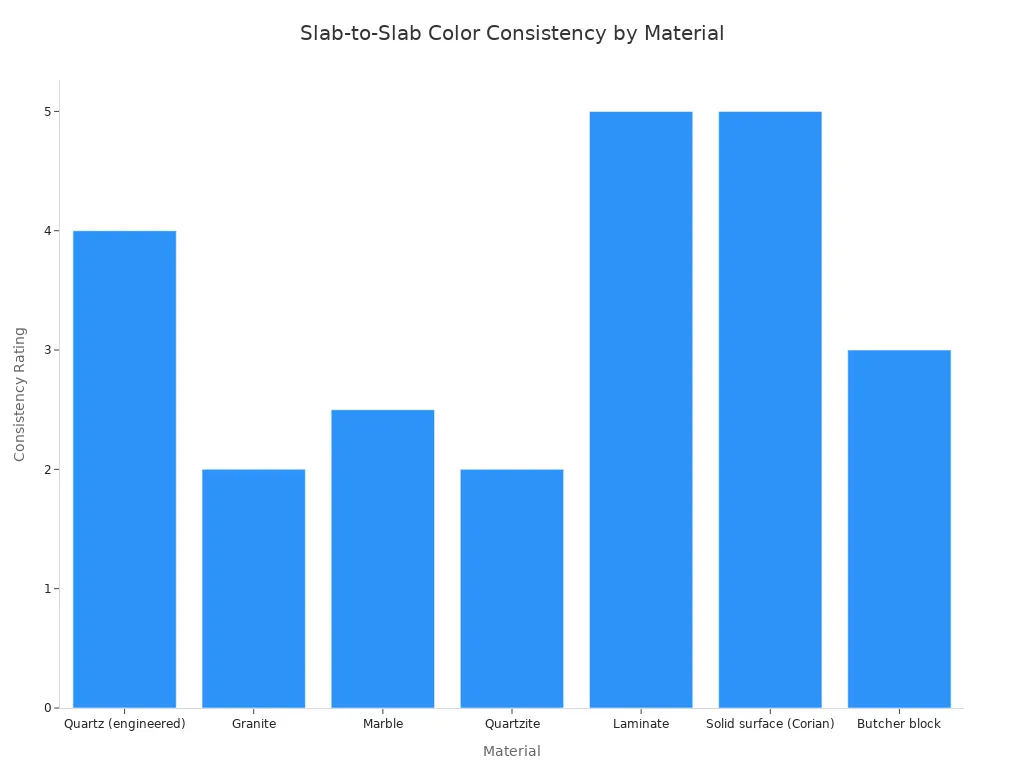
Engineered quartz delivers a uniform appearance across every slab. Manufacturers control pigment particle size and chemical composition within strict tolerances. This control enables repeatable color reproduction between production batches. The industry measures batch consistency with Delta E, a standard color-difference metric. A Delta E under 1.0 is generally imperceptible to the human eye. Values from 1.0 to 2.0 remain acceptable for most applications. A value above 2.0 indicates visible color variation. Certain quartz colors, particularly whites with heavy veining, can vary noticeably between batches. Specifiers should confirm that multi-slab projects draw from a single batch and request Delta E data spanning several batches.
| Material | Color Consistency Slab-to-Slab | How Well Photos Represent the Material |
|---|---|---|
| Quartz (engineered) | High (manufactured) | Good for color family, limited for texture/scale |
| Granite | Low (quarried) | Poor (image shows a type, not your slab) |
| Marble | Low to moderate | Poor (same reason) |
| Laminate | Very high | Excellent |
Terrazzo: Speckled and Customizable
Terrazzo offers a distinctive speckled look. Marble and natural-stone fragments create material richness with subtle irregularities and light-catching depth. This quality suits minimalist interiors and quiet luxury designs. In VDS House, the speckled texture gently reflects natural light to brighten rooms and highlight furniture without competing for attention. Current trends favor terrazzo’s visual complexity:
- Large-chip, high-contrast compositions create bold, graphic surfaces
- Terrazzo on walls enhances visual engagement up close
- Warm, earthy palettes in terracotta, ochre, and blush tones ground interiors
- Terrazzo-effect cement tiles replicate chip distribution and surface complexity
Design flexibility extends through custom aggregate blends, colors, and molds. Architects now request larger chip sizes (#3–#8), including Palladiana-style installations. Custom colorways match brand schemes. Recycled glass, shell, and sustainably sourced marble chips support LEED Platinum goals. G·ONE’s custom-made solutions and design lookbooks help specifiers achieve unique terrazzo aesthetics.
Applications: Where Each Material Excels
Quartz: Countertops and Indoor Tiles
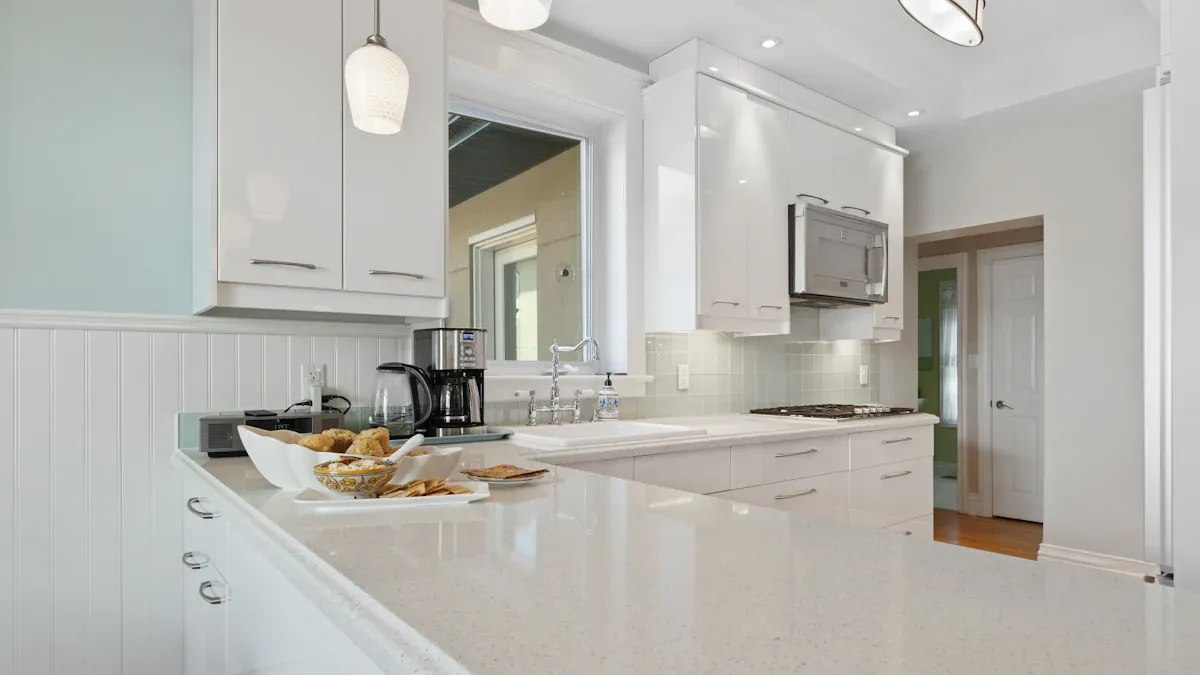
Engineered quartz stone dominates kitchen countertops and bathroom vanities. Its non-porous structure blocks liquid penetration, which simplifies daily care. Consumer Reports lab testing found that quartz scored measurably higher than granite on stain resistance and earned an ‘Excellent’ rating, thanks to its non-porous structure. This performance places quartz stone at the top tier for stain resistance among common countertops materials in controlled lab tests.
| Material | Stain Resistance (Lab Test Rating) | Notes |
|---|---|---|
| Quartz (engineered) | Excellent | Non-porous; never needs sealing |
| Granite | Good (sealed) | Requires resealing every 1–5 years |
| Marble | Etches (acids) | Vulnerable to acid etching |
In Consumer Reports’ lab tests, quartz is non-porous and scored measurably higher than granite on stain resistance, earning an ‘Excellent’ stain rating while granite received only a ‘Good (sealed)’ rating.
Indoor floor and wall tiles also suit quartz well. The material resists moisture and routine cleaning agents. Specifiers choose quartz for bathrooms, laundry rooms, and mudrooms. These spaces demand surfaces that tolerate splashes and humidity without sealing.
Terrazzo: Flooring and Wall Projects
Terrazzo excels in large-scale flooring, wall cladding, facades, and high-traffic commercial spaces. With high surface hardness, the material resists scratches from strollers, carts, heels, and rolling loads. In high-traffic exhibition or retail spaces, the high hardness ensures the floor remains intact and reduces long-term maintenance costs. Inorganic terrazzo offers high hardness, low water absorption, and resistance to abrasion, chemicals, UV, and temperature extremes, making it ideal for malls, airports, hospitals, and industrial facilities.
Installation costs vary by scale and complexity. Large-scale projects often benefit from more cost-effective pricing, rewarding straightforward layouts.
G·ONE’s materials appear in hotel lobbies, luxury retail boutiques, architectural facades, and public landmarks. The brand’s epoxy terrazzo, cement terrazzo, and inorganic systems serve diverse project types. Each product supports the design intent and performance needs of demanding commercial environments.
Price: Terrazzo vs Quartz Costs
Quartz: Higher Material and Fabrication Costs
Quartz carries a higher price tag than many specifiers expect. Standard quartz is priced at the higher end of the material spectrum. Premium options push higher still.
- First Choice Quartz (premium option) features vibrant colors, minimal veining variations, and the highest quality.
Premium quartz countertops can be significantly more expensive, particularly for intricate or avant-garde designs.
Fabrication adds another layer of cost. Quartz slabs require cutting, edge profiling, and precise templating. These steps demand specialized labor and equipment. The material’s brittleness near edges increases breakage risk during installation. That risk translates into higher labor rates and potential replacement costs. Quartz does offer low-maintenance care without sealing. This advantage may offset its higher upfront cost in some projects. Homeowners avoid annual sealing chores and resealing expenses. Over time, those savings accumulate. Yet the initial investment remains steep for large surface areas.
Terrazzo: Cost-Effective for Large Areas
Terrazzo costs are competitive for large areas. This range sits below quartz at the upper end. Terrazzo costs more upfront than vinyl or carpet. It lasts decades with minimal maintenance, offering long-term value.
Routine maintenance involves regular sweeping and mopping. Periodic resealing preserves shine and protects the surface. Repair and restoration are rarely required. Terrazzo can be repaired and restored efficiently without full replacement. Over its lifespan, terrazzo’s low annual maintenance costs and long replacement cycle result in lower cumulative maintenance costs compared to alternatives like carpet or vinyl, which require more frequent replacement.
Restoration costs vary by condition and region, but terrazzo can typically be restored at a fraction of replacement cost. New terrazzo installation costs are competitive, and replacement is rarely needed with proper maintenance.
G·ONE offers tailored consultations and project samples. These services help specifiers manage budgets with confidence.
How to Choose: Terrazzo vs Quartz
Assess Project Type and Features
The project type guides the material decision. Residential kitchens and bathrooms demand thin, non-porous surfaces. Quartz serves those applications well. Commercial lobbies, retail corridors, and public atriums require different performance. These spaces handle heavy foot traffic, rolling loads, and frequent cleaning. The floor design must accommodate anticipated loads and cleaning schedules.
Indoor versus outdoor placement changes the evaluation. Quartz works indoors where UV exposure stays minimal. Epoxy terrazzo also suits indoor applications. Cement terrazzo and inorganic systems tolerate full sun without degradation. Outdoor plazas, entryways, and pool surrounds benefit from these systems. Each environment demands specific material characteristics. Temperature fluctuation, freeze-thaw cycles, and moisture exposure all affect material selection.
Required features narrow the choices further. Durability matters for high-traffic zones. Terrazzo offers high hardness and resists abrasion from foot traffic and wheeled carts. Maintenance expectations also guide selection. Terrazzo requires only sweeping and mopping with periodic resealing. Quartz needs no sealing at all. Both materials stay low-maintenance compared to natural stone. Slip resistance becomes critical for wet areas. The surface finish must match the safety requirements of the space. Aggregate blends can improve traction for the installation. The specifier should verify slip test data for the proposed finish.
Evaluate Design, Quality, and Budget
Appearance goals drive many decisions. A uniform, repeatable pattern suits minimalist interiors. Quartz delivers this consistency. A speckled, organic look distinguishes terrazzo. A clear design intent establishes the visual direction. The design intent also determines which aggregate blends and colorways fit the project. A well-defined aesthetic simplifies the selection process. The material quality and design requirements should align with the project budget. Custom color matching and aggregate selection expand options for unique projects.
Material quality requires thorough vetting. The material from a reliable manufacturer ensures proper aggregate distribution and binder performance. Quality control avoids weak spots or uneven curing. The quality varies by resin content and manufacturing precision. Epoxy systems must meet proper mixing ratios. Incorrect epoxy ratios cause soft spots or discoloration. Manufacturers should provide technical data sheets and performance certifications. Specifiers should review these documents before final selection.
Budget constraints affect the final choice. Terrazzo and quartz have overlapping price ranges, but the total cost depends on project scale. The specifier must weigh upfront investment against long-term lifecycle costs. The material becomes cost-effective for large, open areas where installation scales efficiently. The specifier must weigh upfront investment against long-term lifecycle costs. Both materials deliver decades of service with minimal maintenance. A long service life reduces replacement frequency significantly. The specifier should calculate total cost of ownership, not just initial installation expense.
G·ONE provides specification support for the projects. The brand offers samples, engineering guidance, and custom solutions. Specifiers gain confidence through this expertise. A strong vision, thorough quality assessment, and realistic budget management lead to the right specification decision. The consulting process helps match material performance to project requirements. The team works alongside architects and designers from concept through completion.
Terrazzo and quartz differ across composition, appearance, applications, and price. The composite combines cement or epoxy binders with marble and glass aggregates. Engineered stone uses quartz sand, resin, and pigments. Each material delivers a distinct aesthetic. Terrazzo suits large flooring and wall projects. The engineered option excels in countertops and indoor tiles.
The right choice depends on project type, performance needs, design goals, and budget. Specifiers should weigh durability, maintenance, and lifecycle costs. The material offers decades of reliable service with minimal care. G·ONE provides material solutions, samples, and specification support. The team guides architects from concept through final completion.
FAQ
Can terrazzo work for outdoor projects?
Cement-based systems and inorganic options resist UV exposure and temperature extremes. Standard epoxy bonded systems require interior use. These alternatives suit outdoor plazas and entryways.
Does quartz require sealing?
No. The engineered material is non-porous. The surface needs no annual application of sealers. Routine cleaning with mild soap and water maintains the finish.
How durable is the engineered surface?
Engineered quartz offers excellent stain resistance and good durability, but it can be scratched by abrasive materials and may chip under heavy impact near edges.
What maintenance do these surfaces need?
Both options demand minimal daily care. Sweeping and damp mopping suffice for routine cleaning. One surface needs periodic resealing. The other requires no sealing at all.