
The best approach to terrazzo floor cleaning in commercial buildings starts with identifying your binder type. After that, you follow a consistent routine: dust mop daily, damp mop with a neutral cleaner, scrub periodically, and reseal every few months. Terrazzo is durable, but acids and harsh chemicals will etch its surface. Protecting your floor matters because installation costs vary from $20 to $60 per square foot. This guide covers the right tools, pH-neutral chemicals, step-by-step routines, and common mistakes to avoid. For long-term floor care, terrazzo materials are engineered for durability and easy maintenance.

Key Takeaways
- Identify your terrazzo binder type first. Cement-based terrazzo needs sealing, but resin-based terrazzo does not.
- Use pH-neutral cleaners and soft tools. Avoid acids like vinegar because they etch the surface.
- Follow a cleaning routine: dust mop daily, damp mop with neutral cleaner, scrub weekly, and deep clean every 3-6 months.
- Train your staff on proper cleaning methods. This prevents damage and saves money on repairs.
- Consistent care protects your floor’s shine and extends its life. This avoids costly restoration.
Know Your Terrazzo System for Effective Terrazzo Floor Cleaning
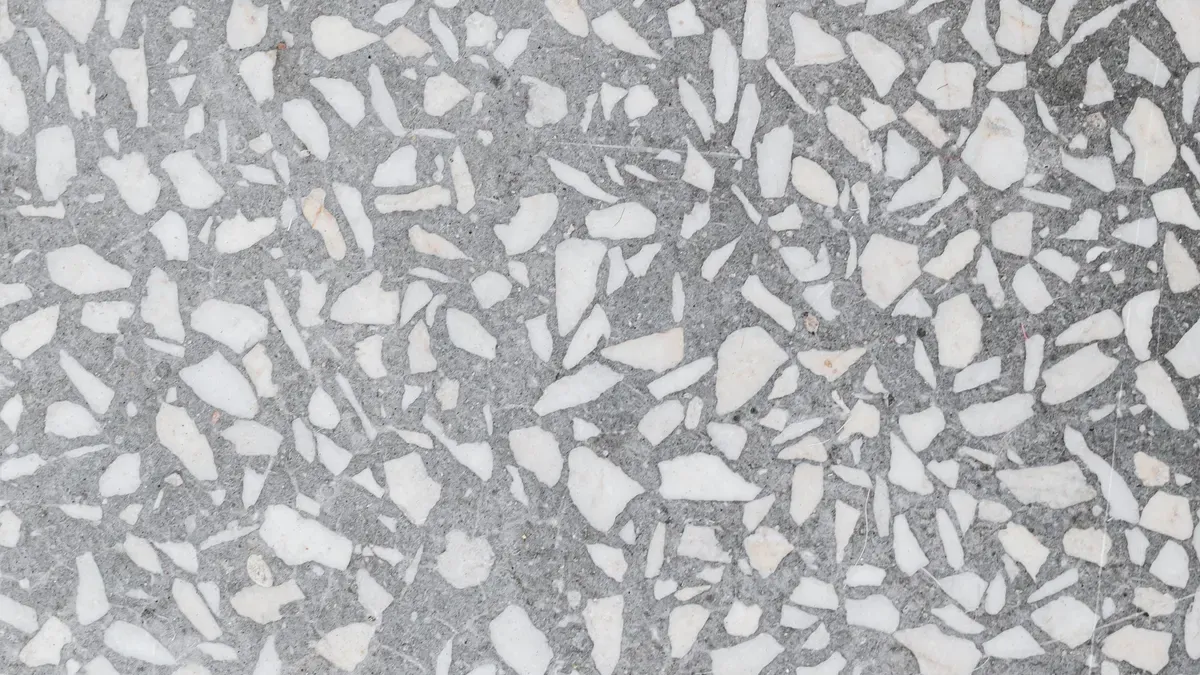
Cement-Based vs. Resin-Based Terrazzo
You cannot choose the right cleaning method until you know what your floor is made of. Terrazzo comes in two main binder types, and each one behaves differently under moisture, chemicals, and foot traffic. Cement-based terrazzo uses a porous cementitious binder. This binder remains susceptible to staining even when sealed. The material is also weaker, so tiles are prone to chipping and cracking. Resin-based terrazzo, including thin sheet and epoxy systems, uses an impervious resin binder. This type offers excellent stain resistance and stays strong and durable, with less risk of chipping or cracking.
| Binder Type | Porosity | Chemical/Stain Sensitivity |
|---|---|---|
| Cement-based terrazzo | Porous cementitious binder; remains susceptible to staining even when sealed | High sensitivity to staining due to porosity; binder is also weaker, making tiles prone to chipping and cracking |
| Resin-based terrazzo (thin sheet & epoxy) | Impervious resin binder | Excellent stain resistance; strong and durable, less prone to chipping or cracking |
Why Binder Type Shapes Your Cleaning Method
The binder type directly determines which cleaners, sealers, and scrubbing methods are safe for your floor. Cement terrazzo is porous and requires a penetrating sealer after final polish to reduce porosity. You must choose cleaning chemicals that are compatible with the sealer and avoid etching or damaging the porous matrix. Alkaline or pH-neutral cleaners work well for cement terrazzo. Epoxy terrazzo is non-porous and requires no sealing. This eliminates periodic sealing costs and simplifies cleaning chemical selection. Mild, non-etching cleaners are sufficient for the non-porous surface. Epoxy terrazzo also resists staining, which reduces the need for harsh cleaning chemicals and labor.
Understanding these differences helps you clean terrazzo floors without causing damage. When you clean terrazzo floors in a commercial setting, always match your products to the binder.
Tools and Equipment for Commercial Terrazzo Maintenance
The best way to clean terrazzo floors starts with proper tools. The wrong equipment can scratch or dull your polished surface. Investing in quality tools saves money on repairs and extends the floor’s life. Here are the essential tools for daily terrazzo maintenance and deep cleaning.
Daily and Weekly Essentials
For daily and weekly cleaning, focus on tools that remove soil without scratching the surface.
Microfiber dust mops provide increased cleaning efficacy over traditional dust mops by trapping and containing more soils and contaminants.
Select a high-quality microfiber mop for daily dusting. These tools effectively capture fine particles and help prevent scratches on your terrazzo floor. Dust mopping should be part of the daily routine to prevent dirt buildup and preserve the floor’s shine. For larger commercial spaces, choose an electrostatic or microfiber head. It attracts fine particles much more effectively than a standard broom. Special attention should go to corners, edges along baseboards, and areas near entry doors. These spots accumulate the most grit from foot traffic.
You also need a neutral-pH damp mop for wet cleaning. Always check the pH balance of your cleaner before applying it to the floor. Wet-floor signs are essential for safety in commercial spaces. Place them prominently whenever you mop in high-traffic areas. Keep spot-cleaning cloths handy for quick stain removal. Address spills immediately to prevent permanent staining.
Deep Cleaning and Restoration Equipment
Deep cleaning requires more powerful equipment. An auto-scrubber with soft pads works well for large commercial areas. Soft pads prevent scratching while removing embedded dirt. For best results, use melamine pads on your auto-scrubber. Melamine pads are made from an open-cell polymeric foam. When it cures, this foam has hard edges that act like a super-fine sandpaper. In many cases, they can scrub with just water. For higher soil loads, use a detergent as well. They work effectively on terrazzo floors and are ideal for restoring shine without harsh chemicals.
A low-speed floor machine works well for spot scrubbing and applying sealer. Use a wet vacuum to remove all cleaning solution after scrubbing. For polishing and restoring gloss, a floor buffer delivers consistent results. Always use soft pads and microfiber heads on every machine. These materials prevent scratching the polished surface. Using the right equipment is how you clean terrazzo floors safely and effectively. Regular care depends on having these tools available and training staff to use them correctly.
Safe Chemicals to Clean Terrazzo Floors
Neutral pH Cleaners and Water-Based Sealers
The chemical you choose determines the health of your terrazzo. Terrazzo contains marble aggregate. Marble is calcium carbonate. It reacts chemically with any acid. That reaction dissolves the aggregate surface and creates a dull, pitted texture. Buffing cannot fix this damage. Only diamond grinding can restore the floor. For one commercial site, a single acid exposure on a 500-square-foot lobby entry cost $4,000 to $7,500 to restore. Prevention costs a fraction of that amount. Select pH-neutral cleaners with a pH of 7.0, or in the 6.5 to 7.5 range. These lift soil without attacking the marble aggregate. To clean terrazzo floors properly, choose a pH-neutral formula. Always follow the manufacturer’s dilution instructions. Too much cleaner leaves residue that dulls the finish.
Water-based sealers provide excellent protection. Solvent-based sealers are hazardous, flammable, and produce strong odors. Water-based sealers are non-hazardous, non-flammable, and produce very little odor. They work safely in enclosed public spaces. These sealers also protect the surface without yellowing over time. Choosing water-based sealers supports your maintenance goals and environmental responsibility.
Products and Chemicals to Avoid
Many common cleaning products damage terrazzo permanently. You must avoid vinegar, bleach, lemon or citrus extracts, ammonia, and strong degreasers. Vinegar has a pH of 2 to 3. It etches cementitious terrazzo on contact. Even diluted vinegar causes cumulative damage with repeated use. It leaves dull spots and removes the polished finish. Avoid acid-based strippers as well. They dull the polish and etch cement-based terrazzo.
Avoid products that contain: Vinegar, Bleach, Lemon or citrus extracts, Ammonia, Strong degreasers. Instead, choose products specifically designed for terrazzo or natural stone flooring.
If you need to remove an old finish, use a stripper designed for terrazzo. Rinse thoroughly after stripping to remove all residue. Many all-purpose cleaners contain acidic or highly alkaline ingredients. They wear down the protective sealer over time and leave the floor looking dull.
The best way to clean terrazzo floors is simple. Stick with pH-neutral products for every routine cleaning. Dust mop daily because grit destroys the polish faster than anything else. Rinse after scrubbing to avoid chemical residue dulling the finish. Reseal cementitious terrazzo on schedule. Wipe spills immediately. These habits protect your floor and keep it beautiful.
Step-by-Step Routine: Best Way to Clean Terrazzo Floors
A consistent routine is the best way to clean terrazzo floors. You need daily attention, weekly scrubbing, and periodic deep cleaning. Each step builds on the last to protect your investment.
Daily and Weekly Tasks
Start every day with dust mopping. This step removes dry soil, grit, and debris before they scratch the surface. In high-traffic areas such as entrances, main corridors, lobbies, and cafeterias, dust mopping and damp mopping should be performed daily. Daily maintenance for terrazzo floors prevents soil from bonding to the surface.
After dust mopping, damp mop with a neutral cleaner. Use a microfiber mop and a solution mixed according to the manufacturer’s instructions. This step removes fine particles and light soil. For stains and scuff marks, spot-clean by hand with diluted neutral cleaner in warm water. Address spills immediately to prevent stubborn stains from setting.
Weekly tasks go deeper. Machine-scrub high-traffic zones with a soft pad and neutral cleaner. This step removes embedded dirt that daily cleaning misses. Pick up the solution with a wet vacuum. Buffing is recommended weekly to monthly to maintain gloss. These cleaning procedures keep your terrazzo floors looking sharp between deep cleaning cycles.
Semi-Annual Scrubbing, Stripping, and Resealing
Periodically, perform a deep clean. This process restores the floor’s appearance and extends its life. For cement-based terrazzo with floor finish, follow these steps:
- Remove the old finish using a commercial floor stripper designed for terrazzo. Acid-based strippers must never be used on terrazzo.
- Clean and rinse the now-bare terrazzo surface thoroughly.
- Apply a fresh water-based sealer to restore stain and moisture protection.
Apply the stripper and allow it to dwell for the recommended time. Scrub with a floor brush and rinse away with clean water. The floor must dry completely before polishing. This stripping and resealing process applies to cementitious terrazzo and is typically performed as part of periodic maintenance. Epoxy terrazzo does not require this step, as polishing alone maintains its surface.
You can clean terrazzo floors correctly by following this schedule. The best way to clean terrazzo floors at a commercial scale requires planning and consistency. Terrazzo maintenance protects the floor’s shine and extends its service life. When you clean terrazzo floors with the right methods, you avoid costly repairs. The best way to clean terrazzo floors is a routine you follow without fail. Regular care keeps your commercial space safe and attractive for years.
Dos and Don’ts of Terrazzo Maintenance
Best Practices That Extend Floor Life
Good terrazzo maintenance starts with daily habits. Dust mop every day to remove grit before it scratches the surface. Use pH-neutral cleaners for all routine cleaning. Rinse thoroughly after scrubbing to remove chemical residue. Reseal cement-based terrazzo periodically. These steps form the foundation of effective terrazzo floor cleaning.
Staff training matters just as much as the products you choose. Professional janitorial training should cover chemical safety, including the risks of mixing incompatible products. Incorrect concentrations cause surface damage, residue, or failed disinfection. Train your team on proper dilution ratios, adequate dwell times, and selecting the correct product for each surface type. Cleaning products are not interchangeable. More chemical does not equal better cleaning. A structured training system should include induction training, monthly refreshers, on-floor supervision, and standard operating procedures for each surface type. When you clean terrazzo floors with a trained team, you protect your investment.
Common Mistakes That Damage Terrazzo
Many facility managers unknowingly damage their floors. Never use vinegar, acidic cleaners, abrasive pads, or acid-based strippers on terrazzo. These products etch the surface and dull the polish. Avoid over-wetting cement-based terrazzo. Excess water penetrates the porous binder and causes damage.
Avoid products that contain: Vinegar, Bleach, Lemon or citrus extracts, Ammonia, Strong degreasers.
Improper dilution is another common error. Too much cleaner leaves sticky residue that attracts dirt and causes stains. Too little cleaner fails to lift soil effectively. Always follow the manufacturer’s instructions. Partnering with a reputable materials brand helps facility managers choose compatible sealers and cleaners. With the right products and training, you can clean terrazzo floors safely for years.
You now know the best way to clean terrazzo floors: identify the binder, use soft tools and pH-neutral chemicals, follow a daily-to-semi-annual routine, and avoid acids and abrasives. Consistent terrazzo maintenance protects longevity, safety, and appearance in high-traffic commercial buildings, where installation costs $20–$60 per square foot. The payoff is real. Terrazzo offers long-term cost savings compared to other flooring options. Build terrazzo care into your standard operating procedures. Sustainable materials and expert guidance support your floor care.
FAQ
How often should you clean terrazzo floors in a commercial building?
Dust mop daily to remove grit before it scratches the surface. Damp mop with a neutral cleaner each day in high-traffic zones. Machine-scrub weekly, and schedule a deep clean periodically. This routine keeps your terrazzo looking sharp and extends its service life.
What pH level is safe for terrazzo cleaning products?
Choose a pH-neutral cleaner in the 6.5 to 7.5 range. Terrazzo contains marble aggregate, which reacts with acids. A neutral formula lifts soil without etching the surface. Always follow the manufacturer’s dilution instructions to avoid residue that dulls the finish.
Can you use vinegar or bleach on terrazzo floors?
No. Vinegar has a pH of 2 to 3 and etches cement-based terrazzo on contact. Bleach, ammonia, and citrus cleaners also damage the surface. These products dull the polish and leave pitted spots. Only diamond grinding can restore that damage, which costs far more than prevention.
Does epoxy terrazzo need sealing like cement-based terrazzo?
No. Epoxy terrazzo is non-porous and requires no sealing. This eliminates periodic sealing costs and simplifies your chemical selection. Cement-based terrazzo is porous and needs a penetrating sealer after final polish. Match your care plan to the binder type for the best results.
Why does professional training matter for terrazzo maintenance?
Incorrect dilution causes surface damage, residue, or failed cleaning. Train your team on proper ratios, adequate dwell times, and the correct product for each surface. Cleaning products are not interchangeable. More chemical does not equal better cleaning. A trained staff protects your investment.