
You may see that cementitious and resin terrazzo floors look the same. These two materials give different results for your project. You will notice differences in how fast they are installed. The surface will also look different. The long-term costs will not be the same. Picking the right terrazzo floor is important for homes and businesses. G·ONE gives trusted help and knows a lot about both types.
Tip: Knowing these differences helps you pick the best floor.
Key Takeaways
- Cementitious terrazzo is thick and has a classic look. Resin terrazzo is thin and has more color choices. Resin terrazzo also lets you make more designs.
- Resin terrazzo goes in faster and dries overnight. This makes it good for places that are busy. Cementitious terrazzo can take up to seven days to dry.
- Both types of terrazzo last over 40 years. Resin terrazzo fights chemicals and cracks better. This makes it good for labs and hospitals.
- Cementitious terrazzo needs sealing every 1 to 3 years. Resin terrazzo needs less care, so you save time and money.
- Pick the right terrazzo for your project. Think about how fast it installs, how much care it needs, and how it looks.
Terrazzo Floor Project Effect
Surface Appearance Differences
Cementitious and resin terrazzo floors look alike at first. If you look closer, you will see they are not the same. Cementitious terrazzo is thicker and heavier. Its colors are softer and more classic. Resin terrazzo is thinner and has more color choices. You can make many patterns with resin terrazzo. The finish feels smooth and fancy.
Here is a table that shows the main differences:
| Feature | Cementitious Terrazzo | Resin Terrazzo |
|---|---|---|
| Thickness | Thicker and heavier | Thinner profile |
| Color Palette | More muted colors | Wider range of colors |
| Finish | More classic style | Smooth, luxurious finish |
| Design Flexibility | Limited design options | Greater design flexibility |
| Installation Speed | Slower installation | Faster application |
| Application Suitability | Suitable for renovation and exterior use | Primarily for interior applications |
You can see differences in design and aggregate choices too. Cementitious terrazzo comes in standard sizes and has fewer colors. Resin terrazzo lets you use marble, granite, glass, shells, plastics, and metal chips. You can pick any color you like. This makes it easy to match your project style.
| Feature | Cementitious Terrazzo | Resin (Epoxy) Terrazzo |
|---|---|---|
| Design Flexibility | Limited, generally divided into grids | Greater flexibility, can form any pattern |
| Color Options | More limited color choices | Can be created in any color desired |
| Aggregate Options | Standard sizes (0 to 2) | Wide variety including marble, granite, glass, shells, plastics, and metal chips |
Note: Some people think both terrazzo floors use the same binder and aggregates. Cementitious terrazzo uses cement and mostly marble chips. Resin terrazzo uses resin and can have many types of aggregates.
| Misconception | Cementitious Terrazzo | Resin Terrazzo |
|---|---|---|
| Binder Type | Uses cement | Uses resin |
| Tile Structure | Can be single or dual-layered | Not typically two-part |
| Production Method | Cast or pressed | Cut from larger blocks |
| Aggregate Type | Typically marble | Can include a variety of aggregates (natural, recycled, etc.) |
Durability and Longevity
You want your terrazzo floor to last a long time. Both cementitious and resin terrazzo floors can last over 40 years. They are strong and work well in busy places.
| Terrazzo Type | Average Lifespan |
|---|---|
| Cementitious Terrazzo | 40+ Years |
| Resin Terrazzo | 40+ Years |
Sometimes you need a floor that is extra tough. Resin terrazzo is better at resisting chemicals and cracks. Epoxy systems can handle harsh chemicals and some movement in concrete. This makes resin terrazzo good for labs, hospitals, and places with spills. Cementitious terrazzo is great for areas needing a classic look and can be used outside.
Tip: If your project needs to resist chemicals or cracks, resin terrazzo is best. Cementitious terrazzo is strong and good for traditional spaces and outdoor use.
Think about where you will use your terrazzo floor. Resin terrazzo is best for indoor spaces with lots of colors and designs. Cementitious terrazzo works well for renovations and outdoor projects where thickness and classic style are important.
Construction Rhythm and Timeline
Cementitious Terrazzo Installation Steps
You start a cementitious terrazzo floor by creating a pattern for the surface. This step helps you get an accurate layout for your construction project. Next, you choose the matrix colors. The colors you pick will shape the final look of your floor. You then work with your contractor to set the schedule and plan for value engineering. This planning stage is important because it affects the whole project timeline.
Here are the main steps you follow:
- Prepare the concrete subfloor. Make sure it is flat, clean, and strong. Fix any cracks or holes.
- Lay out divider strips to form your chosen pattern.
- Mix sand, cement, water, and marble chips to create the terrazzo base.
- Pour the mixture onto the floor and spread it evenly.
- Allow the floor to cure. This can take up to seven days. During this time, you must keep the area free from traffic and water.
- Grind and polish the surface to reveal the aggregates.
- Seal the floor to protect it from water and stains.
This process uses a lot of water and concrete. The long curing time can slow down your construction and may cause business disruptions if you need to keep the area closed.
Resin Terrazzo Installation Steps
Resin terrazzo uses different materials and a faster process. You get more color choices and a thinner floor. The installation steps are simpler and offer time savings.
- Test the concrete slab for moisture. This step ensures the resin will bond well.
- Prepare the surface by cleaning and fixing any issues.
- Mix the epoxy resin with your chosen aggregates and colors.
- Pour the mixture onto the floor and spread it to the desired thickness, usually 1/4″ or 3/8″.
- Let the floor cure. Resin terrazzo cures overnight under good conditions.
- Grind and polish the surface for a smooth finish. No sealing is needed after polishing.
You use less water and lighter materials. The quick curing time means you can finish your project faster and return to normal life sooner.
Factors Affecting Speed
The speed of your terrazzo installation depends on the materials, curing time, and construction steps. Resin terrazzo offers the most time savings. It cures overnight, which is great for busy places like shopping centers. Cementitious terrazzo takes up to seven days to cure before you can polish it. This long wait can delay your project and affect your schedule.
| Type | Curing Time |
|---|---|
| Cementitious Terrazzo | Up to 7 days |
| Resin (Epoxy) Terrazzo | Overnight (fast) |
You must also think about the amount of water and concrete needed. Cementitious terrazzo uses more water and concrete, which can add to the construction time. Resin terrazzo uses less water and lighter materials, making the process faster and easier.
Tip: If you want a quick construction project with less downtime, resin terrazzo gives you the best speed and time savings.
Maintenance Needs and Costs
Cementitious Terrazzo Maintenance
You must keep cementitious terrazzo floors clean to protect them. Cleaning every day helps your floor look nice. Sweep or use a dust mop to get rid of dirt. If you see stains, use special ways to remove them. For hard stains, you might need help from experts. These experts can fix and protect your floor.
- Sweep or dust mop each day.
- Clean up stains right away.
- Call experts for deep cleaning.
Cementitious terrazzo needs sealing to stop water and stains. You have to reseal the floor every one to three years. This keeps your floor strong and safe from water or chemicals. Sometimes, you need to refinish the floor to make it shiny again. Because concrete is porous, you must do regular care. You will use more water and concrete for repairs. These steps make your project cost more.
| Type of Terrazzo | Resealing Frequency | Refinishing Frequency |
|---|---|---|
| Cementitious Terrazzo | Needs sealing every 1-3 years | Might need refinishing over time |
| Resin Terrazzo | No frequent resealing needed | Needs less refinishing |
Note: Cementitious terrazzo is strong and looks classic. But you must do regular care and sealing to keep it nice.
Resin Terrazzo Maintenance
Resin terrazzo floors are easy to take care of. You just need to mop or wipe the surface. The smooth finish makes cleaning simple. You do not need to reseal often because resin does not let water in. This keeps out stains and water. You save money on care over time.
In schools and hospitals, resin terrazzo helps keep things clean. The smooth floor stops dirt and germs from building up. You can keep it shiny with easy cleaning. This makes resin terrazzo good for places that need to be very clean.
- Mop or wipe with a soft cloth.
- No need to reseal often.
- Enjoy a smooth floor that helps keep things clean.
Resin terrazzo also saves you money on materials. You use less water and concrete for repairs. This means you spend less and finish faster.
| Type of Terrazzo | Maintenance Cost | Key Characteristics |
|---|---|---|
| Cementitious Terrazzo | Higher | Needs more care like stripping and sealing. |
| Resin (Epoxy) Terrazzo | Lower | Does not soak up water, easy to clean, less care needed. |
Tip: If you want to spend less on care, resin terrazzo is the best choice.
Repair and Longevity Considerations
Both cementitious and resin terrazzo floors last a long time. Your floor can last 75 years or more. This means you do not need to replace it often. You save money and lower your total costs.
Common repairs are wax buildup, scratches, cracks, chips, and damage to divider strips. Cementitious terrazzo may need more repairs because it soaks up water. You might see stains or a dull surface. Resin terrazzo does not stain easily and cracks less. You will spend less on repairs for resin terrazzo.
- Wax buildup
- Scratches or dull spots
- Cracks and chips
- Divider strip damage
- Stains
When you compare costs, terrazzo saves you money over other floors. For example, terrazzo costs $56,000 a year to care for, but vinyl composition tile (VCT) costs $135,000 each year. Over 30 years, terrazzo saves you $1.4 million in care costs.
| Type of Flooring | Annual Maintenance Cost | 30-Year Total Cost |
|---|---|---|
| Terrazzo | $56,000 | $2.9 million |
| VCT | $135,000 | $4.3 million |
You get the good parts of concrete and resin in one floor. Both types need simple cleaning and some repairs. You do not have to replace your floor often, so you save money and get more value from your project.
Callout: Terrazzo floors are strong, easy to care for, and save you money over time. You can trust terrazzo to protect your project and your budget.
Overall Value and Suitability
Choosing the Right Terrazzo Floor
You should pick a terrazzo floor that fits your project. Think about how strong you need it to be. Also, think about how much money and time you can spend. The look you want is important too. Cementitious terrazzo is great for busy places. It lasts a long time and is very tough. This floor works well in concrete buildings. It does not scratch or wear out easily, even with lots of people walking on it.
Here is a table to help you compare choices for stores or offices:
| Criteria | Cementitious Terrazzo | Resin Terrazzo |
|---|---|---|
| Durability | High | Moderate to High |
| Maintenance | Low | Moderate |
| Installation Complexity | Moderate | Low |
| Performance under Traffic | Excellent | Good |
Cementitious terrazzo is very hard and does not soak up much water. This helps stop stains and damage in concrete buildings. The smooth floor is easy to clean and costs less to keep nice. If you want more colors and designs, resin terrazzo is a good pick. You can finish building faster with resin terrazzo. This saves you time and helps you stay on schedule and budget.
Tip: For big spaces, you can save money by using precast pieces or doing the work in steps.
If you care about the planet, cementitious terrazzo uses natural rocks and concrete. This is better for the environment. Resin terrazzo has zero VOCs, so it keeps the air inside clean. It also stops mold and germs from growing. Both floors help the environment in different ways.
Real-World Scenarios and G·ONE Insights
You can see real savings and good quality in projects. G·ONE’s customers often pick resin terrazzo for quick jobs and lower care costs. The chart below shows how epoxy terrazzo compares to other floors in stores and offices:
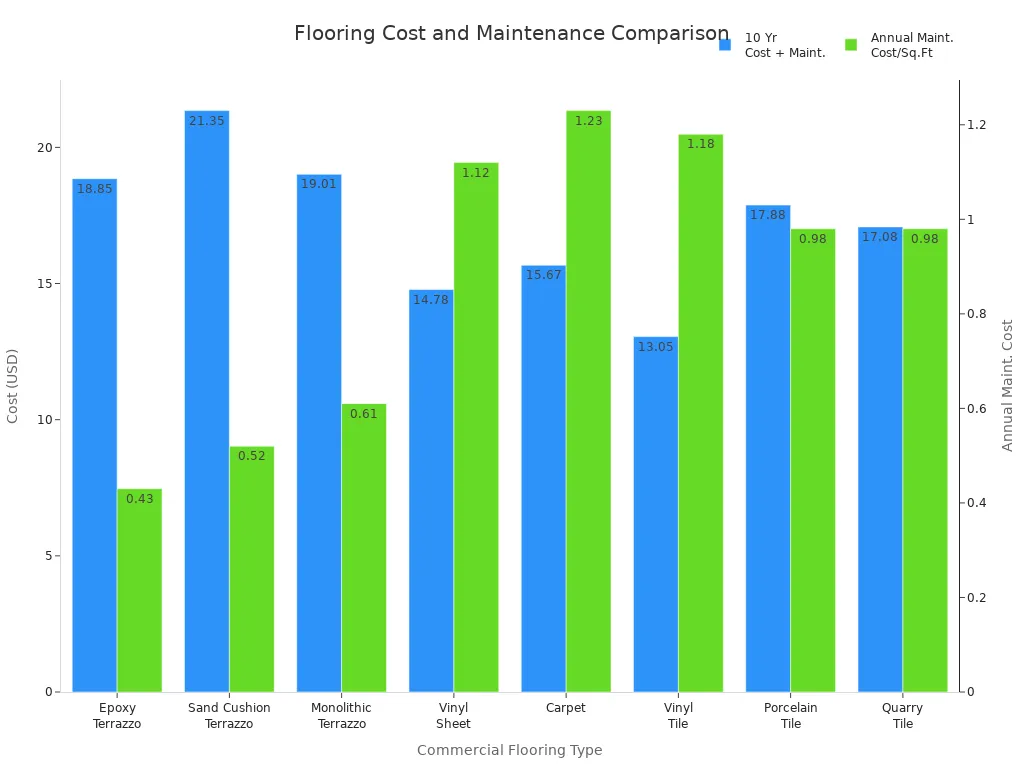
| Commercial Flooring | Initial Cost + 10 Yr Maintenance | Annual Cost of Maintenance (Per Sq. Ft) |
|---|---|---|
| Epoxy Terrazzo | $18.85 | $0.43 |
| Sand Cushion Terrazzo | $21.35 | $0.52 |
| Monolithic Terrazzo | $19.01 | $0.61 |
| Vinyl Sheet | $14.78 | $1.12 |
| Carpet | $15.67 | $1.23 |
| Vinyl Tile | $13.05 | $1.18 |
| Porcelain Tile | $17.88 | $0.98 |
| Quarry Tile | $17.08 | $0.98 |
Terrazzo floors help you save money over time. Epoxy terrazzo costs less to care for each year. It is also fast to install. In big buildings, cementitious terrazzo costs $15 to $50 per square foot. Epoxy terrazzo costs $25 to $90 per square foot. You can control costs by picking simple styles and the right materials.
G·ONE says you should think about your building size, how fast you need the job done, and your budget. You can save by using easy designs and working in steps. Both terrazzo types use less water than other floors. You get a strong and pretty floor that lasts many years.
Callout: Pick the terrazzo floor that fits your needs for price, speed, strength, and being green. G·ONE can help you choose the best floor for your concrete building.
Now you know how cementitious and resin terrazzo are different. Cementitious terrazzo looks classic and is good for outside. Resin terrazzo has more colors and goes in faster. You should think about what your project needs. Also, think about how much money you want to spend and what style you like. If you need help, you can ask G·ONE for advice. Their team can help you pick the right terrazzo floor.
Tip: Picking the right terrazzo helps your project last longer and look nice.
FAQ
What is the main difference between cementitious and resin terrazzo?
Cementitious terrazzo uses cement to hold everything together. Resin terrazzo uses epoxy resin instead. Both types look almost the same. Resin terrazzo lets you pick more designs. It also gets installed faster.
Can I use terrazzo floors outside?
You can put cementitious terrazzo outside. Resin terrazzo is better for inside spaces. Sun and weather can hurt resin terrazzo. Think about your project needs before you choose.
How does terrazzo affect the cost of concrete in my project?
Terrazzo makes your project worth more. Cementitious terrazzo needs more concrete, so it costs more. Resin terrazzo uses less concrete and is finished sooner.
How long does terrazzo installation take?
Cementitious terrazzo takes up to seven days to dry. Resin terrazzo dries overnight. The time you need depends on which material you pick.
Is terrazzo easy to repair?
You can fix terrazzo floors with simple tools. Cementitious terrazzo might need more repairs because it soaks up water. Resin terrazzo does not stain or crack as much, so repairs are easier.