
Black terrazzo works well in commercial spaces when you match its technical performance, application fit, regulatory compliance, and cost to your project’s needs. You can use these four criteria as a decision framework. Each one narrows your options and protects your investment.
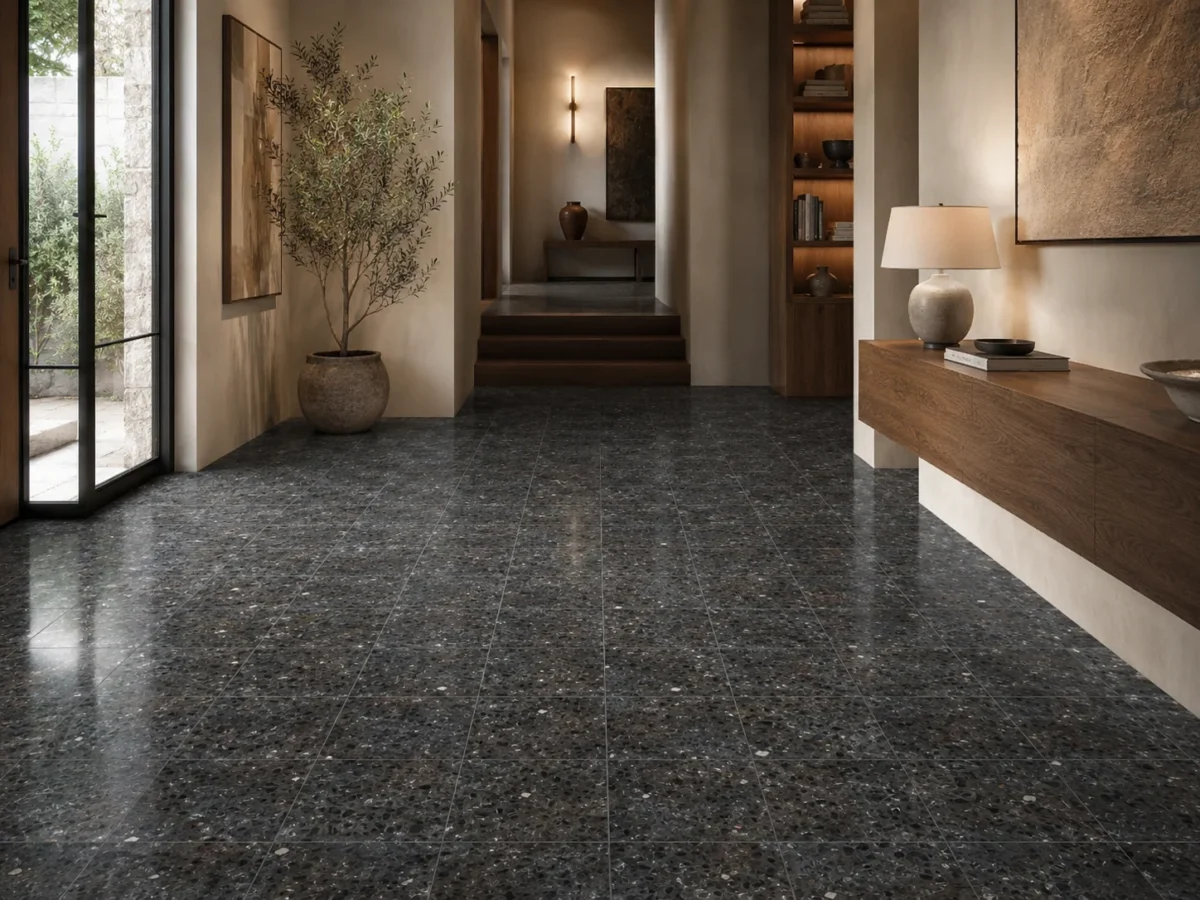
The dark pigmentation of black terrazzo brings specific considerations. You will want to weigh aggregate contrast, the visibility of dust and scuffs, and how the surface pairs with light architectural finishes. This guide addresses each point within the four criteria, so your design decisions rest on evidence rather than assumption.
Key Takeaways
- Match the terrazzo type to your project’s needs: cement for heavy wear, epoxy for fast schedules and color control, hybrid for balance.
- Choose the right finish for each space: polished for showrooms, matte or honed for entries and wet areas to improve slip resistance.
- Document fire ratings, slip resistance, and air quality test data in your specification to ensure compliance and smooth approval.
- Compare terrazzo and tile on total lifecycle cost, not just the upfront price, because terrazzo’s durability and seamless surface reduce long-term maintenance.
- Order terrazzo early—fabrication takes 3–4 months—and lock the design with samples and test data before construction begins.
Black Terrazzo Types And Performance
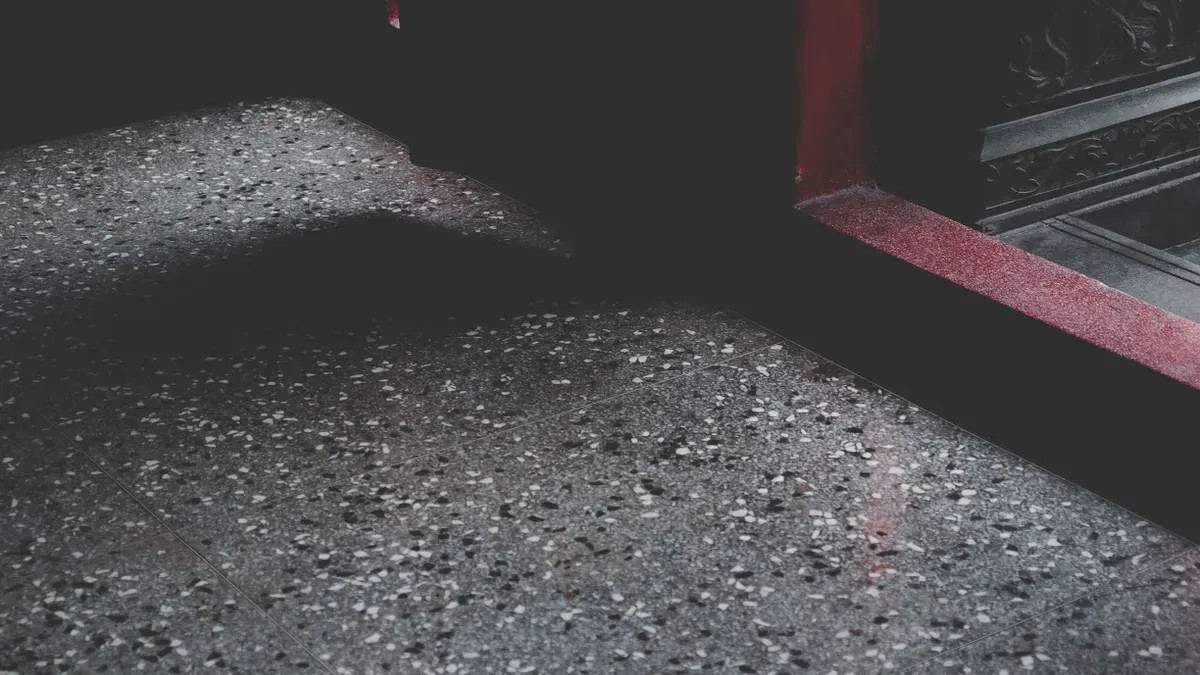
You will meet three terrazzo systems in commercial flooring projects: cement-based, epoxy, and hybrid. Each type differs in durability, maintenance, slip resistance, and color consistency. These differences shape your specification.
Durability And Color Consistency
Cement terrazzo binds aggregate with a Portland cement matrix. This matrix gives cement terrazzo floors high compressive strength and a long service life. Cement terrazzo installation takes time because the slab must cure before grinding. The matrix also shifts slightly in tone during cure, so approve a cured sample first. Cement terrazzo also resists heavy wear. Cement terrazzo floors last for decades under steady traffic.
Epoxy terrazzo uses a resin binder. Epoxy terrazzo floors cure fast and accept a thin build, which suits tight schedules. The resin holds pigment with high fidelity, so epoxy terrazzo gives the most even black field. Epoxy terrazzo also resists stains well, which eases durability and maintenance planning. A thin epoxy terrazzo floor suits renovation work with fixed floor heights. Epoxy terrazzo cures fast enough for weekend installations. Epoxy terrazzo resists chemicals well. Epoxy terrazzo suits fast-track work. Epoxy terrazzo floors resist staining.
Hybrid systems pair a cement base with a resin topcoat. Hybrid terrazzo systems balance cement stability with resin color control. They fit projects that need moderate cure times and dependable color.
Black terrazzo brings visual authority to a lobby or showroom. The dark field pairs well with white walls and light finishes, and the contrast sharpens the aggregate pattern. Terrazzo flooring forms a seamless, impermeable surface with few joints, so soil has fewer places to lodge. Black terrazzo rewards careful specification.
Slip Resistance And Finish
Slip resistance follows the surface finish, not the binder alone. A polished terrazzo floor scores lower on wet slip tests than a honed surface. Specify a matte or lightly etched finish for entries and wet zones. Poured-in-place terrazzo lets you control that finish across the whole field. Poured-in-place epoxy terrazzo cures quickly, so the space returns to service sooner. A poured-in-place terrazzo system also removes the joint lines of terrazzo tile. Test the chosen finish with a wet pendulum test before approval.
The table below sets out the trade-offs.
| Criterion | Cement-based | Epoxy | Hybrid |
|---|---|---|---|
| Durability | Very high strength | High, thin build | High, balanced |
| Maintenance | Periodic resealing | Low, stain resistant | Moderate |
| Slip resistance | Finish-dependent | Finish-dependent | Finish-dependent |
| Color consistency | Good, slight cure shift | Excellent | Very good |
| Best fit | Heavy public areas | Fast-track retail | Renovation work |
Poured terrazzo suits each type. Poured terrazzo gives a monolithic surface. Poured terrazzo also hides seams that tile cannot. Choose cement terrazzo for the hardest-wearing public areas. Choose epoxy terrazzo for speed and color control. Choose hybrid systems for balanced performance. Each option fits a defined need, and your design intent should guide the final choice. Confirm the finish and the material sample before you release the order. Your design team can verify the material selection against these criteria.
Matching Terrazzo Flooring To Space Types
Retail And Hospitality
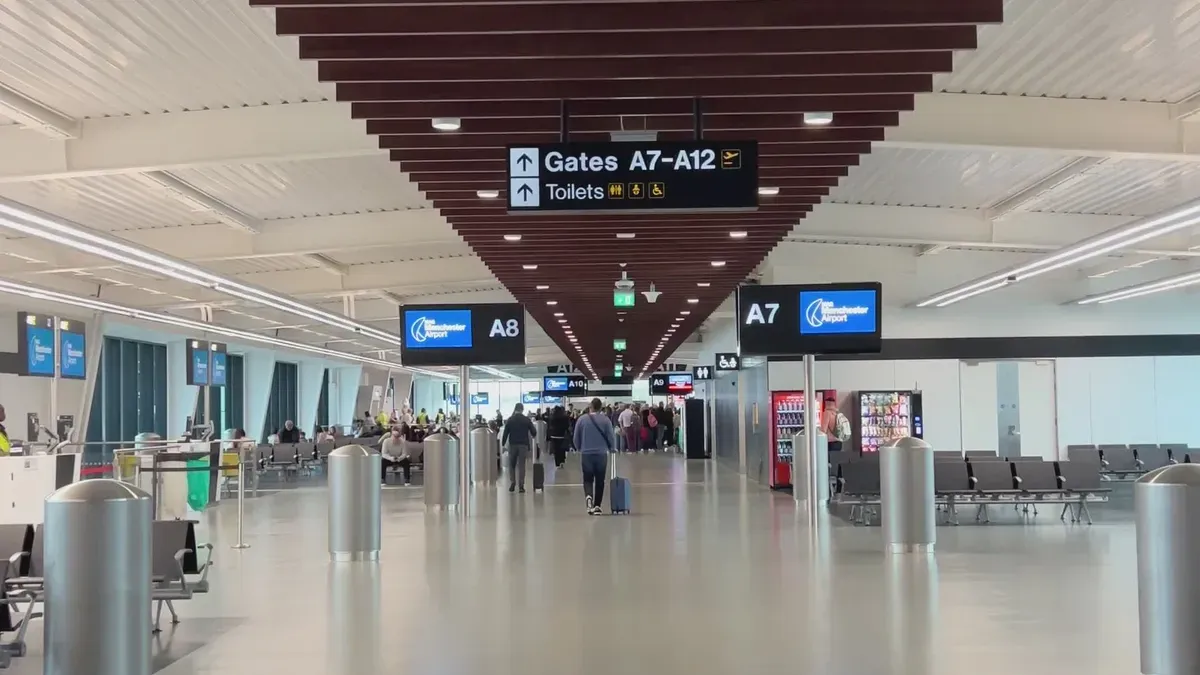
Retail and hospitality spaces reward a floor that carries visual weight and survives constant traffic. A luxury boutique benefits from epoxy terrazzo with a polished finish, because the resin holds a deep black field and sharp contrast. Epoxy terrazzo also cures fast, so a store refit loses fewer selling days. Epoxy terrazzo gives the most even black field and suits fast-track retail work. Epoxy terrazzo also resists stains well. High-traffic hotel lobbies suit cement terrazzo, which handles heavy wear across a long service life. Cement terrazzo resists steady wear. Cement terrazzo fits a landmark entrance. G·ONE precast terrazzo, recycled terrazzo, and mosaic terrazzo each fit this sector, from hotel lobbies to public landmarks.
Match the finish to the footfall. A polished epoxy terrazzo floor looks striking in a showroom, yet a honed surface serves an entrance better. Epoxy terrazzo floors accept a thin build, which helps a renovation with fixed door heights. Mosaic terrazzo lets you build a signature pattern into the terrazzo design. Specify a material sample and confirm the aggregate blend before you approve the order.
Healthcare And Corporate
Healthcare and corporate interiors demand hygiene, comfort, and slip resistance. A seamless poured terrazzo surface leaves few joints for soil, which supports cleaning routines. Poured terrazzo gives a corridor one continuous field. Specify a matte finish in corridors and entries. Epoxy terrazzo floors cure fast, so a clinic or office wing returns to service quickly. Epoxy terrazzo resists stains and chemical spills, a practical gain in a clinical setting.
Corporate lobbies can use black terrazzo as a focal point against white walls. Cement terrazzo suits back-of-house corridors and heavy-duty zones. Epoxy terrazzo holds pigment with high fidelity, so a corporate reception keeps an even tone. Epoxy terrazzo also suits a reception desk surround. G·ONE supplies terrazzo floors and countertops in custom mixes, and the team supports terrazzo flooring selection with samples and test data for any commercial flooring brief. Seamless floors leave fewer joints for soil, and the design team can confirm the finish. Review the terrazzo tile option only where joint lines fit the design.
Terrazzo Specification And Compliance
Compliance turns a good-looking floor into an approved one. You must document fire ratings, slip resistance, and indoor air quality before the terrazzo specification clears review. A terrazzo specification guide helps architects verify each item against the project manual. Use the guide as a checklist, not a brochure.
Fire Ratings And Slip Standards
Fire performance for terrazzo systems rests on the binder and the substrate. Cement terrazzo and epoxy terrazzo both achieve Class A flame spread ratings under ASTM E84 when you pair them with a noncombustible substrate. Confirm the tested assembly, not just the binder. The specification must name the test method and the reported class.
Slip resistance needs a measured value, not a claim. Specify a wet dynamic coefficient of friction (DCOF) tested to ANSI A326.3 for level interior floors. Entries, ramps, and wet zones need a higher threshold than dry offices. A polished epoxy terrazzo surface can fall below that threshold when wet. Specify a honed or lightly etched finish in those zones. Your terrazzo specification should state the finish, the test method, and the acceptance value together.
VOC Emissions And Air Quality
Indoor air quality depends on the binder and the sealer. Epoxy terrazzo systems can meet low-emission targets when the resin and sealer carry third-party certification. Ask for test data against CDPH Standard Method v1.2 or ASTM D5116. Cement terrazzo systems generally carry low volatile organic compound (VOC) content in the matrix. Sealers and curing compounds remain the variable. Name the certified product in the specification, not just the category.
G·ONE supports this step with Environmental Product Declarations (EPDs). An EPD documents environmental performance across the product lifecycle and gives your team transparent, verifiable data. Attach the EPD to the terrazzo specifications so reviewers see the evidence.
Lead time belongs in the same conversation. True terrazzo is fabricated to order, so plan the schedule early.
Ordering true terrazzo can take 3–4 months. Lock the specification before the construction schedule tightens.
That window covers mix approval, fabrication, and delivery. A late change to the terrazzo design restarts the clock. Publish the approved terrazzo specifications and the material sample before you release fabrication. Cement terrazzo and poured terrazzo both follow this timeline. Build the lead time into the specification so the flooring package does not delay handover.
Terrazzo Cost And Lifecycle Value
Why Terrazzo Is More Expensive Than Tile
Terrazzo is more expensive than tile upfront, and the gap comes from three sources. The material itself costs more, because you pay for graded aggregate, pigment, and a binder system. Fabrication adds cost, since a terrazzo design is mixed and cast to order rather than pulled from stock. Installation labor also runs higher, because poured terrazzo needs skilled crews, curing time, and grinding passes.
Tile wins on the first invoice. A tile floor arrives as finished units, and a crew sets them quickly. Terrazzo spreads its cost across a longer horizon. A terrazzo floor resists wear for decades, and it needs less replacement over that span. Tile joints collect soil and lose grout lines over time. Terrazzo floors form a seamless surface with few joints, so cleaning labor drops. Weigh the two on a lifecycle basis, not on the bid alone.
Material, Installation, And Lifecycle Costs
Split the budget into three lines. The material line covers aggregate, binder, and sealer. The installation line covers substrate prep, mixing, placement, and grinding. The lifecycle line covers cleaning, resealing, and repair across the service life. Epoxy terrazzo cures fast and accepts a thin build, so it can trim installation time on a tight schedule. Cement terrazzo carries high compressive strength, so it suits heavy public zones. Poured terrazzo removes the joint lines of terrazzo tile, and that seamless field lowers long-term cleaning cost.
| Cost line | Terrazzo | Tile |
|---|---|---|
| Upfront material | Higher | Lower |
| Installation labor | Higher, skilled | Lower, faster |
| Lifecycle maintenance | Lower, seamless | Higher, joint care |
| Replacement horizon | Long | Shorter |
G·ONE supports the cost decision with customization options for colors, aggregates, dimensions, finishes, and custom molds. Fabrication services include CNC cutting and edge processing. The team supplies samples, quotations, and engineering support, so you can price the terrazzo design against your flooring budget with real data. Request a quotation early, because true terrazzo is made to order.
Apply the four criteria as a checklist before you approve any black terrazzo order. Confirm the performance match by terrazzo type. Confirm the application fit by space type. Verify fire, slip, and VOC compliance through the terrazzo specification. Compare cost on a lifecycle basis, not on the bid alone.
Then take one practical step. Request mix designs, EPDs, and test data from your supplier, and ask G·ONE’s team for samples and engineering support. Attach that evidence to the terrazzo specification and lock the design before fabrication begins. A documented specification protects both your schedule and your budget.
FAQ
Does black terrazzo show dust and scuffs more than light floors?
A dark field reveals light dust and pale scuff marks sooner than a light floor does. Choose a matte or honed finish to soften the contrast. A seamless terrazzo surface with few joints also gives soil fewer places to collect, which keeps daily cleaning simple.
How do you keep a black terrazzo floor looking sharp?
Sweep or damp-mop regularly and reseal on the schedule your supplier sets. Cement terrazzo needs periodic resealing, while epoxy terrazzo resists stains well. Specify the sealer by product name in your terrazzo specification, then follow the maintenance plan for that system.
Which aggregate blend works best against a black field?
Contrast drives the look. A white or pale aggregate pops against the dark matrix, while a black-on-black blend reads as a quiet, monolithic field. Approve a cured sample under the project lighting before you lock the terrazzo design, because the same blend can shift in tone.
Can black terrazzo handle heavy commercial traffic?
Yes, when you match the type to the load. Cement terrazzo carries high compressive strength and suits heavy public zones. Epoxy terrazzo cures fast and resists stains, which fits fast-track retail. Both terrazzo floors hold up under steady footfall when the finish suits the space.
How early should I specify terrazzo in the project schedule?
Order true terrazzo early, because fabrication runs 3–4 months. Lock the mix, finish, and sample before the schedule tightens. Request mix designs, EPDs, and test data from G·ONE, then attach that evidence to your terrazzo specification so review and fabrication move without delay.