
Start with high-resolution, color-calibrated terrazzo floor photos from manufacturer resources such as G·ONE. Verify scale and finish in each image, then confirm your final choice with a physical sample. This habit protects your project from a familiar and expensive trap. A photo can look perfect on screen and still mislead in real projects. Color shift, staged lighting, or a missing scale reference turns a confident selection into a costly revision. Designers and architects rely on accurate visual references for terrazzo, and the practical sequence below covers criteria, sourcing, evaluation, usage, and pitfalls. Flooring decisions deserve that level of care from the first image search.
Key Takeaways
- Always start with high-resolution, color-calibrated photos from manufacturer sources like G·ONE.
- Check scale and finish cues in each image to avoid costly mistakes.
- Confirm your final choice with a physical sample under normal lighting.
- Use manufacturer photos for specifications and stock photos for inspiration only.
- Caption every image with source, finish, and scale, and keep licensing records.
Key Criteria for Terrazzo Floor Photos
Resolution, Color, and Lighting
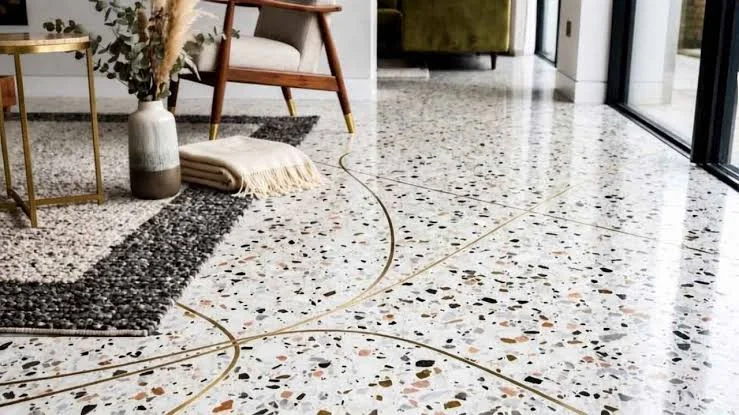
Resolution, color calibration, and lighting context form your first filter for any terrazzo floor photos. A low-resolution file hides chip edges and surface texture. A color-shifted image turns a warm gray into a cool blue. Staged lighting adds highlights that vanish under normal room light. Check the pixel dimensions before you judge the surface. A file that looks crisp on a phone screen can fall apart on a large monitor or a printed board. Look for a neutral reference in the frame, such as a white card or a known wall color. Compare the same terrazzo across two or three lighting conditions when the source provides them. Daylight, warm interior light, and mixed light each change the reading. A calibrated manufacturer file usually carries a color target or a stated lighting setup. Ask for that context when a gallery image lacks it. Request the original file when you plan to print or zoom. Judge terrazzo at full zoom before you shortlist it. This step protects your terrazzo color palette from screen distortion. It also keeps your selection consistent across a presentation deck.
Scale and Finish Cues
Scale reference tells you whether you see a fine speckle or a bold statement. Aggregate size also affects visual scale. Smaller chips create a closer, finer texture; larger fragments become more noticeable when repeated over broad floors or reception walls, as Forustone notes. Certain tiles showcase large, prominent chips generating striking visual drama, while others incorporate finely crushed materials producing delicately speckled surfaces. The proportion of aggregate to foundation material substantially affects the finished appearance, with elevated aggregate densities producing more dramatic visual engagement, according to Nova Tile and Stone. Terrazzo is highly customizable through aggregates, pigments, and patterns. Your image must show enough detail to judge chip size and distribution.
Finish cues matter just as much. Matte, polished, and honed surfaces read differently under the same light. A polished floor reflects the room; a honed floor absorbs it. A matte surface scatters light and softens chip contrast; a polished surface sharpens it. Look for a reflection line or a shadow edge to confirm the finish. Compare finish images at the same zoom level for a fair read. Tile module gives you a second scale anchor. A photo of terrazzo floor tiles beside a door frame or a grout line reveals true size. Without that anchor, a small-format tile can look like a large panel. A photo with no scale anchor forces you to guess, and guessing costs revisions. A terrazzo surface photographed under mixed light can shift hue.
Designers and architects often compare terrazzo tiles against terrazzo-look porcelain tile and terrazzo-look porcelain samples. Those alternatives suit different budgets and installation methods. A terrazzo-look porcelain option can mimic marble and natural-stone fragments, yet the chip depth differs from cast terrazzo. Venetian terrazzo remains the traditional cement-matrix reference point for chip character. Colorful terrazzo flooring and geometric terrazzo flooring demand sharp image detail, because pattern edges blur at low resolution. Contemporary interiors also lean on terrazzo for lobbies and retail floors, where finish and scale decide the look. Keep the comparison honest by matching lighting and scale across the set. Treat every terrazzo image as a specification input, not decoration. Terrazzo rewards a careful eye.
Where to Source Terrazzo Flooring Photos
Manufacturer Galleries and Sample Scans
Manufacturer galleries give you the strongest starting point for spec-grade imagery. These libraries exist for specification, not decoration. They typically pair each surface with a product name, finish, aggregate description, and technical sheet. That pairing turns a picture into a usable reference. G·ONE’s digital catalogs and design lookbooks show how an organized, project-ready photo resource should work. You can move from a collection overview to a single colorway without losing the thread. Sample scans add a second layer of value. A flatbed scan of a physical chip captures true color under controlled light. It also removes the room from the frame, so you judge the material alone. Request scans at high resolution and compare them against the gallery image. A close match between scan and photo builds confidence in the file. A mismatch tells you to trust the scan and treat the photo as mood only. Manufacturer sample libraries and NTMA color plates remain trusted reference points for this cross-check. Both give you a stable baseline that screen images cannot replace.
Stock Libraries and Project Portfolios
Stock libraries and project portfolios serve a different job. They shine in early inspiration and mood boards. A wide shot of a hotel lobby or a retail interior shows terrazzo in context. You see how the surface behaves at scale, how it meets a wall, and how it reads under architectural light. Use these images to set direction with a client. Use them to test a palette against furniture and finishes. They fall short at technical verification. A stock photo rarely states the finish, the aggregate size, or the tile module. Licensing terms also vary, and a portfolio image may belong to the photographer or the project team. Treat stock and portfolio shots as concept material. Treat manufacturer files as evidence. Designers who separate the two avoid costly assumptions. Architects who blend them without labels invite confusion later.
Context images also help you compare material families. A terrazzo-look porcelain tile can appear in the same lobby shot as cast terrazzo. Terrazzo-look porcelain now covers a wide range of visuals. Terrazzo-look porcelain suits large-format floors and tight budgets. Terrazzo-look porcelain also appears in exterior renders and public-space concepts. Terrazzo-effect porcelain stoneware brings similar visuals to wall applications. Venetian terrazzo anchors the traditional end of the spectrum with its cement matrix and chip character. Keep each family labeled in your board. A clean label protects the specification. It also keeps the conversation honest when you move from inspiration to terrazzo flooring selection. Good sourcing habits start with knowing what each image can prove. Strong terrazzo flooring decisions follow the same rule.
Evaluating Terrazzo Floor Tiles in Photos
Performance and Application Fit
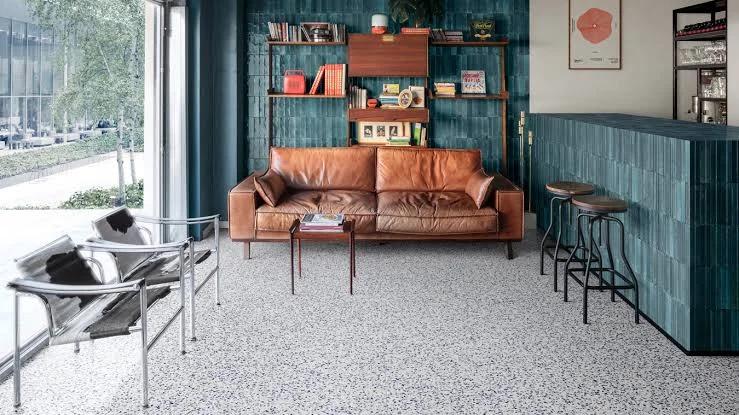
Read performance cues from the photo and its supporting documents together. Wear resistance, slip behavior, and traffic suitability rarely show in a single frame. Doyle Dickerson Terrazzo notes that thinset epoxy systems serve entrances, lobbies, corridors, and shared spaces in commercial buildings. Terrazzco adds that terrazzo withstands heavy foot traffic for years and can be refinished to look new. Emila America points out that the irregular pattern hides micro-scratches better than uniform surfaces. Look for close-ups that reveal chip density and surface texture. Ask for documentation on abrasion and impact before you specify. EU CE marking and test data on breaking strength, breaking load, Böhme abrasion resistance, water absorption, and reaction to fire give you compliance evidence a photo cannot. Treat those documents as the performance layer beneath the image.
The matrix choice shapes both appearance and specification. Cement terrazzo, the traditional reference point for venetian terrazzo, cures slowly and suits interior and exterior work. Epoxy cures fast, reaches a higher gloss, and holds vibrant color. Cement terrazzo spans only 3 to 5 feet between divider strips, while epoxy covers 20 to 30 feet, per Terrazzco. Cement systems also limit small or specialty aggregates.
Standards and Cost Signals
The National Terrazzo and Mosaic Association establishes national standards for terrazzo floor and wall systems and provides specifications and color plates to architects at no cost. Use those plates as your compliance baseline when a photo looks off.
The National Terrazzo and Mosaic Association, Inc. is a full service Non-Profit Trade Association headquartered in Fredericksburg, Texas. The Association establishes national standards for all Terrazzo floor and wall systems and provides complete specifications, color plates, and general information to architects and designers at no cost.
Cost signals appear before any quote. Aggregate type, custom blends, and panel versus tile format all move price. G·ONE offers custom color, aggregate blend, and mold options, plus project samples and technical consultation, to verify what a photo cannot show.
Using Terrazzo Floor Photos in Specs
Presentation Best Practices
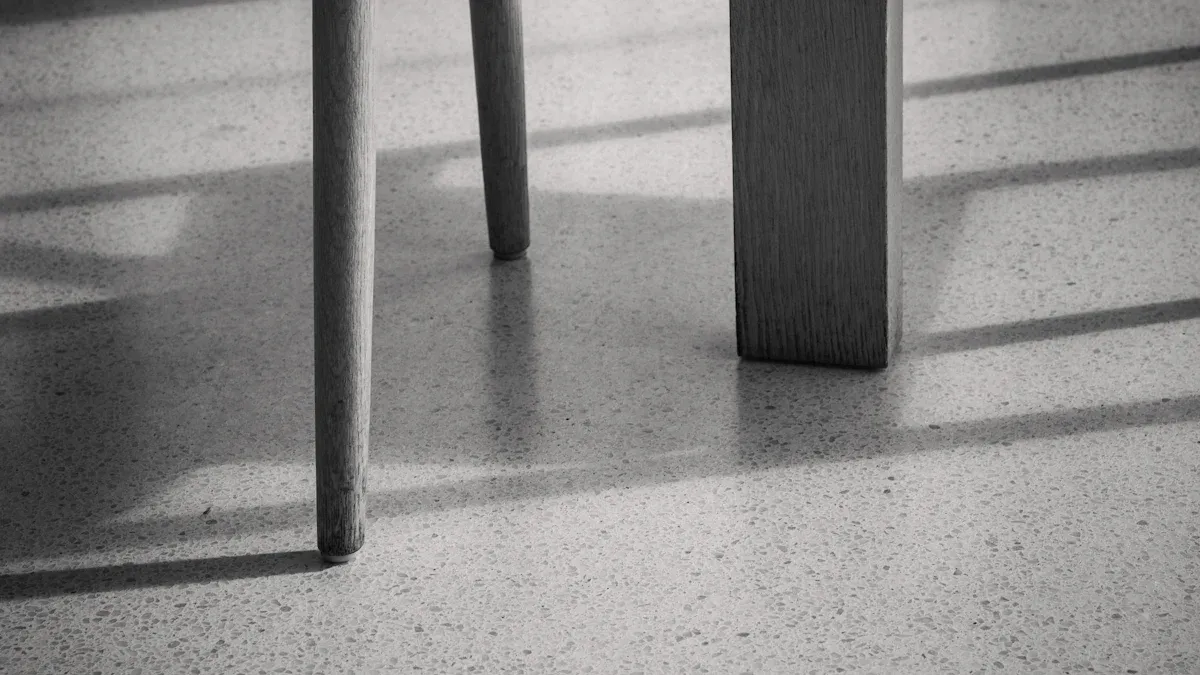
Consistent lighting keeps a client deck honest. Pull every image from the same lighting setup when you can. A daylight shot next to a warm interior shot makes two identical terrazzo surfaces look like different products. Place options side by side at the same zoom level. This layout lets clients compare chip size and finish without guessing. Pair your terrazzo floor photos with a physical sample on the table. The sample settles any doubt the screen creates. Keep the flooring sample beside the screen during the review. Keep the terrazzo sample under the same lamp as the display.
Show venetian terrazzo beside terrazzo-look porcelain when the budget conversation starts. Label each terrazzo family clearly. Terrazzo-look porcelain can sit in the same deck, but mark it as an alternative. Designers who present terrazzo tiles against real samples win faster approvals. Architects can also show pairing terrazzo with wood flooring in a rendered scene. That context helps clients see terrazzo in residential and commercial interiors. Contemporary interiors often mix large-format terrazzo tiles with warm textures. A quick mock-up makes that terrazzo mix concrete.
Documentation Workflows
Caption every image with its source, finish, and scale. A caption like “G·ONE, honed, 24-inch module” turns a picture into a record. The terrazzo finish must match the caption exactly. Store licensed files in a project folder with the license terms attached. Keep attribution notes beside each file. Reference manufacturer lookbooks inside your specification package. These lookbooks carry the technical data a photo cannot show.
Add the CE test data for terrazzo flooring to the same package. Breaking strength averages at least 5.0 MPa, and no single result falls below 4.0 MPa. Breaking load reaches at least 2.5 kN for tiles up to 1,100 cm². Böhme abrasion stays under 30 cm³/50 cm², and water absorption stays under 8% by mass. Reaction to fire is A1fl. This documentation protects your terrazzo flooring choice at every review. Flooring decisions move faster with clean records. A terrazzo deck without captions invites errors. Terrazzo rewards a careful record. Good records also help when you write about decorating your home with terrazzo flooring for a residential client.
Common Pitfalls with Terrazzo Photos
Misleading Images and Color Shift
Screen color shift is the most common trap in terrazzo floor photos. Your monitor, phone, and printer each render the same file differently. A warm beige chip can read as pink on one display and gray on another. Calibrate your display before you judge any terrazzo color. Open the file on two devices and compare. When the two views disagree, trust the calibrated one and request the manufacturer’s color target.
Staged lighting creates a second layer of distortion. A photographer can flood a surface with raking light and make a matte finish look polished. Cropped scale hides the truth as well. A tight frame removes the door frame, the grout line, and the tile module. You then read a small terrazzo floor tile as a large panel. Always ask for a wide shot with a known object in frame. Compare that shot against a physical sample under ordinary room light. Venetian terrazzo and terrazzo-look porcelain tile can look identical in a styled photo and clearly different in person. Marble and natural-stone fragments in a terrazzo-look porcelain body also read flatter at close range. Keep one unedited, wide-angle image in every set.
Licensing and Usage Mistakes
Licensing errors surface late and cost real money. Stock images carry usage terms that vary by platform, print run, and client type. Manufacturer images usually permit specification use but restrict advertising. Confirm the rights in writing before an image enters a client deck. Save the license file beside the photo in your project folder.
Attribution records protect you during review. Log the source, the photographer, the license type, and the date of download for every file. A simple caption row in your specification package covers this need. Manufacturer lookbooks often state their own usage terms, so read them before you republish a page. Good records also help when a client asks about terrazzo flooring sourcing months later. Contemporary interiors decks mix many sources, and clean records keep that mix defensible. Treat every terrazzo image as licensed material, not a free asset. Careful sourcing keeps your terrazzo flooring package clean at every review.
Close your terrazzo selection with a repeatable routine. Source from manufacturer galleries first, verify scale and finish in every image, and confirm the final choice with a physical sample. Run this checklist before any surface enters a client deck. A short review now saves a costly revision later.
- Resolution and display calibration checked
- Lighting context stated
- Scale reference visible
- Finish match confirmed
- Licensing clearance recorded
- Sample verification complete
G·ONE offers calibrated manufacturer photography and project samples as a practical starting point. Treat terrazzo photos as evidence, not decoration. Your terrazzo flooring decisions will then hold up in review and in the built space.
FAQ
How do I check terrazzo color accuracy on screen?
Calibrate your monitor first. Open the terrazzo file on two devices and compare the results. Ask the manufacturer for a color target or a sample scan. A physical terrazzo sample under normal room light settles any doubt the screen creates.
Can a photo prove terrazzo floor tiles will perform well?
No. A photo shows appearance, not performance. Request test documentation alongside the image. G·ONE’s EU CE certification covers breaking strength, breaking load, Böhme abrasion resistance, water absorption, and reaction to fire. Read those figures before you specify any terrazzo surface.
Why does venetian terrazzo look different in person?
Venetian terrazzo uses a cement matrix, and its chip character reads deeper at close range. Staged lighting flattens that depth in photos. Compare the image against a physical sample. The same gap appears between terrazzo and a terrazzo-look porcelain tile in a styled shot.
How do I tell terrazzo from terrazzo-look porcelain in a photo?
Look for chip depth and edge sharpness. Terrazzo-look porcelain prints the pattern on the surface, so fragments read flatter at full zoom. Terrazzo-look porcelain also repeats its pattern across large formats. Request a close-up and a wide shot of each option before you compare them.
What should I confirm before using a terrazzo photo in a client deck?
Confirm four things: source, finish, scale, and license. Caption each terrazzo image with the manufacturer, the finish, and the tile module. Save the license terms beside the file. Pair the photo with a physical terrazzo sample during the review. Clean records keep your terrazzo flooring package defensible.