
Begin with three steps: define project type and traffic level, match technical performance and compliance needs, and set the budget envelope including lifecycle cost.
The 24×24 format is itself a tile design decision. Fewer grout joints create a cleaner surface for open floors and expansive walls. That logic guides terrazzo tile 24×24 use in bathroom floors, bathroom walls, bathroom vanities, bathroom feature walls, and bathroom corridors.
This guide covers product types and specification tips. It compares terrazzo tiles, porcelain tiles, mosaic tiles, wall tiles, floor tiles, porcelain tile look-alikes and porcelain tile alternatives. Expect tile design intent, thoughtful tile selection guidance, installation planning, and installation support. G·ONE Materials offers samples, catalogs, and technical documentation.
Key Takeaways
- Choose 24×24 terrazzo tiles to reduce grout lines and create a clean, open look on floors and walls.
- Match slip ratings to each wet area: use P4 or R10/R11 for bathroom floors and matte finishes for safety.
- Compare terrazzo with porcelain look-alikes by upfront cost and long-term durability for each zone.
- Request samples and technical documents early to confirm color, finish, and installation details.
- Plan simple layouts with large tiles to save on installation labor and protect your budget.
Why Choose Terrazzo Tile 24×24
Scale and Layout Benefits
Format is a design decision, not a packaging detail. A terrazzo tile 24×24 reduces the number of grout joints across an open floor. Fewer joints mean a cleaner, less interrupted surface, and that matters most on expansive floors and long walls. The same slab reads very differently at a smaller size, so the format shapes the final look as much as the color or the aggregate size does.
Layout planning becomes simpler with large-format tiles. You set a grid once and repeat it, which keeps sightlines steady through corridors and open rooms. A large-format 24×24 option also suits bathroom floors and walls, where fewer joints support a calm, continuous finish. Compare a 24×24 porcelain tile against a terrazzo tile of the same size, and you will see how scale drives the visual result.
Terrazzo Tile Types Compared
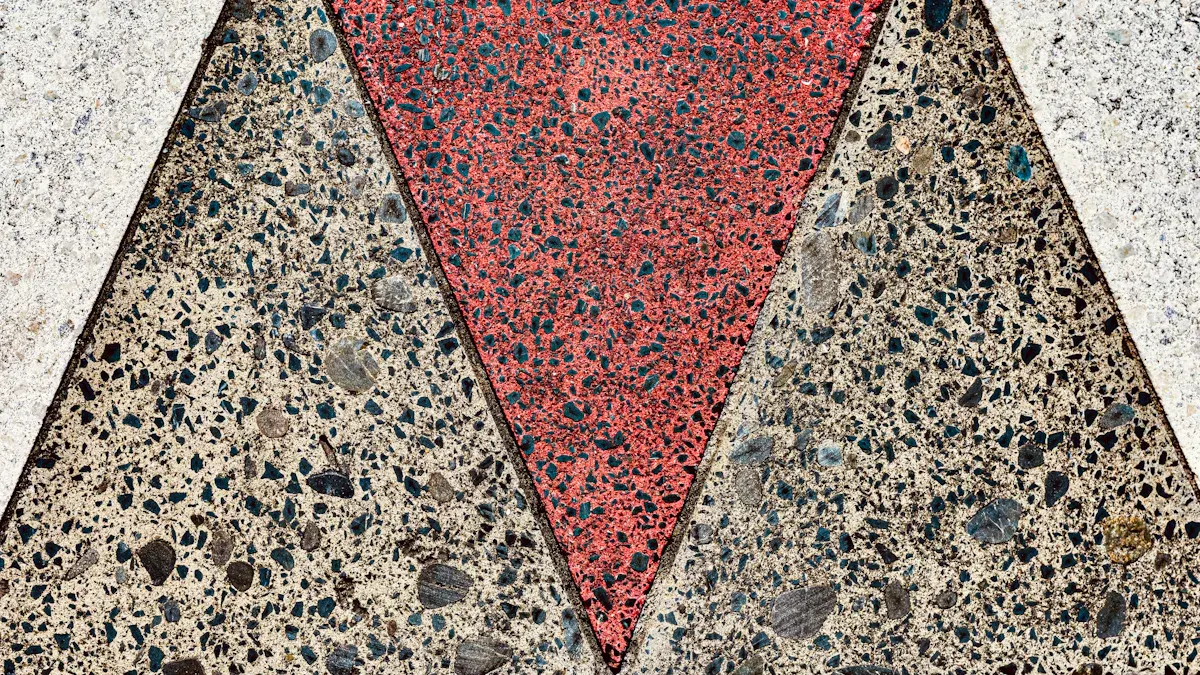
Each terrazzo type serves a different design intent. Regular terrazzo delivers a consistent, durable surface for general floors and walls. Recycled terrazzo supports green-building goals and suits projects with sustainability targets. Mosaic terrazzo brings fine detail and works well for feature areas and inlays. Precast terrazzo arrives as finished panels or blocks, which helps when you need tight control over terrazzo tiles and inlays.
G·ONE offers regular, recycled, and mosaic terrazzo lines, plus UHPC panels and blocks. That range lets you match tile materials and styles to the application. A terrazzo look porcelain tile can serve a modern bathroom at a lower material cost, while authentic terrazzo flooring brings depth and repairability. Weigh a terrazzo look porcelain tile against real terrazzo for each zone, and let the design intent decide.
Key Selection Criteria
Performance Criteria for Terrazzo Tiles
Compare four metrics before you commit: durability and wear resistance, slip resistance, maintenance needs, and preservative treatment. Wear resistance decides how a floor holds its surface in heavy traffic, and it separates one terrazzo tile from another. Slip resistance decides safety in wet zones, especially in any bathroom tile you specify. Maintenance needs shape the cleaning routine your client will live with. Preservative treatment protects the surface and extends service life, so confirm the schedule with your supplier.
Slip resistance has published test methods, and you should specify a rating rather than a description. Standards Australia AS 4586:2013 sets wet pendulum classes:
| Pendulum Class | Slip Resistance (SRV) | Suitability |
|---|---|---|
| P2 | 25–34 | Moderate, dry indoor areas |
| P3 | 35–44 | Wet areas, kitchens, covered outdoor |
| P4 | 45–54 | Bathrooms, public walkways |
| P5 | ≥55 | Ramps, pool surrounds |
The oil-wet inclining platform test adds R-ratings from R9 to R13. Solid Shape describes R10 as ideal for occasional moisture and R11 for frequent water or grease. ANSI A326.3 sets a minimum DCOF of 0.42 for level interior surfaces walked on when wet. Build a bathroom tile design: 9-item comparison sheet listing rating, finish, and maintenance, then repeat that bathroom tile design: 9-item comparison for each wet room. Match bathroom tile to the wet zone. Check bathroom tile against the rating table. A matte finish works as a practical default for bathroom tile. Large-format bathroom tile reduces joints in a shower zone. Terrazzo tiles and inlays let you place detail where the eye lands, and a terrazzo tile holds up well in corridors. Compare matte tiles, wet-area tiles, and feature tiles.
Compliance and Cost Factors
Application fit comes first. Indoor floors, wall tiles, and exterior facades each demand different strength and weather resistance. Regulatory compliance follows. ADA requires stable, firm, slip-resistant routes; any vertical change over 1/4 inch must be beveled, and more than 1/2 inch requires a ramp. ASTM E648 Class 1 covers fire resistance in public exit corridors. FloorScore and CDPH v1.2 address VOC emissions, and LEED v4.1 supports green building mandates.
Cost splits into three lines: material, installation, and lifecycle. Tile selection starts with traffic, and thoughtful tile selection pairs rating with finish. Tile materials and styles vary widely, so compare floor tiles, mosaic tiles, and porcelain tiles on equal terms. Tile design starts with the rating. Bathroom tile design ideas often start with a large format. Bathroom tile design ideas for wet rooms favor P4. Bathroom tile design ideas for vanities allow P2. A 24×24 porcelain tile suits a modern remodel, and a second 24×24 porcelain tile option may fit a tighter budget. Large-format porcelain keeps grout lines few. Large-format porcelain tiles need flat substrates. A terrazzo look porcelain tile mimics the pattern, and a terrazzo look porcelain tile costs less upfront. Porcelain tile installation runs faster on flat floors. Installation labor, installation planning, and installation support all affect the final number. Terrazzo tile 24×24 costs more upfront and rewards you over decades through repairability. Weigh real terrazzo, precast terrazzo, recycled terrazzo, and mosaic terrazzo for each zone, and let traffic and budget decide. Terrazzo also repairs well.
Selecting by Project Type
Residential and Commercial Projects
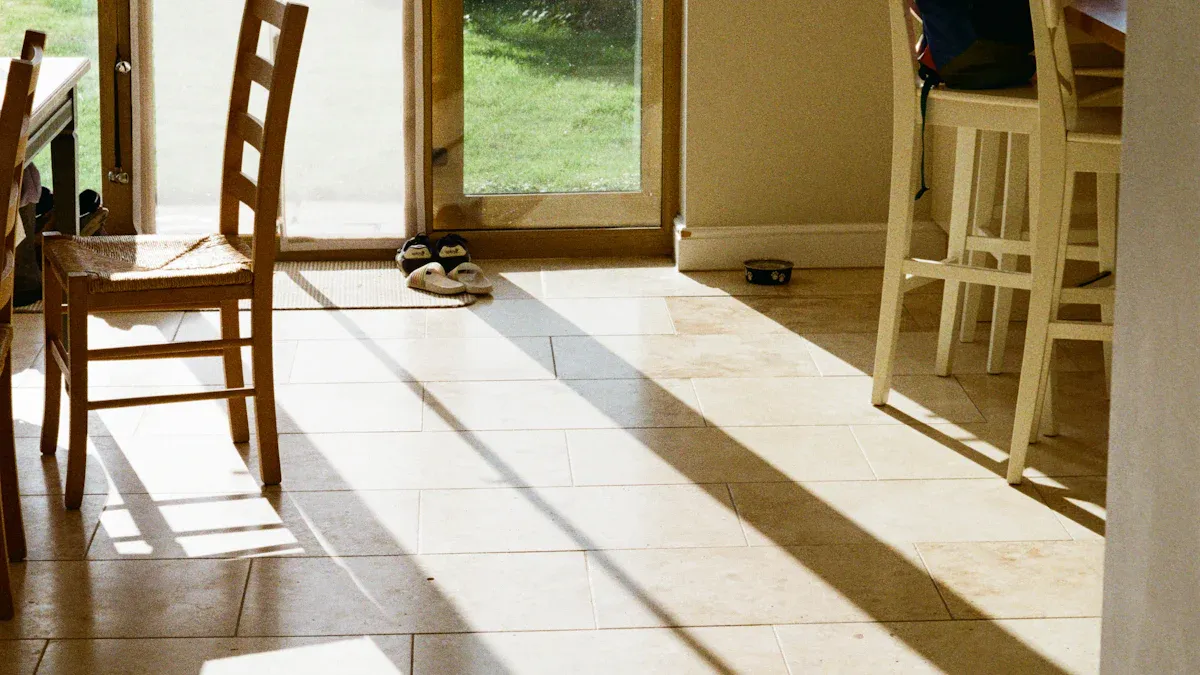
Start residential work with the wet rooms. A bathroom tile choice carries more risk than any other surface in the house. American Flooring reports that a coefficient of friction of 0.42 or more is safe for wet areas, and ANSI A326.3 sets the same minimum dynamic coefficient of friction for level interior surfaces walked on when wet. R10 or R11 ratings suit wet zones best.
| Metric | Guidance |
|---|---|
| Dynamic COF, wet bathroom | At least 0.42 |
| Slip rating for wet areas | R10 or R11 |
| Recommended COF per American Flooring | Above 0.6 |
Matte finishes grip better than polished surfaces. American Flooring notes that textured or matte finishes help prevent slipping even when wet, and glossy tiles can be slippery. Build a bathroom tile design: 9-item comparison sheet for each wet room, and repeat that bathroom tile design: 9-item comparison for the vanity zone. Your bathroom tile design ideas should favor matte surfaces for shower floors. Bathroom tile design ideas for vanities allow a lower rating. Large-format bathroom tile reduces joints, yet smaller bathroom tile adds grout lines that improve traction. American Flooring advises water-resistant adhesives, anti-slip grout, proper drainage slope, and regular sealing. Those steps protect every bathroom tile you specify.
A 24×24 porcelain tile suits a modern remodel. Direct Stone Source describes high-quality porcelain as non-porous and fiercely resistant to stains, scratches, fading, and moisture, with no periodic buffing or waxing. A terrazzo look porcelain tile captures the speckled aesthetic at a lower upfront cost. Authentic terrazzo flooring brings depth and repairability, and Geon notes there is no substitute for authentic materials when building for longevity. Weigh a terrazzo look porcelain tile against real terrazzo per zone. A second 24×24 porcelain tile option may fit a tighter budget. Terrazzo tiles and inlays let you place detail where the eye lands.
Hospitality, Healthcare, and Retail
Commercial work starts with traffic. Terrazzo handles convention centers, airports, and high-end lobbies, per Int Flooring, and it earns a very high durability rating with low maintenance. No single universal traffic rating exists, so verify sealing and slip resistance. Healthcare floors face beds, wheelchairs, and carts under heavy loads. Seams and moisture absorption matter there, and reliable slip resistance reduces risk. Retail floors take constant browsing traffic, with entryways and checkout areas seeing the heaviest concentrated wear. Hospitality floors endure heavy foot traffic, rolling loads, and consistent chemical cleaning.
G·ONE supplies regular, recycled, and mosaic terrazzo for hotel lobbies, luxury retail boutiques, and public landmarks, with custom colors, aggregate blends, and molds. UHPC panels serve facades and column covers. A terrazzo tile 24×24 keeps joints few in a lobby, and 24×24 inches or larger suits expansive floors. Specify terrazzo tiles rated for abrasive stress. Terrazzo resists microbial growth, which suits hygiene-sensitive spaces. The TCNA study cited by Spec Ceramics puts epoxy terrazzo at about $13.66 per square foot for initial installation, with a 75-year useful life and a $137.22 per square foot lifecycle cost. Compare terrazzo look porcelain tiles on lifecycle terms. Large-format porcelain tiles cut installation labor. Large-format porcelain needs flat substrates. Plan installation early, and confirm installation support with your supplier. Large-format tile also suits walls. Large-format tiles keep sightlines steady. A terrazzo look porcelain tile works in retail fit-outs. Porcelain tile installation runs faster on flat floors. Porcelain tile suits tight timelines. Porcelain tile resists moisture well. Porcelain tile needs few joints at 24×24. Porcelain tile selection follows traffic. Tile selection follows the same logic. Tile design starts with the rating. Your tile design should pair format with finish. Good tile design balances cost and longevity. Terrazzo tiles hold up in corridors. Terrazzo tile repairs well over decades.
Specification and Installation Tips
Specifying Terrazzo Tiles and Inlays
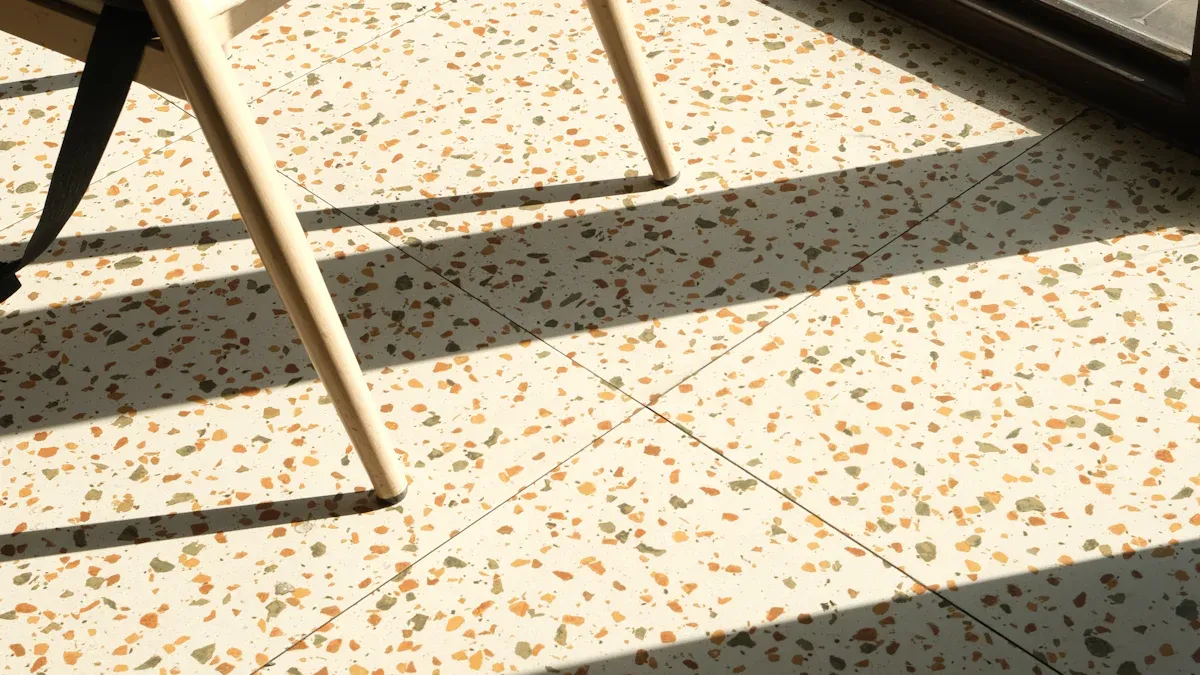
Write the specification around selection, design intent, and installation. Name the binder, the aggregate blend, and the finish. IMI lists membranes for cleavage, bonding, moisture mitigation, and crack suppression. Set a chip density of 75-85% for visual impact, and define aggregate size by the screen the chips pass. Custom colors come from a physical sample or a color deck number. Divider strips in metal or plastic build geometric, organic, or full-field art layouts. Precast molds suit vanities, stairs, and wall panels. For terrazzo tiles and inlays, waterjet cutting embeds logos into the floor. Apply the same discipline to bathroom tile: state the finish, the sealer, and the slip rating. Bathroom tile design ideas for vanities allow a honed surface. Bathroom tile design ideas for showers need a matte one.
Samples, Installation, and Maintenance
Request samples and technical documents early. A Voice lists technical submittals, maintenance data, nominal size, finish, substrate, and a reference panel for chip size, color, and polish. Dongxing advises reviewing mock-ups during design development. G·ONE supplies digital catalogs, design lookbooks, project samples, installation support, and engineering support. Early talks on drawings, quantities, and delivery help large projects.
Installation follows the material. Epoxy cures fast and needs a dry, crack-free substrate. Precast behaves like stone, so accurate fitting prevents shadow lines. Terrazzo is acid-sensitive; specify pH-neutral cleaners and a water-based sealer.
Bathroom tile selection deserves its own line. Compare a 24×24 porcelain tile against a terrazzo look porcelain tile for a terrazzo tile budget. A terrazzo look porcelain tile mimics the pattern at a lower upfront cost. Porcelain tile resists moisture well. Large-format porcelain tiles reduce joints, and large-format porcelain needs a flat substrate. Large-format porcelain suits open floors. Bathroom tile layout planning starts at the drain. Bathroom tile design pairs format with finish. Bathroom tile maintenance favors pH-neutral cleaners. Bathroom tile samples confirm color before order. Bathroom tile installation rewards a flat, dry substrate. Compare floor tiles, wall tiles, mosaic tiles, matte tiles, wet-area tiles, feature tiles, and porcelain tiles on equal terms. Porcelain tile suits tight timelines. Every bathroom tile choice should match the wet zone. Terrazzo tiles and inlays reward early coordination.
Three steps close it. Project type sets traffic and risk. Performance criteria set ratings and compliance. Budget sets the envelope; NTMA advises early coordination with a terrazzo contractor to balance value.
- Risk and demand guide the system.
- Lifecycle cost outweighs price.
- Simple layouts with large tiles protect budgets.
Bathroom floors and bathroom walls follow the same logic. Bathroom floors need grip. A bathroom vanity allows honed finishes. Let tile design follow the rating. Compare tiles fairly; treat a porcelain tile as one option. Terrazzo tiles reward long service.
Request samples and technical documents from G·ONE Materials. Confirm installation details early; validate each bathroom choice against compliance requirements before installation.
FAQ
Does a 24×24 format work in a small bathroom?
Yes. A 24×24 format cuts grout joints and makes a small bathroom read larger. Plan the layout from the drain outward. Keep cut pieces at the perimeter. A matte finish supports safety in a wet bathroom. Confirm the substrate is flat before installation begins.
Which slip rating should you specify for a wet bathroom?
Specify a rating, not a description. ANSI A326.3 sets a minimum DCOF of 0.42 for level interior surfaces walked on when wet. AS 4586 P4 and R10 or R11 suit bathroom floors. A matte finish helps. Keep polished surfaces away from shower zones in any bathroom.
How does terrazzo compare with a porcelain tile look-alike?
A porcelain tile mimics the speckled pattern at a lower upfront cost. Terrazzo brings depth and repairability over decades. Weigh each option per zone. Use terrazzo in high-traffic bathroom corridors. A terrazzo look porcelain tilesuits a fast remodel. Both tiles serve valid design intents.
What should you confirm before installation?
Request samples and technical documents early. Confirm substrate flatness, sealer type, and slip rating. Terrazzo is acid-sensitive, so specify pH-neutral cleaners. For large-format porcelain tiles, verify a flat, dry substrate. Early talks on drawings and quantities help large projects. Good tile design pairs format with finish.
How do you keep a terrazzo bathroom easy to maintain?
Seal the surface and follow a simple routine. Use pH-neutral cleaners on terrazzo. Wipe bathroom floors often in wet zones. A matte finish hides marks well. Build bathroom tile design ideas around low maintenance. Compare bathroom tile design ideas for vanities and showers. Large-format porcelain reduces joints, which eases cleaning.