
Terrazzo flooring costs typically range from $20 to $100 or more per square foot installed. Your final price depends on system type and design complexity. Several variables drive these numbers: aggregate selection, square footage, pattern intricacy, cove bases, stairs, and finish options. Each factor influences your total investment. Understanding these drivers helps you budget with confidence. G·ONE‘s specification resources and digital catalogs streamline cost estimation during early planning phases. Architects and designers can access transparent material specifications to support accurate project pricing. This framework lets you plan terrazzo installations without guesswork. You gain a clear picture of where your money goes.
Key Takeaways
- Terrazzo flooring costs $20 to $100 or more per square foot installed.
- Project size, design complexity, and material selection drive the final price.
- Terrazzo lasts 75 years or more and saves money over time.
- Simple designs and large projects lower the cost per square foot.
- G·ONE provides resources to help you budget and plan your terrazzo project.
Terrazzo Flooring Costs at a Glance
Upfront Cost per Square Foot
You need a clear starting point for your budget. The table below shows installed cost ranges for common terrazzo systems.
| Terrazzo System | Installed Cost (USD/sq ft) |
|---|---|
| Basic thin-set terrazzo | $15–$40 |
| Complex patterns | $25–$60 |
| Terrazzo tile (materials) | $5–$15 |
| Terrazzo tile (installed) | Comparable to premium natural stone tile |
| Overall range | $20–$100+ |
Standard epoxy terrazzo poured-in-place commercial installations run $30–$65 per square foot. Large-scale projects with straightforward designs achieve $20–$35 per square foot. These figures give you a reliable baseline for early planning.
Reading the Cost Range
The spread in terrazzo flooring costs reflects three main variables: system type, aggregate selection, and project scale. No single fixed price exists because every project combines these factors differently.
Project size drives unit pricing through economies of scale. Fixed mobilization costs mean small projects under 1,000 square feet pay a premium. Large projects of 10,000 square feet or more achieve much lower unit costs. A 1,000-square-foot job may run $30 or more per square foot, while a 30,000-square-foot project can reach $18 per square foot.
Design complexity also shapes your price per square foot. Dense divider strips and multiple color changes require more labor-intensive layout and additional pours. Intricate geometric patterns, logos, or organic curves push costs toward the upper end of the range.
Aggregate selection creates another cost layer. Standard marble chips cost $16–$40 per 50-pound bag. Premium materials like mother-of-pearl run $80–$100 per 50-pound bag. Your choice of aggregate directly impacts finished floor material costs per square foot.
The type of terrazzo you specify matters too. Thin-set epoxy remains the most frequently installed system. Precast terrazzo tile offers an alternative for small areas like mid-stair landings and elevator cabs, where on-site multi-step pouring becomes inefficient.
G·ONE supports your budgeting process with digital catalogs and design lookbooks. These resources include product brochures, technical specifications, and material selection manuals. You can review physical samples before finalizing specifications. This transparency helps architects and designers estimate terrazzo flooring costs with confidence during early design phases.
Thin-Set vs. Tile Terrazzo Systems
Poured and Precast Terrazzo
You face a fundamental choice between poured and precast systems. Each type of terrazzo delivers distinct cost profiles and performance traits. Thin-set terrazzo flooring typically runs $15–$40 per square foot installed. This system uses a thin epoxy matrix poured directly on your prepared substrate. Poured epoxy terrazzo flooring offers seamless surfaces with unlimited design flexibility. Poured terrazzo flooring cures in place and creates a monolithic finish without joints.
Precast terrazzo panels arrive at your site fully cured and ready for installation. This approach suits smaller areas where on-site pouring proves inefficient. G·ONE’s precast terrazzo balances upfront investment with long-term performance. The material resists wear and maintains its appearance across decades of heavy use.
Lifecycle costs tell a compelling story for epoxy terrazzo. The table below compares annual costs over a 40-year lifespan.
| Flooring Type | Annual Lifecycle Cost per Sq. Ft (40 Years) |
|---|---|
| Epoxy Terrazzo | $0.80 |
| Vinyl Sheet | $1.57 |
Epoxy terrazzo costs $0.80 per square foot annually over 40 years, less than half the $1.57 annual cost of vinyl sheets, according to NTMA lifecycle data.
Terrazzo Tile Costs
Terrazzo tile carries higher upfront costs than thin-set epoxy terrazzo. Installed terrazzo tile ranges from $25–$80 per square foot. Material costs alone run $5–$15 per square foot. These figures reflect the additional manufacturing steps required for tile production. Each tile undergoes casting, curing, cutting, and finishing before shipment.
Your choice among types of terrazzo flooring affects both budget and timeline. Tile installation moves faster on small projects because you skip on-site curing delays. However, tile introduces grout lines that interrupt the seamless look of poured terrazzo flooring. The cost difference between these systems narrows on large commercial projects. Poured terrazzo flooring becomes more economical as square footage increases.
G·ONE provides tailored consultations to help you select the right system. Their team reviews your project scope and recommends the most cost-effective approach.
Terrazzo Cost Guide: Key Drivers
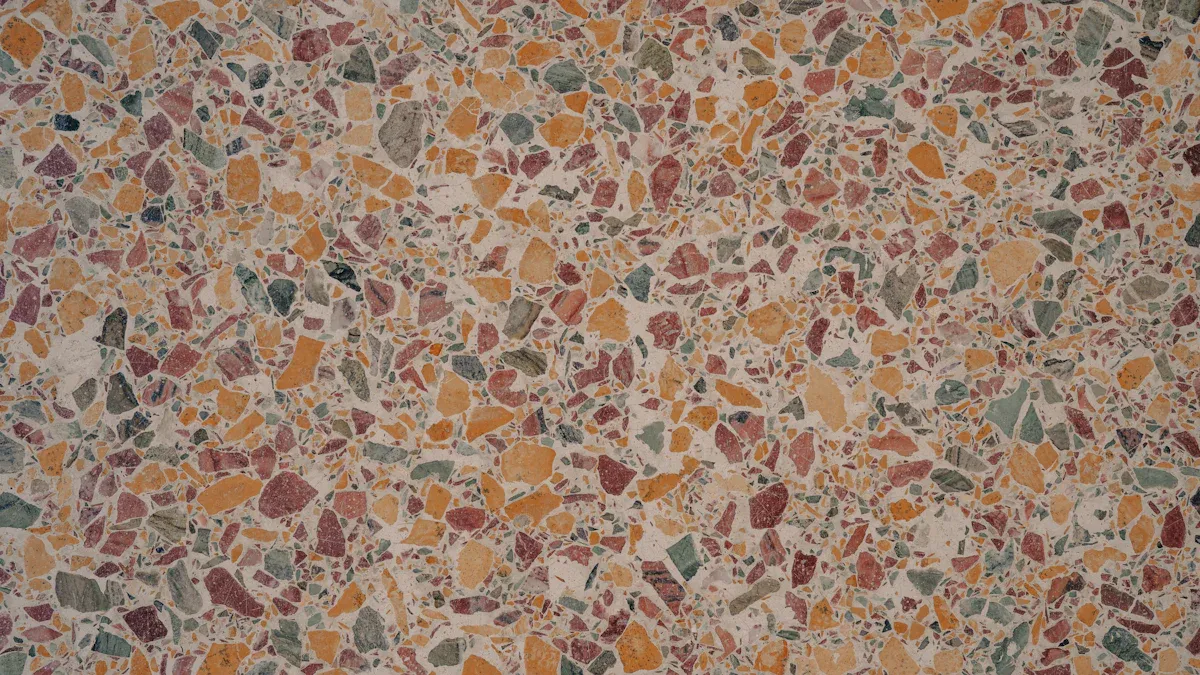
Understanding the variables that drive cost helps you build an accurate budget. This terrazzo cost guide breaks down the two biggest levers: material selection and project scope. Each decision you make ripples through your final price per square foot.
Aggregate and Matrix Selection
Your aggregate choice shapes both the look and the price of your terrazzo floor. Marble chips larger than 3/8 inch (size #2) cost more than standard chips. Recycled aggregates greatly reduce pricing. Some recycled glass counts as a premium aggregate and can increase overall cost. The table below summarizes how each aggregate type affects your budget.
| Aggregate Type | Effect on Terrazzo Cost |
|---|---|
| Recycled aggregates | Greatly reduce pricing |
| Recycled glass | Some types are premium and raise cost |
| Marble aggregates | Chips larger than 3/8″ (size #2) cost more |
Recycled content offers a powerful cost advantage. Up to 60% of a terrazzo floor can be aggregate made from post-consumer and industrial waste such as glass, granite, and marble chips. A floor with 100% recycled glass aggregates can contain up to 75% recycled raw material by volume. These figures lower your material costs and reduce waste sent to landfill.
Matrix selection matters too. Epoxy terrazzo carries higher upfront expenses than cement-based systems. Cement matrix installation cost is comparable but includes higher labor and additional material costs. Epoxy terrazzo delivers lower lifecycle cost through durability and easier maintenance. Its non-porous surface reduces sealing, cleaning, repair, and restoration needs. Cement systems may require more frequent sealing and repairs over time.
G·ONE’s recycled terrazzo and custom-made solutions give you sustainable, cost-conscious options. Their team helps you weigh these cost considerations against your performance goals.
Square Footage and Design Complexity
Project size strongly influences your unit price. Covering more square footage increases total project cost, but the cost per square foot of epoxy terrazzo decreases as total square footage increases. Contractors work more efficiently on larger areas, which lowers both material and labor costs per unit. The table below shows this effect clearly.
| Project Type | Project Size | Per-Square-Foot Cost Range |
|---|---|---|
| Residential pour | 200 sq ft | $50–$80 |
| Commercial pour (identical system) | 5,000 sq ft | $30–$50 |
The residential premium reflects fixed cost spread across a small area, not a higher-quality floor. Combining several rooms into one pour spreads mobilization cost across more square footage. The per-square-foot rate falls sharply above roughly 400 square feet. Narrow corridors raise installation costs because limited worker and equipment movement makes the work more labor-intensive.
Design complexity raises costs in the opposite direction. Intricate patterns, logos, and custom design features demand more labor time. Using more colors or detailed work further increases that labor. The table below shows how specific features affect your budget.
| Design Feature | Cost Impact per Sq Ft |
|---|---|
| Complex commercial installation | $25–$60/sq ft (vs. $20–$30/sq ft for simple) |
| Intricate patterns + premium materials | $35+/sq ft |
| Colored marble or granite chips | +$3–$8/sq ft installed |
| Custom inlaid logos | $2,000–$10,000+ (flat) |
| Multi-color fields with brass strips | $60–$90/sq ft |
Brass divider strips cost more than zinc or aluminum. Diagonal or curved designs cost more than rectangular ones. Venetian and Palladiana styles add significant cost due to larger aggregate size and thickness requirements. Epoxy terrazzo with unique designs and color combinations ranges from $40 to $150 per square foot.
G·ONE’s custom-made solutions let you achieve your design vision while managing terrazzo flooring costs. Their digital catalogs and design lookbooks provide transparent specifications for early budgeting.
Cove Bases, Stairs, and Finishes
Cost Impact of Cove Bases and Stairs
Stairs and wall transitions require far more labor than open floor areas. Cove bases demand a seamless curved transition from floor to wall. Stair treads require precise casting and edge detailing. These elements add to terrazzo flooring costs beyond your flat-rate quote.
Integral cove base typically adds $15–$40 per linear foot for a 4–6 inch coved height. That figure excludes the labor and material needed to finish the top edge. A commercial kitchen with 100–200 linear feet of wall transition will add roughly $1,500–$8,000 to the project. Your cost model must track vertical work separately from open square footage because stairs and coves depend on linear feet, not floor area.
Precast terrazzo products such as cove bases, stair treads, and architectural elements are gaining traction because standardization and faster installation help simplify complex interior finishing projects.
Precast elements reduce on-site complexity. You can order stair treads and cove bases to match your aggregate blend. The total labor budget grows with each transition, but precast units compress the timeline. G·ONE offers precast terrazzo that balances upfront investment with long-term durability.
Finish Options and Price Premiums
Your terrazzo finish choices shape both visual impact and budget. Matrix color, aggregate selection, polish level, and custom graphics all influence design scope. Polished terrazzo delivers high gloss and maximum light reflection. Honed and matte finishes offer a softer, low-sheen look.
Polished surfaces generally command a modest premium over matte or honed options. Additional grinding steps produce that glossy surface. Custom logos and inlaid graphics raise your budget because they require extra layout time and specialized fabrication. The exact premium varies with your aggregate and pattern.
Precast terrazzo components help you manage your finish budget. G·ONE produces stair treads, cove base, and straight base units with consistent finish quality. These standardized pieces minimize waste and field adjustments. Architects and designers can specify these elements early, confident that the final terrazzo matches their vision. That planning discipline keeps your terrazzo project within budget while protecting its long-term value.
Terrazzo Floor Installation: Added Costs
Subfloor Prep and Moisture Testing
Your terrazzo floor installation begins long before the first pour. The concrete slab condition determines the success of the entire project. Terrazzo systems demand a clean, level, and structurally sound substrate. Every defect transfers directly to the finished surface.
Subfloor preparation costs often surprise first-time specifiers. Contractors grind high spots, fill low spots, and repair cracks. They remove curing compounds and old adhesives. These steps add labor hours and materials to your total budget. Your total square footage influences the prep quote substantially.
Moisture testing is non-negotiable for terrazzo floors. Epoxy matrices fail when moisture vapor migrates through the slab. You need test results before authorizing the pour. The ASTM F2170 test measures relative humidity inside the concrete. The ASTM F1869 test measures the moisture vapor emission rate. Both methods give reliable data. Your contractor should present the results in writing.
Demolition and Removal
You face a hidden cost when replacing existing flooring. Demolition and removal of old materials add significant expense to your terrazzo project. Ripping out carpet, vinyl, or tile requires labor, equipment, and disposal fees. The expense varies with material type and area size.
Building location matters as well. Ground-floor spaces allow easier dumpster access. Upper floors may require specialized handling. Your contractor must factor these site conditions into the quote. Terrazzo materials are heavy and demand careful handling on site.
Each floor is unique, which lengthens the schedule. You must select colors and design early in the process. These choices affect the material order and pour sequence. A successful terrazzo floor installation depends on precise sequencing. Paying for the planning phase protects against costly delays later.
Remember that installation impacts the cost as much as material selection. A complex layout with multiple colors and divider strips requires more labor hours. Larger areas spread fixed expenses but add total time. Plan your schedule with the full picture of preparation, removal, and finishing work. The finished terrazzo surface delivers decades of service. Terrazzo requires a stable substrate from start to finish.
Terrazzo Floor Installation Cost Guide: Lifecycle Value
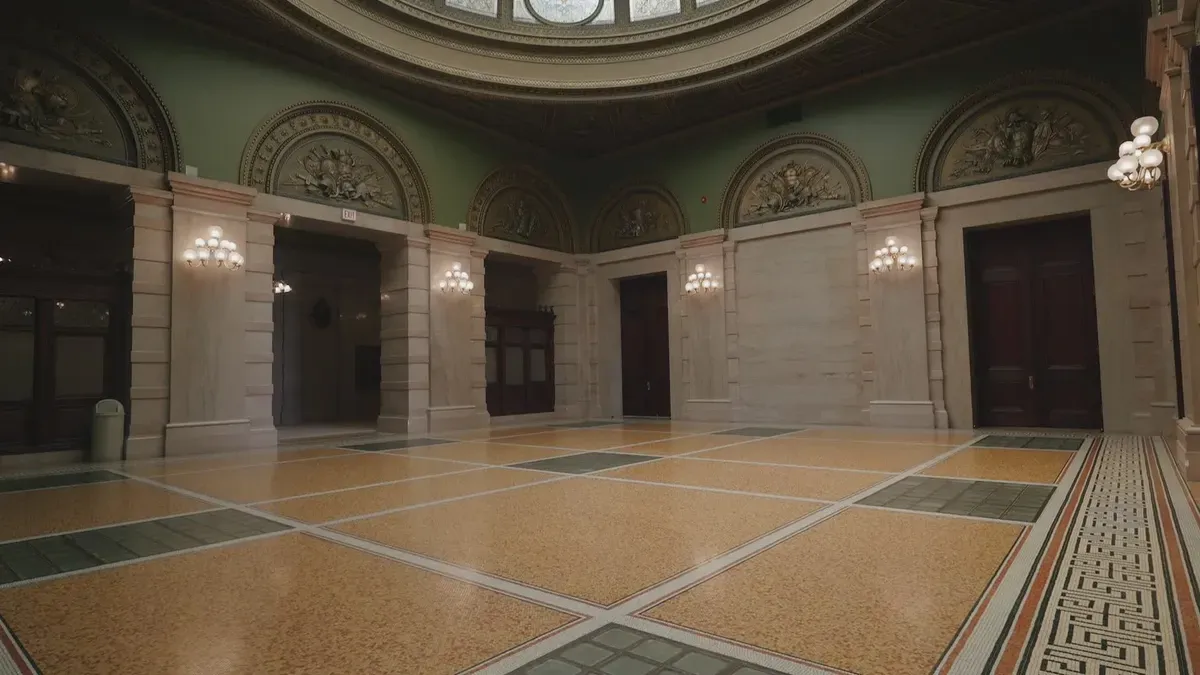
Installation Timeline and Labor
You pay more upfront for terrazzo than for vinyl or carpet. That initial installation cost reflects the specialized labor, material quality, and craftsmanship behind every pour. A terrazzo floor installation follows a deliberate sequence: substrate prep, moisture testing, divider strip layout, aggregate placement, curing, grinding, and polishing. Each phase demands skilled tradespeople. Your project timeline stretches across weeks rather than days.
This extended schedule delivers a permanent floor. Terrazzo does not require replacement cycles, adhesive re-bonding, or grout remediation. Routine care involves damp mopping and periodic resealing. Compare that to luxury vinyl, which lasts 10–20 years, or ceramic tile at 20–30 years. Terrazzo endures 75 years or more.
| Flooring Type | Lifespan | Upfront Cost per Sq Ft | Maintenance |
|---|---|---|---|
| Terrazzo | 75+ years | $18–$60 | Low |
| Ceramic Tile | 20–30 years | $6–$24 | Moderate (grout) |
| Hardwood | 20–40 years | $10–$30 | Moderate–High |
| Polished Concrete | 30–50 years | $6–$18 | Low |
| Luxury Vinyl | 10–20 years | $4–$12 | Low–Moderate |
New terrazzo installation typically costs between $18 and $60 per square foot — significantly more than most tile, vinyl, or carpet installations. However, the upfront number doesn’t tell the whole story. When you calculate total cost of ownership over 30-50 years — factoring in replacement cycles, maintenance costs, and downtime — terrazzo frequently comes out ahead.
Long-Term Maintenance Savings
The lifecycle cost of terrazzo consistently beats periodically replaced alternatives. Annual maintenance runs $0.38–$0.62 per square foot under a 30-year comparison. In-house routine care costs $0.35–$0.55 per square foot annually. Professional services run $0.65–$0.85 per square foot. These figures keep long-term terrazzo flooring costs predictable and low.
Epoxy terrazzo strengthens this advantage through its non-porous surface. Designers specify it for high-traffic commercial spaces because it resists stains and wear. Your installation investment pays dividends across decades of service.
G·ONE’s expert engineering support and tailored consultations help you optimize installation efficiency. Their team guides you through material selection and project sequencing. This support protects your long-term value and keeps your terrazzo floor performing beautifully.
Terrazzo flooring costs range from $20 to $100 or more per square foot installed. Project size, design complexity, material selection, and labor rates drive that spread. You now hold a framework for budgeting each variable.
Terrazzo rewards that upfront investment across decades. A 40-year life-cycle cost of $30 per square foot beats VCT at $50, and terrazzo breaks even against VCT in 12.5 years. It never needs replacement.
| Metric | Terrazzo | VCT |
|---|---|---|
| 40-year life-cycle cost | $30/sq ft | $50/sq ft |
| Replacement need | Never | Periodic |
| Break-even vs. VCT | 12.5 years | — |
Architects and designers should treat this framework as a planning tool. Consult G·ONE for specification support, samples, and estimation guidance. Specify terrazzo with confidence in both budget and performance.
FAQ
How much does terrazzo flooring cost per square foot?
You can expect to pay $20 to $100 or more per square foot installed. Basic thin-set terrazzo runs $15–$40 per square foot. Complex patterns push costs to $25–$60 per square foot. Terrazzo tile installed ranges from $25–$80 per square foot. Your final price depends on system type, aggregate selection, and project scale.
Is terrazzo more expensive than other flooring options?
Yes, terrazzo carries a higher upfront cost than vinyl, carpet, or ceramic tile. However, terrazzo delivers superior lifecycle value. Epoxy terrazzo costs $0.80 per square foot annually over 40 years. Vinyl sheets cost $1.57 annually over the same period. Your terrazzo investment pays dividends across decades of service.
What factors increase terrazzo flooring costs the most?
Design complexity drives costs higher than any other factor. Intricate patterns with multiple colors and brass strips reach $60–$90 per square foot. Custom inlaid logos add $2,000–$10,000 or more. Cove bases and stairs require additional labor. Premium aggregates like mother-of-pearl also raise your terrazzo budget significantly.
How long does terrazzo flooring last compared to alternatives?
Terrazzo endures 75 years or more with proper care. Ceramic tile lasts 20–30 years. Luxury vinyl lasts only 10–20 years. This longevity means you avoid replacement cycles entirely. Your terrazzo floor breaks even against VCT in 12.5 years and never needs replacement afterward.
Does terrazzo require expensive maintenance over time?
No, terrazzo maintenance costs stay low throughout its lifespan. Annual maintenance runs $0.38–$0.62 per square foot under a 30-year comparison. In-house routine care costs $0.35–$0.55 per square foot annually. Professional services run $0.65–$0.85 per square foot. Routine care involves damp mopping and periodic resealing only.