
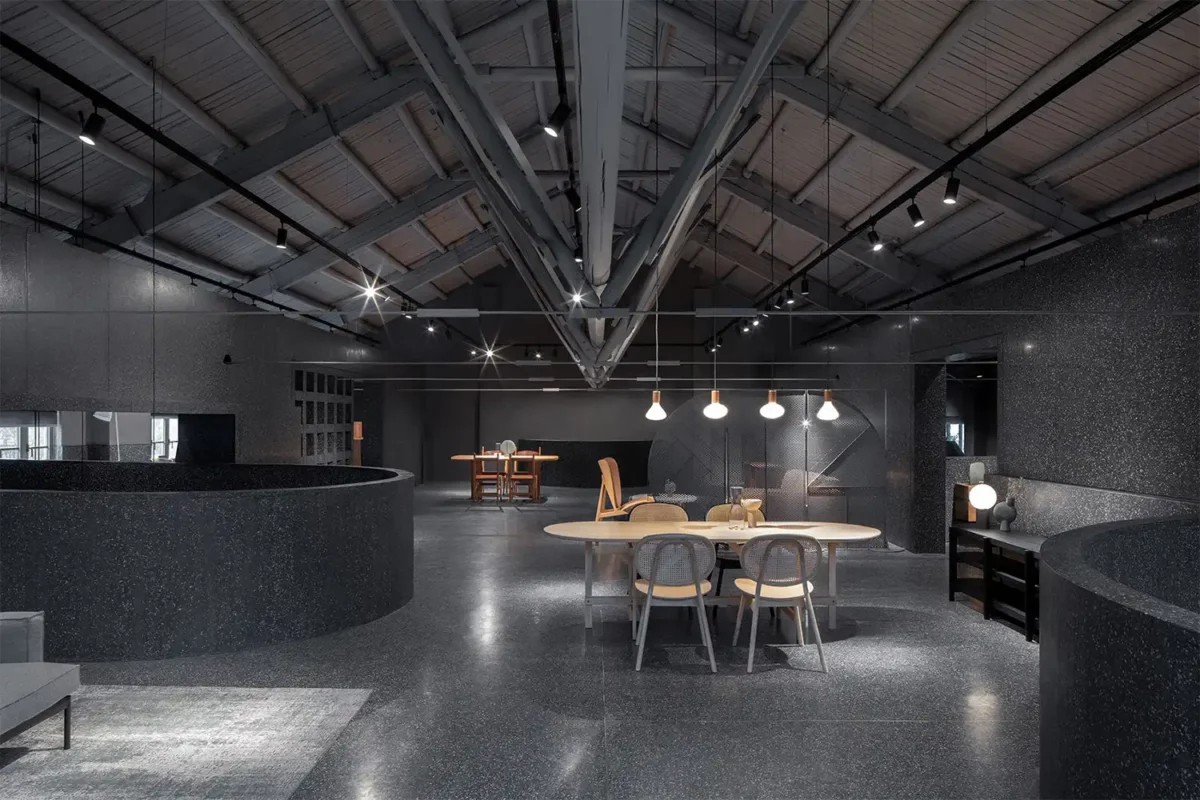
Choosing a black terrazzo tile comes down to five decision filters: tile type, technical performance, aesthetic direction, application fit, and code and cost compliance. Black terrazzo earns its place in demanding specifications. It gives a room a bold visual anchor, adapts to almost any aggregate blend, and holds up under heavy use. You will find actionable criteria, direct comparison points, and specification checklists here. Apply them to active projects right away. G·ONE supports your selection work with sample sets, digital catalogs, and technical data sheets. Architects and designers can move from shortlist to final specification with fewer surprises.
Key Takeaways
- Choose epoxy terrazzo for strength and thin profiles; choose cement-based terrazzo for traditional mineral binders.
- Specify wet slip resistance with a Pendulum Test (PTV ≥ 36) and test on site after sealing.
- Select aggregate size and finish to match room scale and traffic; polished finishes show wear sooner.
- Prepare substrates carefully for large-format tiles: check adhesion, moisture, and flatness.
- Plan lead times and costs early; authentic terrazzo offers customization, porcelain offers speed.
Black Terrazzo Tile Basics
Cement-Based vs. Epoxy
Two binder systems drive your first decision: cement-based and epoxy. Each system suits different project priorities, and neither is universally superior.
Epoxy systems are lighter and thinner than traditional cement-based systems, and they offer a broader selection of vibrant colors. Installation costs for the two systems are generally similar. Epoxy is often regarded as the more cost-effective option overall.
Cement-based systems fit projects that favor a traditional mineral binder. Epoxy suits projects that need a thin profile, low weight, or a wide color range.
Composition and Performance
Terrazzo material composition combines aggregate, binder, and pigment. Your choices here affect durability, weight, and finish. Aggregate type sets the visual character and wear behavior. The binder determines strength and moisture response. Pigment controls color depth and consistency.
Compressive strength differs notably between the two systems:
| Terrazzo Type | Compressive Strength |
|---|---|
| Epoxy terrazzo | 10,000 psi |
| Cementitious (cement-based) terrazzo | ~4,500 psi |
Epoxy systems are generally stronger and more durable than cement-based systems. They exhibit greater compressive, tensile, and flexural strengths, and they are less susceptible to cracking. Even at a thinner 1/4″–3/8″ profile epoxy outperforms traditional systems, forming a seamless, highly wear-resistant floor suited to high-traffic commercial, institutional, and industrial spaces.
Epoxy terrazzo is water-resistant and commonly used in areas prone to floods and hurricanes; it does not allow moisture to accumulate.
Epoxy offers tensile-compressive strengths not found in cement-based systems. It has the lowest maintenance cost due to non-absorbancy. It provides chemical resistance and resiliency. It is lightweight and flexible, ideal for multi-story use.
The material is highly customizable across aggregates, pigments, and patterns. You can tune terrazzo material composition to match a precise design intent. This flexibility separates authentic terrazzo from terrazzo-look porcelain, which offers a fixed palette. Authentic terrazzo rewards a custom blend. Terrazzo-look porcelain suits faster schedules. Specify terrazzo tiles with confidence when customization matters. Request samples to compare blends side by side.
A Specification Guide for Architects
Performance and Slip Resistance
This specification guide for architects starts with measurable criteria. Durability, wear resistance, slip resistance, and maintenance requirements all belong in the written spec, not in a verbal agreement. The table below maps each criterion to its standard.
| Property / Criterion | Standard | Test Method / Requirement |
|---|---|---|
| Abrasion (wear) resistance | BS EN 13748-1 (internal terrazzo tiles) | Covered as a product property with associated test methods under the product standard |
| Frost resistance (external) | BS EN 13748-2 (external terrazzo tiles) | Covered under the external-use product standard |
| Slip resistance (wet) | BS EN 16165 Annex C | Pendulum test (replaced BS 7976-2); wet PTV not less than 36 on finished floor using slider 96 |
Follow this sequence to control slip risk on terrazzo tiles in architectural design:
- Identify areas that will be wet in use (entrances, lobbies near external doors, WCs, kitchens, ramps).
- Select the finish for those areas first — honed or textured rather than high polish.
- Require the manufacturer’s wet PTV for the supplied finish plus a site test to BS EN 16165 Annex C after grinding and sealing.
- Confirm the sealer manufacturer’s data shows the sealer does not reduce slip resistance below the requirement.
- Specify: “Slip resistance: Wet PTV not less than 36 on the finished floor after grinding and sealing, tested on site to BS EN 16165 Annex C using slider 96.”
A coefficient-of-friction result is a measurement of a particular surface, under a defined test method and contaminant condition, at the time of the test. It is strong evidence about that tested condition, but it is not a permanent property of the floor — it does not describe the same floor after the sealer wears, residue accumulates, or the finish changes under traffic. Published traction data should therefore be sourced from the finish and sealer suppliers, since the sealer defines the surface being measured.
Code Compliance and Cost
Performance requirements for terrazzo floors extend to code compliance and budget planning. Confirm local building codes and the project’s slip and fire standards before you release a tile order. Plan the schedule around real lead times. Stock terrazzo tile ships within days. Custom tile runs commonly require four to six weeks or longer. Confirm whether quoted lead time is measured from order receipt or from submittal approval — the two can differ by weeks. Before releasing a tile order, lock in writing: exact production run/dye lot, lead time from submittal approval, freight terms and delivery point, and return/warranty policy. Account for cure time: traditional cementitious terrazzo needs days of curing before grinding and polishing; rapid-screed systems compress this window but alter the placement sequence.
| Terrazzo Type | Material Cost ($/sq ft) | Labor Cost ($/sq ft) | Total Installed ($/sq ft) |
|---|---|---|---|
| Authentic Terrazzo | $8–15 | $4–8 (precast tile) | $12–23 |
| Poured-in-Place Terrazzo | — | $10–15+ (design-dependent) | — |
Additional prep work (moisture testing, subfloor leveling) adds $1–3/sq ft before installation begins.
Reframe cost as cost-per-year-of-service rather than price per square foot. Properly installed epoxy terrazzo can last the life of a building (75–100 years) with only routine cleaning and no replacement cycles, unlike carpet (replaced every 8–10 years) or tile (every ~15 years). Architects should request itemized quotes separating material, labor, and finishing, and use manufacturer design consultations early to tailor material selections to budget constraints. Note also that larger aggregate sizes increase both system thickness and cost.
G·ONE’s technical specifications and material selection manuals support this work. Use them to verify test data, compare finishes, and document compliance. Authentic terrazzo rewards this diligence. Terrazzo-look porcelain offers a faster path when the schedule is tight. Both have a place; the spec should state which one you chose and why.
Aesthetic Direction for Black Terrazzo Tile
Aggregate Size and Contrast
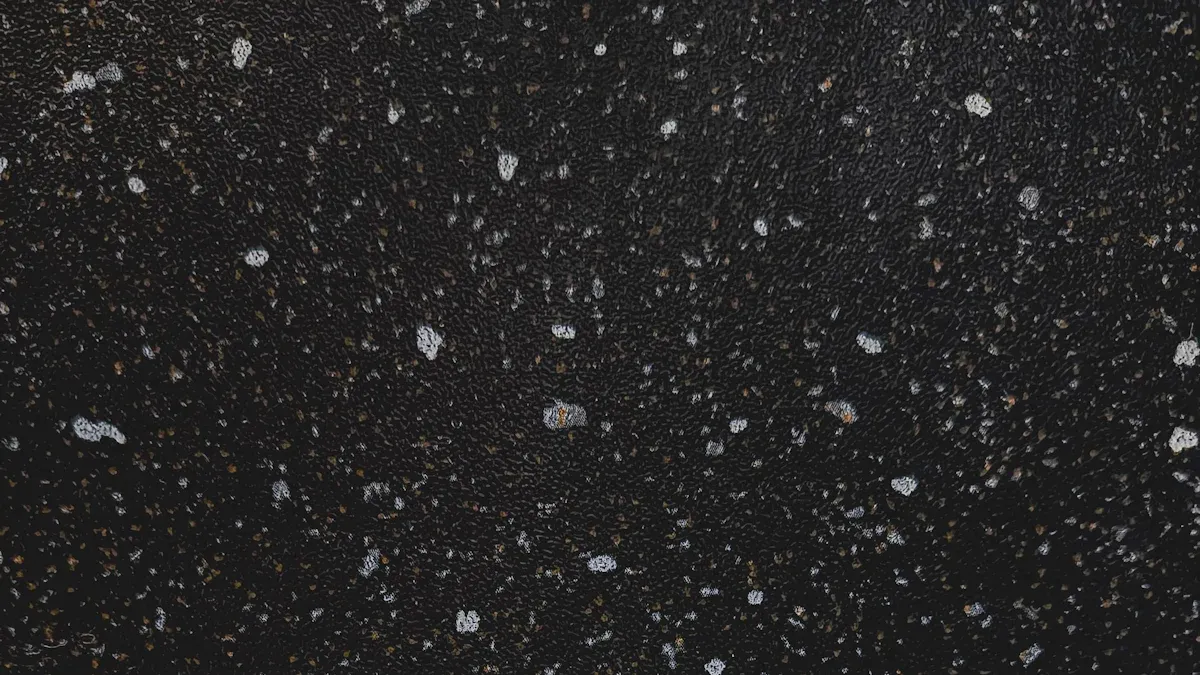
Aggregate size sets the visual rhythm of a black terrazzo tile. In a deep black matrix, lighter embedded chips pop dramatically. This delivers a moody, luxurious aesthetic suited to contemporary bathrooms or upscale retail environments. Dark terrazzo pairs well with both light and dark aggregates, so you can steer the contrast in either direction.
In a deep black terrazzo tile, the dark background causes the lighter embedded chips to pop dramatically, delivering a moody, luxurious aesthetic suited to contemporary bathrooms or upscale retail environments.
Scale your chip choice to the room. Smaller rooms benefit from small or medium chips with low-density patterns to prevent visual overload. Larger spaces support bolder, more expressive choices — larger tiles and pronounced patterns create striking visual effects, especially with intense shades or strong color contrasts. A creative style calls for large, high-density fragments on dark backgrounds for a bold, highly expressive result. Exercise caution with glass chips in darker matrices, because contrast effects may be less controlled.
Finish and Color Variation
Finish changes both the look and the maintenance requirements of terrazzo tiles. A polished surface deepens the black and sharpens chip definition, yet it shows dust and footprints sooner. Honed and matte finishes soften reflections and hide wear better in high-traffic zones. Match the finish to the room’s use, then confirm the sealer data supports your slip target.
Color variation separates authentic terrazzo from terrazzo-look porcelain. Authentic terrazzo accepts custom pigment and aggregate blends, so you control depth and character. Terrazzo-look porcelain offers a fixed palette with faster lead times. G·ONE supports the design phase with custom color and aggregate blend capabilities plus design lookbooks. Use these tools to compare blends before you commit. Routine maintenance stays simple on a sealed surface, and the right finish keeps that maintenance predictable for years.
Terrazzo Floor Tiles and Applications
Large-Format Terrazzo Floor Tiles
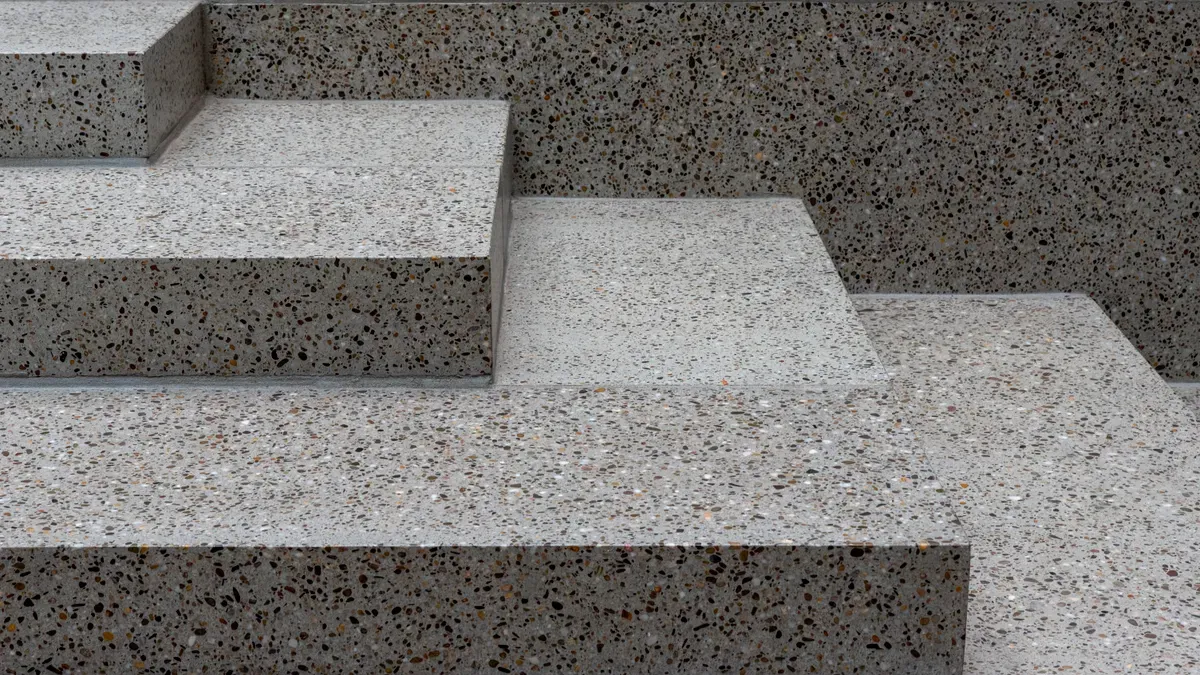
Large-format terrazzo floor tiles demand disciplined substrate work. Confirm adhesion strength of at least 150 psi per ASTM D-4541, or apply a bonding primer. Keep concrete moisture vapor emission at or below 4 lb/1,000 ft²/24 h per ASTM 1869-04, or at or below 85% RH per ASTM F2170-18. Flatness tolerances tighten with tile size: tiles with any edge of 15″ or more need 1/8″ in 10 ft and 1/16″ in 24″ from high points under ANSI A108.5. Hold the substrate at 60°F or above, keep ambient air between 60–80°F with ventilation, and scarify the surface to CSP 2–3.
Experienced installers follow a repeatable sequence on terrazzo floor tiles:
- Confirm the subfloor is fully cured (minimum ~30 days) and even; use a high-quality medium-bed thin-set and consider an uncoupling membrane.
- Blend tiles from multiple boxes before laying to achieve uniform color.
- Build a mockup board to test grout, sealers, and maintenance products.
- Press tiles by hand only, keep them flat, and work in sections no larger than 2’x2′ with 1/8″ spacers.
- Allow at least 48 hours of cure before sealing and grouting, then protect finished floors with paperboard.
Walls, Countertops, and Outdoors
Match each surface to its exposure. Walls and countertops suit thinner profiles and honed finishes; wet floors favor textured surfaces with verified slip data. Outdoors, specify frost-resistant product to BS EN 13748-2 and expect wider joints. G·ONE supplies precast, recycled, and mosaic terrazzo lines plus UHPC panels for demanding exterior applications.
Compare authentic terrazzo and terrazzo-look porcelain tile before you commit. Authentic terrazzo is fully customizable in color, pattern, and chip size, and floors often last 50+ years. Terrazzo-look porcelain tile is more affordable, easier to install, and widely available. Terrazzo-look porcelain floor tiles suit fast schedules; large-format terrazzo-look tiles cover residential and commercial interiors quickly. Choose authentic terrazzo tile for depth and uniqueness, and porcelain terrazzo-look tile for budget and speed. Both serve terrazzo tile bathrooms and commercial and hospitality projects well. Plan maintenance requirements early, because routine maintenance protects any terrazzo flooring investment.
Specifying Large-Format Terrazzo Tiles
Writing the Specification
A clear specification moves through four stages: selection, preservative treatment, design, and installation. Start with the binder. Terrazzo is a composite of a cement or resinous binder mixed with chips of marble, glass, or other aggregates, then troweled, cured, ground, and polished. Name the binder category in your spec so bidders price the same system.
| Binder Category | Description | Example Systems |
|---|---|---|
| Cementitious | Original terrazzo material; durable floor finish in many forms | Monolithic, Sand cushion, Rustic, Bonded |
| Resinous | Overcame color and thickness limits; epoxy dominates the market | Epoxy, Polyacrylate, Polyester |
| Proprietary modified cement | Cement binders modified for thinner profile and wider pigment range | Proprietary systems |
Next, write the design intent. Describe aggregate blends across marble, recycled glass, and colored glass, and state that the binder color carries the field. Require an approved physical sample as the appearance control for large-format terrazzo tiles. Then address installation requirements: moisture readings before resinous terrazzo, substrate flatness within 1/4 inch in 10 feet for thin-set work, and crack treatment. Divider strips control cracking and form the layout; cement terrazzo spans 3 to 5 feet, while epoxy covers 20 to 30 feet. Place a strip wherever a joint exists beneath the concrete.
Common Pitfalls
Vague aggregate descriptions top the list. “Black with chips” gives a contractor nothing to price or match. Specify chip material, size range, and blend density, and attach the approved sample. Mismatched slip ratings come second: state the wet slip value for the supplied finish and require a site test after grinding and sealing. Overlooked lead times rank third. Confirm whether quoted lead time runs from order receipt or submittal approval.
Weigh authentic terrazzo against terrazzo-look porcelain early. Authentic terrazzo accepts custom blends; terrazzo-look porcelain ships faster with a fixed palette. Engage a terrazzo contractor during design so costs are understood before value engineering removes the scope. Early consultation also clarifies maintenance expectations and lifecycle cost. G·ONE supports architects with tailored consultations, project samples, and engineering support, plus specification review before you issue the documents.
Treat the selection sequence as a repeatable checklist:
- Confirm type and composition.
- Verify performance and compliance.
- Lock in the aesthetic direction.
- Match the tile to its application.
- Specify precisely.
Run this checklist on every black terrazzo tile decision. Request samples and technical documentation from G·ONE early. Validate each choice against project-specific codes and budgets before you finalize.
Disciplined selection pays off. A well-specified black terrazzo tile holds its appearance and simplifies maintenance for decades. Terrazzo rewards that rigor. Authentic terrazzo delivers depth and customization. Terrazzo-look porcelain delivers speed. Choose authentic terrazzo for a custom blend, or terrazzo-look porcelain for a tight schedule. Either terrazzo path protects your design intent.
FAQ
Which binder should you choose for a black terrazzo tile?
Epoxy reaches 10,000 psi compressive strength and suits thin, light, high-traffic floors. Cement-based terrazzo delivers roughly 4,500 psi and fits traditional mineral specifications. Match the binder to your structural, color, and schedule priorities.
How do you specify slip resistance on terrazzo floors?
Require a wet pendulum test to BS EN 16165 Annex C with a wet PTV of at least 36 on the finished floor, using slider 96. Test on site after grinding and sealing. Confirm the sealer does not lower slip resistance.
How long does a terrazzo tile order take?
Stock tile ships within days. Custom runs often need four to six weeks or longer. Confirm in writing whether lead time runs from order receipt or submittal approval.
What substrate conditions do large-format terrazzo tiles need?
Require adhesion of at least 150 psi per ASTM D-4541, moisture at or below 4 lb/1,000 ft²/24 h per ASTM 1869-04, and flatness of 1/8″ in 10 ft per ANSI A108.5. Hold the substrate at 60°F or above and scarify to CSP 2–3.
When should you choose terrazzo-look porcelain?
Choose terrazzo-look porcelain for tight schedules and fixed budgets. It installs faster and ships sooner. Specify authentic terrazzo when you need custom aggregate blends, depth, and long service life. Plan maintenance early either way.