
Architects and designers often face a hard trade-off. Visual richness demands expressive surfaces. Technical performance demands proven durability. Tile marble terrazzo union 7 resolves that tension as a single specification choice. This guide delivers a decision-ready framework. Readers gain selection criteria, direct comparisons, application fit, installation realities, and real-project validation. Each element supports confident specification decisions. G·ONEstands behind this guidance as a knowledgeable partner in architectural terrazzo and sustainable materials. The brand’s engineering depth and customization services inform every recommendation. Designers can move from ambition to specification with clear evidence. The tile selection process becomes structured, not speculative.
Key Takeaways
- Union 7 offers many colors and patterns to match any design vision.
- Union 7 floors last about 75 years and cost less over time than carpet.
- Union 7 panels install fast and repairs stay local, unlike poured terrazzo.
- Union 7 works well in high-traffic areas like airports and hotel lobbies.
- Qualified installers and moisture testing ensure a successful Union 7 floor.
Union 7 Selection Criteria
Aesthetics and Design Flexibility
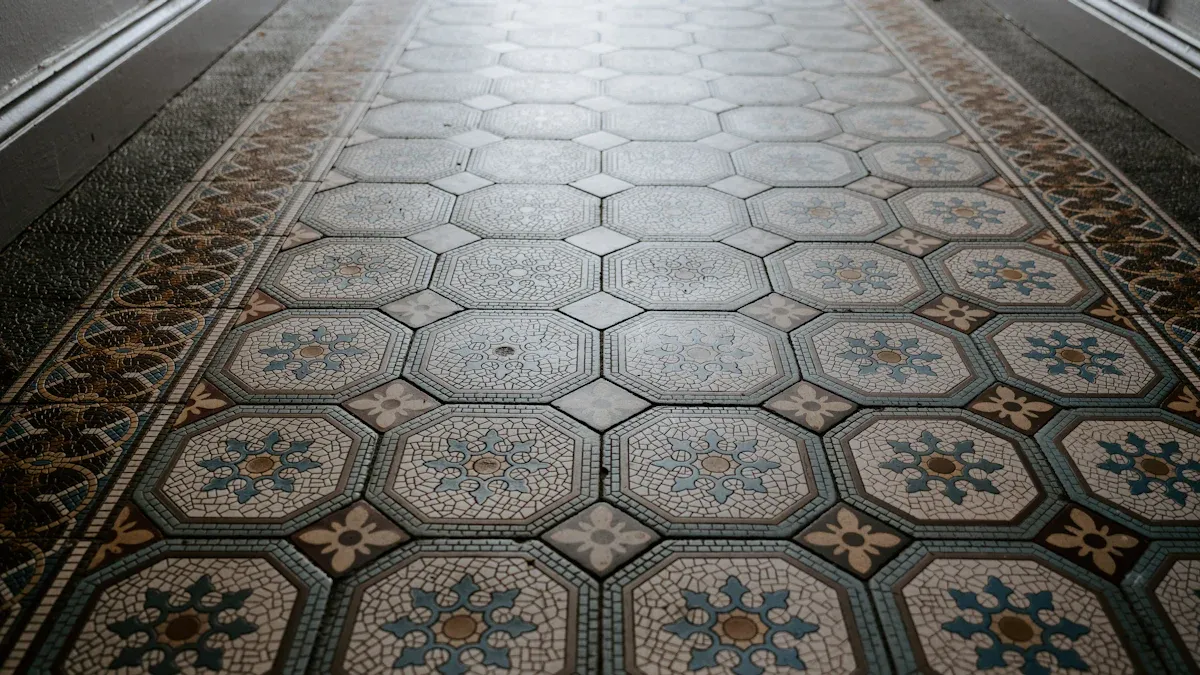
Design intent drives the first filter. Union 7 gives designers a broad palette of aggregates, including marble chips, granite chips, glass chips, mirror chips, shell chips, and metal chips. Each option carries distinct aesthetic and functional properties. Color flexibility extends from subtle monochromatic palettes to bold contrasting schemes, with full custom color matching available. Divider strips control layouts and enable geometric patterns, free-form curves, and large-scale graphics. Finish selection ranges from high-gloss polish to satin and honed matte, controlled by grit level. This range of colors, patterns, and aggregates supports aesthetics from modern minimalism to classic elegance. G·ONE’s custom color and aggregate blending services set a useful benchmark here. The brand tailors blends and molds to specific project requirements, so the tile marble terrazzo union 7 specification can match a design concept rather than force a compromise.
Durability, Sustainability, and Cost
Performance criteria deserve equal weight. Architects and designers should balance three factors in one decision matrix: durability ratings, recycled content, and lifecycle cost. The table below organizes the trade-offs.
| Decision factor | What to verify | Union 7 position |
|---|---|---|
| Durability | Wear record, restorability | Terrazzo floors from the 1920s remain in service; restoration costs a fraction of replacement |
| Recycled content | Percentage by volume | Plastic chips hold up to 20% recycled plastic; 100% recycled glass floors reach up to 75% recycled material by volume |
| Lifecycle cost | Installed cost versus annual cost | About $25 per square foot installed, lasting roughly 75 years; total cost of ownership consistently lower than periodically replaced alternatives over a 40-year horizon |
Epoxy terrazzo systems deliver low lifecycle cost due to durability and low maintenance, with minimal repairs. Union 7 inherits this economic logic. Upfront cost per square foot exceeds vinyl or carpet, yet the total cost of ownership falls over a long horizon. No replacement cycles, no adhesive re-bonding, and no grout remediation apply. Routine care stays limited to damp mopping and periodic resealing. Recycled content strengthens the sustainability case without weakening performance. These figures belong in every architectural specifications package, because they let a client compare premium terrazzo against cheaper tile on equal terms. A single matrix keeps the conversation honest.
Tile Marble Terrazzo Union 7 vs. Alternatives
Union 7 vs. Epoxy Terrazzo
A direct comparison clarifies where each system belongs. The table below sets tile marble terrazzo union 7 against cement-based terrazzo, epoxy terrazzo, and marble tile across three specification-critical dimensions.
| System | Cure time | Seam visibility | Repairability |
|---|---|---|---|
| Union 7 | Factory-controlled precast curing; panels arrive ready to install | Panel joints remain visible as deliberate design lines | Individual panels lift and replace without affecting neighbors |
| Cement-based terrazzo | Long cure window on site; moisture sensitivity delays scheduling | Poured in place with divider strips; seams follow strip layout | Local patching possible; color match depends on site mixing |
| Epoxy terrazzo | Fast cure compared with cement systems; thin-set application | Seamless monolithic surface with no joints | Repair requires re-pouring the affected zone; blend matching is difficult |
| Marble tile | No cure period; thin-bed adhesive sets quickly | Grout joints interrupt the surface at every tile edge | Single tile replacement is straightforward; grout lines age differently |
Epoxy terrazzo wins on one clear point: a seamless, joint-free field. Designers who need an uninterrupted plane across a large lobby should keep epoxy terrazzo in the conversation. The epoxy matrix used as a binder also cures faster than cement systems, which shortens site schedules. Union 7 answers with different strengths. Precast panels remove on-site curing risk entirely. Panel replacement stays localized, so a damaged section never forces a full-floor intervention. Cement-based terrazzo and marble tile each carry their own logic, yet neither matches Union 7 on the combination of predictable installation and serviceable seams.
Trade-Offs Before Specifying
Specifiers should weigh four practical trade-offs before committing. First, schedule risk. Epoxy terrazzo depends on site conditions during placement and cure. Union 7 shifts that risk to the factory. Second, seam strategy. A seamless epoxy terrazzo floor reads as one continuous surface. Union 7 treats joints as part of the visual language, which suits grid layouts and panelized facades. Third, repair philosophy. Epoxy terrazzo repairs demand skilled crews and careful aggregate matching. Union 7 repairs follow a swap logic that facilities teams understand. Fourth, substrate tolerance. Poured systems demand strict substrate preparation on site. Precast panels relax that demand because the factory controls thickness and flatness.
Epoxy terrazzo remains the pragmatic pick for curved, free-form floors and for projects that cannot accept visible joints. Union 7 outperforms where downtime matters, where panelized design fits the architecture, and where future service access is a client concern. Neither system suits every program. The honest answer depends on the project’s tolerance for site work, its visual language, and its maintenance plan. Designers should record these trade-offs in the project specifications early, before bidding narrows the field. Ceramic and porcelain tile materials and systems offer a lower-cost path, yet they cannot replicate the aggregate depth of terrazzo. Marble tile delivers natural stone character at a different price and performance profile. Each alternative earns its place on a shortlist for specific reasons. The comparison above gives designers the evidence to choose deliberately rather than by default.
Application-Specific Selection
Flooring and High-Traffic Zones
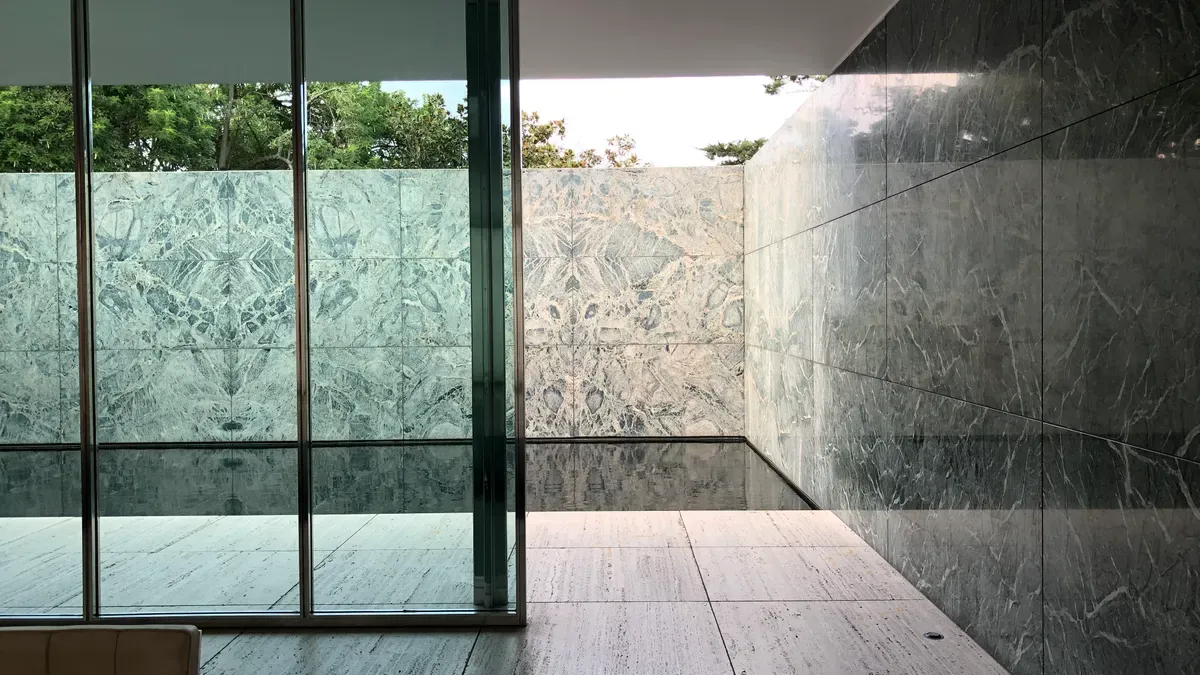
Hotel lobbies, retail concourses, and public landmarks place heavy demands on any surface. Tile marble terrazzo union 7 suits these zones because the precast panels resist abrasion and hold their polish under constant foot traffic. Designers should verify three performance points before approval. The table below summarizes the checks.
| Standard aspect | Requirement for high-traffic commercial spaces |
|---|---|
| Traffic rating | No single universal rating applies; verify suitability per project |
| Sealing | Confirm proper sealing to protect against moisture and stains |
| Slip resistance | Confirm adequate slip resistance for the intended area |
Terrazzo is a cement- or epoxy-based matrix with marble, granite, or recycled aggregates, ground and polished for a seamless flooring solution. Terrazzo has a durability record dating back over a thousand years, and modern formulations resist microbial growth. These properties favor airport terminals, transit hubs, and showrooms. Cost-efficiency improves with larger project square footage, which makes terrazzo well-suited to large-scale high-traffic areas. Specifiers comparing budgets can cite the installed cost of about $25 per square foot and an estimated useful life of roughly 75 years without replacement.
Walls, Countertops, and Feature Surfaces
Vertical and horizontal feature surfaces reward a different selection logic. Wall cladding in Union 7 panels delivers the same visual depth as the floor, and panelized joints align with architectural grids. Countertops demand tighter tolerances and careful edge detailing, so designers should confirm thickness and finish during sample review. G·ONE pairs Union 7 with UHPC plates where a project needs thin, strong cladding or a contrasting matte texture. Thin gauged porcelain tiles and large format tile offer lighter alternatives for walls, yet they cannot match the aggregate depth of terrazzo. Marble tile remains a natural choice for countertops with a classic character. Record these choices in the project specifications early, because each surface type carries its own substrate and seaming requirements.
Installation and Qualified Labor
Substrate, Seaming, and Finish
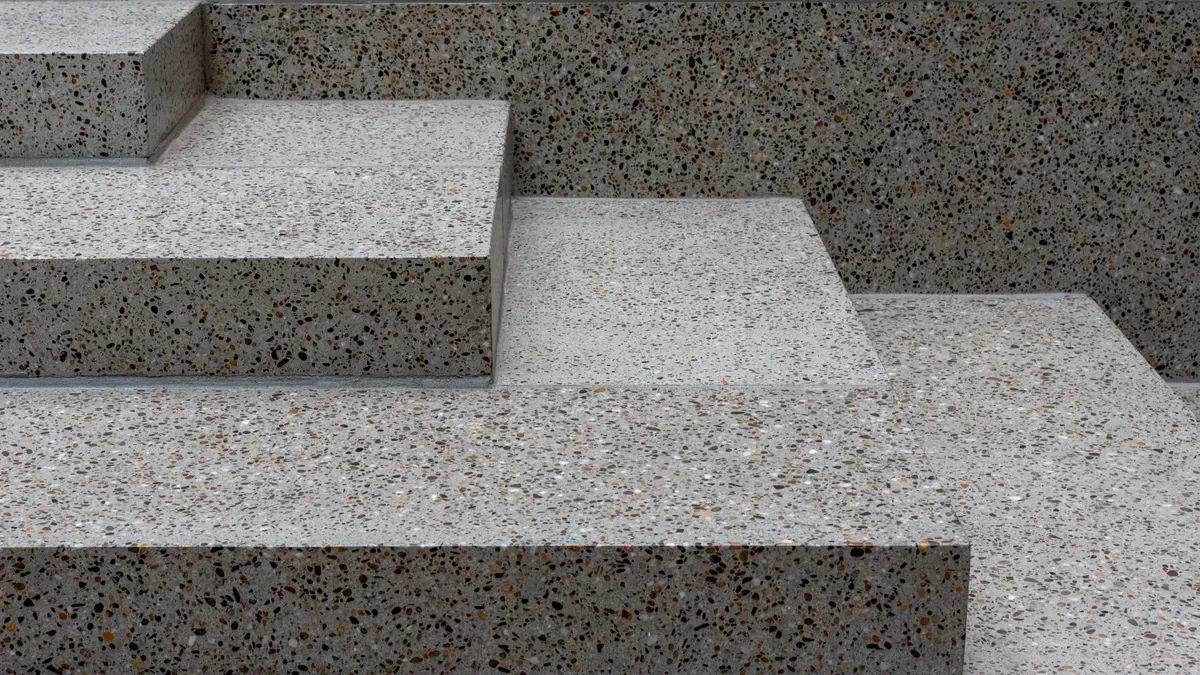
Qualified labor decides whether a terrazzo specification performs. Excess moisture vapor rising from a concrete slab is a leading cause of terrazzo failure. It produces adhesive failure, cracking, bubbling, debonding, discoloration, and foul odors. The NTMA recommends quantitative moisture testing per ASTM F1869, with terrazzo ideally kept below 3 pounds of water per day per 1,000 square feet. High readings demand a moisture mitigation system, vapor retarders, and perimeter drainage. Trained, union installers test moisture during planning and inspect the cured system for bubbles or pinholes. Union contractor certification gives specifiers a verifiable signal of that discipline.
Seaming and finish follow the same logic. Designers should align terrazzo control joints with the concrete control joints and keep divider-strip aspect ratios in corridors at or below 1.5:1. A full-bed crack suppression membrane belongs in the project specifications, not only over visible shrinkage cracks. Qualified labor language in the bid documents should name installer qualification criteria, including experience with tile, setting materials, membranes, grouts, and terrazzo systems. Union tile contractors bring trained crews to tile installations, and that training protects quality tile installations across tile systems.
Long-Term Care Expectations
A realistic regimen keeps the surface serviceable. The table below sets the schedule.
| Frequency | Maintenance action |
|---|---|
| Daily | Dust mop to remove abrasive grit; spot-clean stains with neutral cleaner in warm water |
| Weekly | Damp mop; scrub heavy soiling mechanically, rinse, then buff dry |
| Semi-Annual | Strip sealers and finish coats, then reseal |
Only neutral-pH cleaners belong on terrazzo. Crews must rinse thoroughly and apply a water-based acrylic sealer rated slip-resistant at minimum 0.5 COF. New floors need scrubbing at least twice weekly for the first 2–3 months. G·ONE’s engineering support and project samples reduce risk before installation begins, and qualified labor carries that intent through tile contractors and installers on site.
Case Examples and Lessons
Representative Project Examples
Newark Airport Terminal A shows Union 7 logic at public-landmark scale. BAC Local 7 New York/New Jersey completed the LEED-certified terminal with signatory contractor T. Yorie Corp. The project carries a 555,000-square-foot terrazzo floor with an aviation-themed design. A consistent aggregate blend of glass, mother-of-pearl, mirror, and marble holds the visual field together across that vast area. More than 1,000 handcrafted zinc chevrons guide passengers through the space. Crews achieved exceptional flatness tolerance, with no deviation greater than one-eighth of an inch over 10 feet. The scope also includes more than 3,600 linear feet of precast cement terrazzo stairs across 22 flights. That stair package proves durability in high-traffic environments.
Hotel lobbies and luxury retail follow the same pattern at smaller scale. A lobby floor must absorb luggage wheels, cleaning machines, and constant footfall. A boutique floor must hold a precise color story under accent lighting. Union 7 panels serve both programs because the factory controls the aggregate blend and the finish. Designers can specify a signature blend for a flagship store and repeat it across locations.
Lessons for Designers
Three specification lessons emerge from these projects. First, approve samples early. A physical sample confirms aggregate density, color, and sheen before bidding closes. Second, coordinate qualified labor during design, not after award. Union-trained installers understand moisture testing, seaming, and finish control. Third, lock the joint layout into the drawings. Panel joints should align with the architectural grid and with control joints in the slab.
Early-stage selection benefits from good reference material. G·ONE supports this phase with dedicated resources:
- Digital catalogs and design lookbooks for initial review
- Product brochures, technical specifications, and material selection manuals
- Custom colors, aggregate blends, and molds for project-specific direction
These tools let designers compare terrazzo options and review physical samples before finalizing specifications. The tile selection conversation starts with evidence, not guesswork. A designer who reviews the catalog, orders a sample, and books a labor review early avoids the costly revisions that follow a late substitution.
The selection process follows a repeatable checklist: criteria, comparison, application fit, and installation realities. Across all four steps, tile marble terrazzo union 7 satisfies both aesthetic ambition and performance demands. Designers who follow this sequence specify with confidence. Precast terrazzo panels reduce on-site curing risk. Terrazzo floors hold their polish under constant heavy traffic. For project-specific guidance, samples, and engineering support, teams should consult G·ONE early. The right tile, marble, and terrazzo specification starts with evidence. Skilled tile contractors protect the outcome. Early tile samples confirm color and sheen. A clear tile selection brief keeps every trade aligned from day one.
FAQ
How does Union 7 handle moisture in a concrete slab?
Excess moisture vapor causes adhesive failure, cracking, and debonding in terrazzo systems. Specifiers should require quantitative testing per ASTM F1869. The NTMA recommends keeping readings below 3 pounds of water per day per 1,000 square feet. High readings demand a mitigation system, vapor retarders, and perimeter drainage before panel installation begins.
Can designers specify a custom aggregate blend?
Yes. G·ONE offers custom colors, aggregate blends, and molds for project-specific direction. Designers can combine marble, glass, mirror, shell, and metal chips to match a concept. A physical sample confirms aggregate density, color, and sheen before bidding closes. This step protects the tile selection from late substitutions.
What slip resistance should a high-traffic floor meet?
Specifiers should confirm adequate slip resistance for the intended area. Sealed terrazzo should carry a water-based acrylic sealer rated slip-resistant at minimum 0.5 COF. Designers should verify traffic suitability per project, because no single universal rating applies. These checks belong in the specification package for every tile and terrazzo floor.
How long does a Union 7 floor last, and what does it cost?
Installed cost runs about $25 per square foot, with a service life near 75 years. Over a 40-year horizon, terrazzo’s total cost of ownership is consistently lower than any periodically replaced alternative. Routine care stays limited to damp mopping and periodic resealing.
Why does qualified labor matter for installation?
Trained, union installers test moisture during planning and inspect the cured system for bubbles or pinholes. They align terrazzo control joints with concrete joints and keep divider-strip aspect ratios in corridors at or below 1.5:1. Union contractor certification gives specifiers a verifiable signal of that discipline. Skilled crews protect every tile installation.