
You want the best terrazzo tile for your project. Your choice depends on style, strength, cleaning, price, and where you use it. Cementitious, epoxy, and monolithic terrazzo systems each have special benefits for floors and inside spaces. Many designers compare terrazzo and porcelain tile for looks, especially for busy floors or eye-catching spots. The terrazzo flooring market is growing around the world. This happens because people want strong, flexible, and nice-looking materials. Think about what you need, like anti-slip grades for wet areas or certifications for business places. The right terrazzo floor or tile will fit your design and give you lasting value.
Key Takeaways
- Pick the best terrazzo type for your project. Cementitious is strong and lasts long. Epoxy gives you many color choices. Monolithic installs fast and easy.
- Think about anti-slip grades for safety. Wet or busy places need higher grades. Higher grades help stop slips and falls.
- Find terrazzo tiles with certifications. Certified tiles are safe and good quality. LEED and ISO mean your tiles meet rules.
- Keep terrazzo floors nice with regular care. Sweep every day to remove dirt. Seal them every 1-2 years. Use gentle cleaners to protect the floor.
- Terrazzo lets you design with many colors and patterns. You can customize to fit your style.
- Seal terrazzo in outdoor or wet spots. Sealing stops water damage. Pick the right finish for safety.
- Terrazzo costs more at first but lasts longer. It needs little care, so you save money over time.
- Ask experts to install terrazzo. Professionals give you a good finish. They help you avoid expensive mistakes.
Terrazzo Tile Types
Cementitious Terrazzo
Cementitious terrazzo is a classic pick for big projects. It uses marble, granite, quartz, or glass chips in cement. This surface can handle lots of people walking on it. It keeps looking good for many years. Architects and designers like cement terrazzo tiles for lobbies, schools, and hospitals. These tiles are easy to clean and need polishing sometimes. The surface does not let bacteria grow easily. This makes it a smart choice for hospitals and public places. Cementitious terrazzo saves money over time because it stays nice with little work.
Tip: Cementitious terrazzo gives you a timeless look and lasts long.
Epoxy Terrazzo
Epoxy terrazzo has a modern look and many color choices. It uses the same chips, but the binder is epoxy resin. You can pick any color to match your style or brand. Epoxy terrazzo tiles go in faster than cement ones. The surface does not stain easily and can take heavy use. The resin binder makes the floor less porous. This means cleaning is simple and spills do not soak in. Designers use epoxy terrazzo in stores, offices, and creative spaces. Color and patterns are important in these places. Epoxy terrazzo also works with crack suppression membranes. This helps in buildings that move or shake.
- Epoxy terrazzo is known for:
- Quick installation
- Many color choices
- High stain resistance
- Easy care
Monolithic & Other Systems
Monolithic terrazzo is thin and strong. It works well in busy places. You see it in stores and schools because it installs fast and costs less. Monolithic terrazzo tiles are about half an inch thick. They weigh 5 to 7 pounds each. You get a smooth look that fits modern styles.
Other systems are sand cushion terrazzo and rustic terrazzo. Sand cushion terrazzo uses layers of cement and sand. This helps fix small problems and lets you change the design. Rustic terrazzo has a rough surface that does not slip. You can use it outside or in wet places. These systems can be half an inch to six inches thick.
| Type of Terrazzo | Composition Description |
|---|---|
| Cementitious Terrazzo | Traditional terrazzo with chips in cement, used for big projects. |
| Epoxy Terrazzo | Modern terrazzo with chips in epoxy resin, more colors and faster to install. |
| Polyacrylate Terrazzo | Mixes cement strength with epoxy color and flexibility, making it tough and useful. |
You can also try mosaic, recycled terrazzo, and UHPC cement panels. These give you more ways to make cool designs. Many suppliers now offer these choices for architects, designers, and builders.
Terrazzo Mosaic & Recycled Options
You can pick terrazzo mosaic or recycled terrazzo tiles for special designs. These tiles use old glass, metal, and stone pieces. This helps the planet by cutting down on waste. It also supports green building. Designers like terrazzo mosaic for bright colors and custom patterns. You can match your style or make a unique look for any space.
- Terrazzo mosaic and recycled terrazzo give you:
- Green materials like glass and metal for eco-friendly projects.
- Strong surfaces that do not stain or scratch easily.
- Many design choices, so you can change the look without new floors.
- Earth-friendly ways to make tiles using less new material.
- Long-lasting floors, so you do not need to replace them often.
You can use terrazzo mosaic tiles in busy places or wet areas. These tiles let you pick colors, shapes, and layouts. Builders like that they are easy to care for and last a long time. Developers like that these tiles last and help the planet, which makes buildings more attractive. Wholesalers can sell these tiles as a top green choice for new projects.
Tip: Pick recycled terrazzo for LEED buildings or green projects. You help the earth and get a strong, stylish floor.
UHPC Cement Panels
UHPC cement panels are a new kind of terrazzo-like building material. These panels give you better strength and more design choices. They work well for big projects, public spaces, and cool building designs.
| Performance Feature | UHPC Cement Panels | Traditional Terrazzo Tiles |
|---|---|---|
| Strength | Very strong | Regular strength |
| Permeability | Hard for water to get in | Easier for water to get in |
| Durability | Lasts a very long time | Lasts a good amount of time |
| Panel Thickness | Thinner and lighter | Thicker and heavier |
| Design Flexibility | Many shapes and textures | Fewer choices |
| Weather Resistance | Handles weather very well | Handles weather okay |
| Maintenance Costs | Cheaper to take care of | Costs more to take care of |
| Sustainability | Made to be green | Not as focused on being green |
You can put in UHPC panels fast because they are thin and light. Designers use them for outside walls, outdoor areas, and fancy rooms. You can get special textures and shapes that regular terrazzo tiles cannot do. Builders like that these panels are easy to move and install. Developers like that they cost less to keep up and stand up to weather. Wholesalers can offer UHPC panels as a strong, green choice for new buildings.
Note: UHPC cement panels mix strength, long life, and design freedom. You can make bold buildings and still meet green rules.
Terrazzo Flooring Design
Color & Pattern Choices
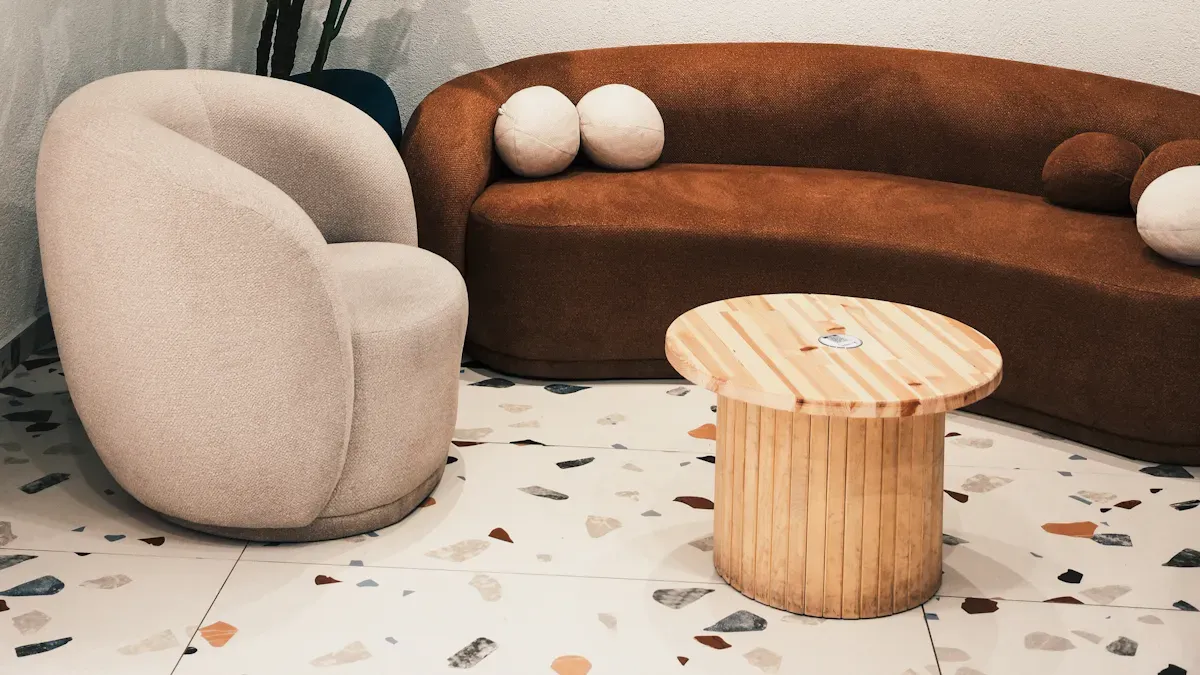
There are many colors and patterns for terrazzo. Designers like to use bright colors such as deep blue, emerald green, and warm terracotta. These colors help your terrazzo floor stand out in any room. You can pick custom colors to match your brand or style. Micro terrazzo uses tiny chips for a simple look. This style is good for modern rooms with smooth floors. Metallic touches like brass and copper make the floor look fancy. Checkerboard patterns are also popular for cool and trendy rooms.
- Some favorite terrazzo color and pattern choices are:
- Deep blues and emerald greens
- Warm terracotta shades
- Custom color mixes
- Micro terrazzo with small chips
- Metallic touches for a fancy look
- Checkerboard patterns
Tip: You can pick bright or soft colors to fit your project. These choices help you make a terrazzo floor that matches your design.
Customization Options
Terrazzo tile lets you change many things for your project. You can pick different chips, binders, and extras to make your floor special. The table below shows how these choices change your project.
| Customization Aspect | Options Available | Impact on Project Outcomes |
|---|---|---|
| Chips | Marble, Stones, Glass, Mirror, Mother of Pearl | Changes how the floor looks and feels special |
| Binder | Epoxy, Cement | Changes how strong and easy to clean the floor is |
| Optional Add-Ons | Abrasive nosing strips, Decorative metal strips | Makes the floor work better and look nicer |
You can work with a designer or architect to pick the best materials. These choices help you get a terrazzo floor that stands out and fits your needs. Customizing lets you make a floor that shows your brand or style.
Modern vs Classic Looks
Modern terrazzo uses micro terrazzo with tiny pieces. This gives a smooth and neat look, great for simple rooms. Modern terrazzo often uses recycled and green materials. These give you bright colors and new designs. Classic terrazzo uses bigger chips and even colors. This style gives a classic look for old-style spaces.
Modern terrazzo floors are flexible and look fresh. You can use them in creative rooms or busy places. Classic terrazzo floors are still liked because they last long and look nice. Both styles let you make a floor that fits your project.
Note: You can pick modern or classic terrazzo for your design. Each style has special benefits for designers, builders, and teams.
Durability & Performance
Wear Resistance
You want your terrazzo floor to last a long time. This is important for people who design and build buildings. Not all terrazzo tiles are the same. Tests on tiles from Koya and Erbil show this. Tiles from factory A were much stronger than those from factory B. They had 50% more impact resistance. So, you should pick your tiles carefully. Stronger tiles last longer and look better. They keep their color and texture even with lots of people walking on them. If you are working on a school, hospital, or mall, you need tough terrazzo. Good terrazzo floors can handle daily use. They also need less care and do not get damaged easily.
Water & Stain Resistance
Water and stain resistance help your terrazzo floor stay nice. It is good to know how terrazzo compares to porcelain tile. Here are some simple facts:
- Porcelain tile does not let water, stains, or scratches in. You can use it in kitchens, bathrooms, and busy places.
- Terrazzo is strong but has tiny holes. You need to seal it to stop water and stains.
- If you do not seal terrazzo, it can soak up water and stains.
- Porcelain is easy to care for and keeps out water. You can use it almost anywhere.
- Terrazzo needs sealing and regular care to stay nice.
If you want terrazzo in a wet place, ask about sealing and care. Designers and builders like terrazzo for its look. But they also plan for cleaning and care. If you follow the right steps, your terrazzo floor will last a long time.
Anti-Slip Grades (R9-R13)
Safety is very important for floors, especially in wet or busy spots. Terrazzo tiles come in different anti-slip grades, from R9 to R13. These grades help you pick the right tile for your space. The tables below show what each grade means:
| Ramp Class | Slip Angle (°) | Suitability |
|---|---|---|
| R9 | 6–10° | Low slip resistance (dry indoor use only) |
| R10 | 10–19° | Moderate slip resistance (shopping centers) |
| R11 | 19–27° | Wet areas (commercial kitchens) |
| R12 | 27–35° | High slip resistance (walkways, car parks) |
| R13 | >35° | Very high slip resistance (industrial) |
| Pendulum Class | SRV Range | Suitability |
|---|---|---|
| P0 | <12 | Very slippery, not recommended |
| P1 | 12–24 | Low slip resistance |
| P2 | 25–34 | Moderate slip resistance (dry indoor areas) |
| P3 | 35–44 | Wet areas (covered outdoor, kitchens) |
| P4 | 45–54 | Good slip resistance (bathrooms, public walkways) |
| P5 | ≥55 | High slip resistance (ramps, pool surrounds) |
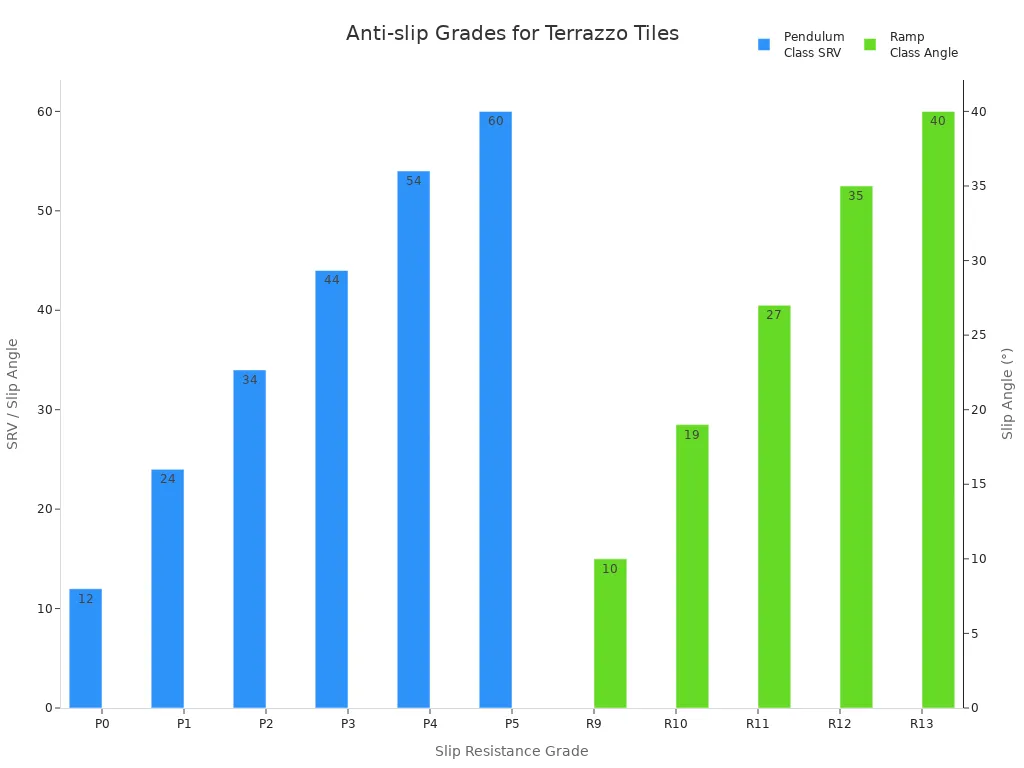
You can ask for terrazzo tiles with the right anti-slip grade. Many companies give safety reports for their tiles. This helps builders and designers follow the rules and keep people safe. If you want a special look or feel, ask your supplier for choices that fit your needs.
Tip: Pick the right anti-slip grade for wet or busy places. This keeps everyone safe when they walk on the floor.
Certification (GSC & More)
When you pick terrazzo tiles, certifications are very important. These papers show the tiles are safe and good quality. Certified terrazzo tiles work well in busy and wet places. Architects and designers use these certifications to make smart choices.
You will see terrazzo tiles with different certifications. These show the tiles follow rules in many countries. Certifications check for slip resistance, strength, and being green. You can use certified tiles in schools, hospitals, and offices. Builders and developers look for these marks to make sure the tiles last.
Here are some certifications you should know about:
- LEED credits mean the tiles help green building projects. You get points for using eco-friendly materials.
- ISO 10545 checks if the tiles meet ceramic tile rules. This means you get good quality.
- EN 14411 and BS EN 14411 check slip resistance and quality in the UK and EU. These tiles are safe for important places.
- ANSI A137.1 checks quality in the USA. These tiles meet tough American rules.
| Certification | Indicates |
|---|---|
| ISO 10545 | Follows ceramic tile rules |
| EN 14411 | Checks slip resistance |
| ANSI A137.1 | Checks quality in the USA |
| BS EN 14411 | Checks quality in the UK/EU |
You should look for these certifications when you buy tiles. Certified tiles help you follow building and safety rules. They also last longer and need less fixing.
Tip: Ask your supplier for certification papers. These show the terrazzo tiles are right for your project.
Many terrazzo floors can get LEED credits. This makes terrazzo a great choice for green buildings. Designers and sellers like certified terrazzo tiles for eco-friendly projects. You help the earth and get nice, strong floors.
You can use certified terrazzo tiles in many places. Schools, hospitals, and stores need tiles that pass strict tests. These tiles make spaces safer and stronger for everyone. Designers and architects trust certified terrazzo tiles for style and strength.
Certified terrazzo tiles help you worry less. You know the tiles will last and look good. Builders and developers like these tiles because they are reliable. Pick certified terrazzo tiles for your next project and enjoy them for years.
Maintenance & Cleaning
Daily Care
You want your terrazzo floors to look nice every day. Start with easy steps to keep them clean. Sweep or vacuum to pick up dust and dirt. Use a damp mop and a pH-neutral cleaner. This keeps the floor clean and does not hurt the finish. Many designers say these steps work for homes and stores. If you have terrazzo in the bathroom, wipe up water right away. This stops stains and keeps the floor safe. Interior designers like terrazzo in bathrooms because it looks good and is easy to clean. You do not need special tools for daily cleaning. A soft mop and gentle cleaner are enough for most floors.
Tip: Wipe up spills fast in bathrooms. This stops water spots and keeps your terrazzo floor looking new.
Long-Term Upkeep
Taking care of your terrazzo helps it last for years. Seal the floor every one or two years. This keeps out stains and water damage. Many architects and builders pick terrazzo because it is easy to care for. Polishing the floor makes it shiny and removes small scratches. You can hire someone to deep clean and seal the floor. This keeps it strong and pretty. In bathrooms, look for soap scum or hard water marks. Use a gentle scrub pad if you see them. Do not use harsh chemicals because they can make the floor look dull. Interior designers say to clean terrazzo often in bathrooms and kitchens.
Here is an easy upkeep plan:
- Sweep or mop every day.
- Seal the floor every 1-2 years.
- Polish when you want more shine.
- Use gentle cleaners in bathrooms.
Wet Area Suitability
Terrazzo works well in wet places like bathrooms, showers, and locker rooms. You need to pick the right finish and anti-slip grade. Many floors do not last in wet spots, but terrazzo is strong. Designers and builders use terrazzo in bathrooms because it keeps out water if sealed. Always seal the floor to stop water from getting in. This makes terrazzo a great choice for bathrooms in hotels, gyms, and homes. Ask your supplier about anti-slip finishes for more safety. You can use terrazzo on floors, walls, and even counters in bathrooms. The material gives you style and is easy to care for in busy wet spaces.
| Area | Recommended Finish | Key Benefit |
|---|---|---|
| Bathrooms | Sealed, anti-slip | Water resistance |
| Showers | Sealed, textured | Safety and hygiene |
| Locker Rooms | Sealed, anti-slip | Easy cleaning |
Note: Terrazzo is a smart pick for bathrooms and other wet places. You get style, safety, and easy care all in one.
Terrazzo vs Porcelain Tile
Style & Appearance
You want your space to look unique and professional. When you compare terrazzo vs porcelain tile, you see big differences in style. Terrazzo gives you endless design options. You can choose custom colors, chip sizes, and patterns. Interior designers often use terrazzo for bold floors in lobbies, offices, and luxury homes. You can match your brand colors or create a one-of-a-kind look. Porcelain offers many finishes, like stone, wood, or even terrazzo effects. You find many porcelain tile ideas for modern and classic spaces. These tiles look sharp and clean. Architects like porcelain for its uniform look and wide range of styles. If you want a floor that stands out, terrazzo gives you more freedom. If you want a simple and neat look, porcelain works well.
Tip: Ask your designer to show you samples of both materials. This helps you see which style fits your project best.
Durability & Use Cases
You need a floor that lasts. In the terrazzo vs porcelain tile debate, durability matters. Terrazzo stands up to heavy foot traffic in schools, airports, and malls. You see terrazzo in many public buildings because it resists wear and tear. Porcelain also offers strong performance. It does not scratch or chip easily. You can use porcelain in kitchens, bathrooms, and outdoor areas. Many construction teams pick porcelain for wet zones because it does not soak up water. Terrazzo needs sealing to block stains and water. Porcelain works well in places where you want low maintenance and high strength. Both materials serve architects, developers, and wholesalers who want reliable building materials.
| Feature | Terrazzo | Porcelain |
|---|---|---|
| Wear Resistance | Very high | High |
| Water Proof | Needs sealing | Yes |
| Use Cases | Lobbies, malls | Kitchens, bathrooms |
Maintenance & Cost
You want to know how much work and money your floor will need. Terrazzo vs porcelain tile shows clear differences here. Terrazzo needs regular sealing and polishing. You must clean spills quickly to avoid stains. Over time, terrazzo can last for decades if you care for it. Porcelain needs less work. You can sweep and mop it with simple cleaners. Porcelain tile ideas often focus on easy care for busy families or businesses. The cost of terrazzo is higher at first. You pay more for materials and installation. Porcelain costs less to buy and install. If you want a budget-friendly option, porcelain is a smart choice. If you want a floor that adds value and lasts for years, terrazzo is a good investment.
Note: Talk to your interior designer or supplier about long-term costs. This helps you pick the right tile for your needs.
Cost & Value
Material & Installation Costs
You want to know what terrazzo and porcelain tiles cost. Real terrazzo tiles cost more because of the materials and skilled workers needed. Porcelain tiles cost less and are easier to put in. Look at the table below to see the difference:
| Tile Type | Cost Comparison |
|---|---|
| Authentic Terrazzo Tile | Costs more because of special materials |
| Terrazzo-Look Porcelain | Costs less and is simple to install |
Terrazzo tiles are more expensive since they use special chips and need experts. Porcelain tiles are a good choice if you want to save money. Both terrazzo and porcelain cost more than regular ceramic tiles. But terrazzo is special because it looks unique and is high quality. Think about both cost and how hard it is to install when you plan your floor.
Tip: Terrazzo is a smart pick if you want a fancy look and value that lasts. If you want to spend less, porcelain tiles give you style for less money.
Longevity & ROI
You want your floor to last and be a good deal. Terrazzo floors can last more than 75 years if you take care of them. You do not have to replace them often, so you save money over time. Porcelain tiles also last, but not as long as terrazzo. The table below shows the main ideas:
| Aspect | Advantages | Limitations |
|---|---|---|
| Durability | Lasts a very long time (75+ years) | Might crack if something heavy hits it |
| Cost | Saves money over time because it lasts | Costs more at first than regular tiles |
Terrazzo does not need much work. You only need to reseal it sometimes. This means you spend less money in the long run. Even though terrazzo costs more at first, it gives you better value over many years. Many designers and builders pick terrazzo for busy places because it lasts and looks good for a long time.
- Terrazzo can last more than 75 years if you care for it.
- It does not need much work, so you save money later.
- Even though it costs more at first, you get more value than with floors that need fixing often.
Budget-Friendly Alternatives
You might want the terrazzo look but not the high price. Faux terrazzo and terrazzo-look porcelain tiles are good options. These choices cost less and are easier to put in. But they do not last as long as real terrazzo. The table below compares real terrazzo and faux terrazzo:
| Feature | Traditional Terrazzo | Faux Terrazzo |
|---|---|---|
| Durability | Lasts a very long time | Does not last as long |
| Thickness | 3/8″ to 3 inches | Up to 1/16″ thick |
| Wear Resistance | Very strong and tough | Not as strong, wears out faster |
| Maintenance | Easy, just reseal sometimes | Needs to be replaced more often |
| Installation Complexity | Needs skilled workers and tools | Easy, no special skills needed |
| Cost | Costs more at first, saves later | Costs less at first, more later |
“Just because something is called terrazzo, it does not mean it is as strong or lasts as long as real terrazzo. How long it lasts is the biggest difference: real terrazzo can last 75-100 years.”
You should talk to your designer or supplier about your budget and what you need. If you want a floor that will last for many years, pick real terrazzo. If you need something fast and cheap, faux terrazzo or terrazzo-look porcelain tiles are good. Always choose what fits your style, how long you want it to last, and your budget.
Installation Factors
Professional vs DIY
When you want to put in terrazzo tile, you have a big choice. You can pay experts or try to do it yourself. Terrazzo needs skill and special tools. Most designers say you should hire pros for this job. Experts know how to pour, grind, polish, and seal the tiles. These steps are hard and need training. Doing it yourself is not easy. It is not a quick weekend job. If you do not know what you are doing, you could make mistakes. These mistakes can cost a lot and look bad.
| Pros of Professional Installation | Cons of DIY Installation |
|---|---|
| Experts know how to do hard jobs | You might make mistakes |
| They use the right tools | It takes a lot of work |
| You get a good-looking floor | The floor might look bad |
Tip: Let professionals install terrazzo floors. You will get a strong, nice floor and feel less worried.
Site Preparation
Getting the site ready is very important for a good floor. The subfloor must be dry and set, which takes about 30 days. This stops cracks and white marks from showing up. Use a good thin set to make the floor even. Put tiles on cement board or drywall if the area is dry. Do not use painted surfaces. In wet or busy places, make grout lines bigger or use anti-slip products to keep people safe.
Here are the steps for getting the site ready:
- Make sure the subfloor is dry and set.
- Spread thin set with a trowel.
- Wet the back of each tile before you put it down.
- Press each tile in place with your hand.
- Work in small areas, no bigger than 2 feet by 2 feet.
- Use spacers so the gaps are even.
- Wipe off any extra thin set right away.
- Let the thin set dry for at least two days before sealing and grouting.
Designers and builders know that careful site prep makes the floor last longer and look smooth.
Installation Time
How long it takes depends on how big your project is. Terrazzo tiles need at least three days for small rooms like bathrooms. The floor needs time to dry and set. Bigger jobs take even more days, especially in stores or public places. Other tiles, like ceramic, go in much faster. You can finish those in one day and do not always need a pro. Terrazzo takes longer but gives you a strong and special floor.
Note: Give yourself extra time for terrazzo. You will get a custom floor that lasts and looks great.
Architects, designers, and builders should plan for how long terrazzo takes. Good planning helps you get a floor that looks good and works well.
Where to Use Terrazzo
Residential Spaces
You can put terrazzo floors in many rooms at home. It works in entryways, kitchens, bathrooms, and living rooms. Many people pick terrazzo because it looks nice and is useful. The surface is strong and does not get damaged easily. It stays pretty even when people walk on it a lot.
- Terrazzo tiles do not scratch or dent in busy rooms.
- The surface is not porous, so cleaning is simple. You just need a mop and a gentle cleaner.
- There are lots of colors and patterns to choose from. You can match your floor to your favorite style.
- Terrazzo often uses recycled pieces, which is good for the planet.
- The surface does not let germs or allergens grow. This helps keep your home healthy.
- You can use terrazzo on floors, walls, and counters for a matching look.
- Terrazzo works with radiant heating, so your floors feel warm in winter.
- Real estate agents say terrazzo makes homes worth more because it lasts and looks fancy.
Tip: Terrazzo is a smart pick if you want a floor that is pretty, tough, and easy to clean.
Commercial & Public Areas
You see terrazzo in airports, schools, hospitals, and offices. Designers use it in busy places because it is strong and lasts a long time. The surface can handle lots of people walking on it every day. It keeps shining for many years.
| Performance Characteristic | Description |
|---|---|
| Exceptional Durability | Handles lots of people without wearing out |
| Minimal Maintenance | Needs only simple cleaning and some polishing |
| Hygienic Surface | Does not let germs grow |
| Long Term Cost Effectiveness | Looks good for many years and saves money |
When you plan a business project, check the floor underneath first. You need to know if the floor will move or crack. You should plan for special joints to stop cracks. Think about how fast you need the job done and if people need to use the space soon. Some places have water or chemicals, so pick the right finish—matte, satin, or shiny.
- Floors must not be slippery, especially in halls and lobbies.
- Think about who will clean the floor and how often.
- Terrazzo meets health rules and looks neat and professional.
Note: Terrazzo helps you make public spaces that are safe, stylish, and easy to care for.
Outdoor & Wet Zones
You can use terrazzo outside on patios, pool decks, and in wet places like showers or locker rooms. You must seal the tiles to keep out water and stains. The right sealer keeps water out but does not make the floor slippery. This is important for safety in wet spots.
- Always seal terrazzo before using it outside. This keeps the color bright and stops stains.
- Pick a sealer that blocks water but does not make the floor slick.
- Clean and reseal terrazzo every one to three years, depending on weather and use.
- Taking care of terrazzo helps it last longer and look new.
If you want to know where terrazzo works best, it is great in places that need to be both pretty and strong. You get a surface that fits many styles and stands up to tough weather. Designers and builders trust terrazzo for both inside and outside jobs.
Tip: For outdoor or wet places, ask your supplier about the best sealer and care plan. This keeps your terrazzo safe and looking good.
Artistic & High-Design Uses
You can use terrazzo to make art spaces look bold. Architects and designers pick terrazzo for galleries and museums. Terrazzo turns floors, walls, and furniture into art. You can choose many colors, chip sizes, and patterns. This lets you match your style or brand.
Designers use terrazzo for custom inlays and murals. You can add logos, shapes, or abstract art to the floor. This makes every project special. Real estate developers like terrazzo because it stands out and adds value. You see terrazzo in boutique hotels and fancy restaurants. It is also in flagship stores. These places need a surface that looks good and lasts.
Tip: Work with a designer or artist to plan your terrazzo. Use sketches or digital tools to see your ideas.
You can use terrazzo for sculptural pieces too. Some artists make benches, planters, or lights with terrazzo. This gives the project a matching look. Builders and wholesalers know terrazzo works well with wood, glass, and metal. You can mix these materials for cool contrasts.
Here are some popular ways to use terrazzo:
- Feature walls in hotel lobbies or art galleries
- Custom desks and counters for reception areas
- Staircases with colorful risers
- Public art in parks or plazas
- Sculptural seating in museums or airports
| Application Area | Artistic Impact | Who Benefits |
|---|---|---|
| Gallery Floors | Shows art with a simple background | Artists, curators |
| Hotel Lobbies | Makes a luxury first impression | Developers, guests |
| Retail Flagships | Highlights brand identity | Designers, retailers |
| Public Plazas | Adds color and interest outside | Cities, communities |
You can use terrazzo tile for a smooth look or to highlight spots. Terrazzo fits modern and classic styles. The surface is easy to clean and stays pretty for years. If you want a bold design, terrazzo helps you make it.
Note: Terrazzo is more than a floor. It is a canvas for your ideas. You can shape it to fit any creative vision.
Which Tile Should You Use
Matching Tile to Project Needs
You want to select the right tile for your project. Start by thinking about where you will use it and how much traffic the area gets. If you plan for a busy lobby or a school hallway, choose a tile with a strong finish and larger aggregate size. This gives you more durability and keeps the floor looking good. For a quiet office or a stylish home, you can pick smaller chips and a smoother finish. Designers often match terrazzo patterns and colors to the overall look of the space. You can create bold floors or subtle walls that fit your vision.
Consider your budget. Terrazzo costs more at first, but it lasts longer and needs less fixing. Porcelain tiles cost less and install faster. Think about how much you want to spend now and later. Maintenance matters too. Terrazzo needs sealing and polishing. Porcelain needs simple cleaning. If you want a green project, look for tiles made with recycled materials. Many manufacturers offer sustainable options that help the planet.
You must also think about environmental factors. Terrazzo works well in many places, but it can crack if the temperature changes a lot. Professional installation is important. Skilled workers make sure your floor stays strong and smooth. If you want a custom design, terrazzo gives you many choices. You can pick from a wide range of aggregates, pigments, and patterns. This flexibility lets you create a floor that matches your brand or style.
Tip: Match the tile to your project needs by looking at location, design goals, budget, and environmental impact. This helps you get the best results for your space.
Key Questions to Ask
Before you decide which tile should you use, ask yourself these questions. This checklist helps you make the right choice for your project.
- Where will you install the tile?
- Is it a high-traffic area or a quiet space?
- What style do you want?
- Do you prefer bold colors and patterns or a classic look?
- How much can you spend?
- Are you looking for long-term value or a quick, budget-friendly solution?
- How much maintenance are you willing to do?
- Do you want easy cleaning or are you ready for regular sealing and polishing?
- Do you need eco-friendly materials?
- Will recycled content or green certifications matter for your project?
- Will the tile face extreme temperatures or moisture?
- Do you need extra durability or water resistance?
- Who will install the tile?
- Can you hire professionals or do you plan to do it yourself?
| Decision Factor | Terrazzo | Porcelain Tile |
|---|---|---|
| Durability | Very high, lasts decades | High, lasts years |
| Customization | Many colors, patterns, aggregates | Wide range of finishes |
| Maintenance | Needs sealing and polishing | Simple cleaning |
| Installation | Professional required | DIY possible |
| Cost | Higher upfront, lower long-term | Lower upfront, moderate long-term |
| Sustainability | Recycled options available | Some eco-friendly choices |
Note: Use this checklist to compare your needs with what each tile offers. You will find the best match for your project.
If you work as an architect, designer, or developer, you know that the right building materials make a big difference. Terrazzo gives you flexibility and lasting value. Porcelain tile offers quick installation and easy care. Material wholesalers and construction teams can help you find the best option for your space. Always match the tile to your goals and ask the key questions before you decide.
You can pick from lots of terrazzo or porcelain tile choices. Terrazzo lets you make many designs and lasts a long time. It gives your project a special look. Porcelain tile is simple to clean and goes in fast. Think about what you want for style, how strong the floor should be, how much work it takes to clean, the price, and how hard it is to put in. Talk to a designer or building expert if you need help. Look at different terrazzo tiles or ask a supplier to help you find the best one for your space.
FAQ
What is terrazzo, and why do designers choose it?
Terrazzo is made from marble, glass, or stone chips in a binder. Designers like terrazzo because it looks unique and lasts a long time. It fits many styles, so you can use it in modern or classic rooms.
Can you use terrazzo in wet areas like bathrooms?
You can use terrazzo in wet places. Seal the surface and pick an anti-slip finish. Designers often use terrazzo in bathrooms, showers, and locker rooms. It keeps out water and is easy to clean.
How does terrazzo compare to porcelain tile for durability?
Terrazzo lasts longer than most porcelain tiles. It handles lots of people walking on it for many years. Porcelain tile resists scratches and stains, but terrazzo gives more choices and lasts longer in busy spots.
Is terrazzo hard to maintain?
Sweep and mop terrazzo often. Seal it every one or two years. Designers say terrazzo is easy to care for if you follow simple steps. Do not use harsh chemicals so the finish stays nice.
What are the main installation challenges with terrazzo?
Terrazzo needs skilled workers to install. You must get the floor ready, use special tools, and let it dry. Doing it yourself is not a good idea. Architects and builders plan extra time for terrazzo jobs.
Are there eco-friendly terrazzo options?
You can find terrazzo tiles with recycled glass, stone, or metal chips. Many companies make green materials that help you earn LEED credits. Designers and developers pick these for earth-friendly projects.
How do you pick the right terrazzo for your project?
Think about your space, style, and budget first. Ask your designer or supplier about chip size, color, finish, and anti-slip grades. Decide how much care you want to do. You can ask for samples before you choose.
Can terrazzo increase property value?
Terrazzo floors can make your property worth more. Developers and sellers see terrazzo as a top building material. You get a strong, stylish floor that buyers like and that stands out.
Pingback: Beyond Traditional Concrete: 8 Stunning UHPC Facades That Will Inspire You - guiyinet.com
Pingback: Modern Terrazzo Trends Designers Are Loving Right Now - guiyinet.com