
Choosing terrazzo tiles is easy if you know what is important. First, think about your style. Pick colors that make your home feel nice. Find tiles that fit your needs. Some tiles are good for busy rooms. Other tiles look best in quiet spaces. Terrazzo is strong and can handle lots of use. It also deals well with spills. Cleaning terrazzo is simple and keeps things easy. There are many patterns and finishes to choose from. Pick what matches your guide and your life. Always buy from a trusted supplier. This helps you get tiles that last.
Key Takeaways
- Pick terrazzo tiles that fit your style and each room’s use. Think about colors and patterns that make your home look nice.
- Terrazzo is strong and can last more than 75 years if you care for it. It handles lots of people walking on it and does not stain or spill easily.
- Choose the right terrazzo type for what you need. Cement-based tiles look classic. Resin-based tiles have more colors and are easier to clean.
- Terrazzo is good for the environment. It is often made with recycled things. Try to find tiles with lots of recycled parts to help the planet.
- Taking care of terrazzo is easy. Sweep it often and mop it sometimes to keep it nice. Reseal cement-based tiles every few years to protect them.
- Putting in terrazzo takes skill. Hire experts to make sure it looks good and lasts long. Good installation stops problems like cracks later.
- Think about your budget. Add up the price for tiles, putting them in, and caring for them so you do not get surprised.
- Look at ways to make your tiles special. You can pick colors, chip sizes, and patterns to make a look that is just for you.
What Is Terrazzo
Terrazzo Definition
Terrazzo is special because it mixes different materials. It combines marble, glass, or other chips with cement or resin. Terrazzo can look shiny, matte, or rough. Here’s why terrazzo stands out:
- Terrazzo uses cement or resin mixed with marble, glass, or other chips.
- You can use terrazzo for floors, countertops, stairs, and custom designs.
- Terrazzo gets poured or set, then polished to make a strong surface.
- Terrazzo gives you many design choices for any style or color.
Terrazzo History
Terrazzo began in Italy in the 1500s. Workers wanted to use leftover stone pieces. They mixed these into floors. They poured terrazzo by hand or made blocks to cut shapes. Now, you can buy terrazzo tiles that are easy to put on floors and walls.
Types Of Terrazzo Tiles
You can pick from different terrazzo tiles. Each kind uses special materials and fits certain rooms. Here are the main types:
| Type of Terrazzo Tile | Common Materials Used |
|---|---|
| Cement-Based Terrazzo | Marble, granite, colored glass chips |
| Epoxy Terrazzo | Epoxy resin, many colors and chips |
| Monolithic Terrazzo | Terrazzo mix poured on concrete floor |
| Sand Cushion Terrazzo | Sand layer, wire mesh, insulation |
| Rustic or Textured Terrazzo | Natural stone look, slip-resistant finish |
Cement-Based Terrazzo
Cement-based terrazzo uses marble, granite, or glass chips with cement. It looks classic and is strong. This type works well in big spaces and can handle lots of walking.
Resin-Based Terrazzo
Resin-based terrazzo, also called epoxy terrazzo, uses resin instead of cement. You can pick from many colors and chip sizes. Resin-based terrazzo feels lighter and can be thinner. It resists stains and is good for indoor use.
Precast Terrazzo
Precast terrazzo means tiles are made in a factory. You can get them in different shapes and sizes. Precast terrazzo is simple to install and looks the same everywhere.
Custom Terrazzo
Custom terrazzo lets you make your own design. You can choose colors, chip sizes, and patterns. Some people add logos or art for a special look.
When picking terrazzo tiles, think about where you want them and what style you like. Cement-based terrazzo gives a classic look. Resin-based terrazzo has more color choices and is easy to care for. Precast and custom terrazzo help you get the look you want.
Terrazzo Flooring Benefits & Drawbacks
Durability Of Terrazzo Flooring
If you want a floor that lasts, terrazzo flooring is a smart choice. You can count on it to handle busy homes, schools, or shops. Terrazzo stands out because it can last more than 75 years with the right care. That’s much longer than many other types of flooring. Take a look at how terrazzo compares to other popular options:
| Flooring Type | Lifespan |
|---|---|
| Terrazzo | 75+ years |
| Natural Stone | 50-100 years |
| Hardwood | 30-100 years |
| Ceramic Tile | 20-50 years |
| Vinyl | 10-20 years |
| Carpet | 5-15 years |
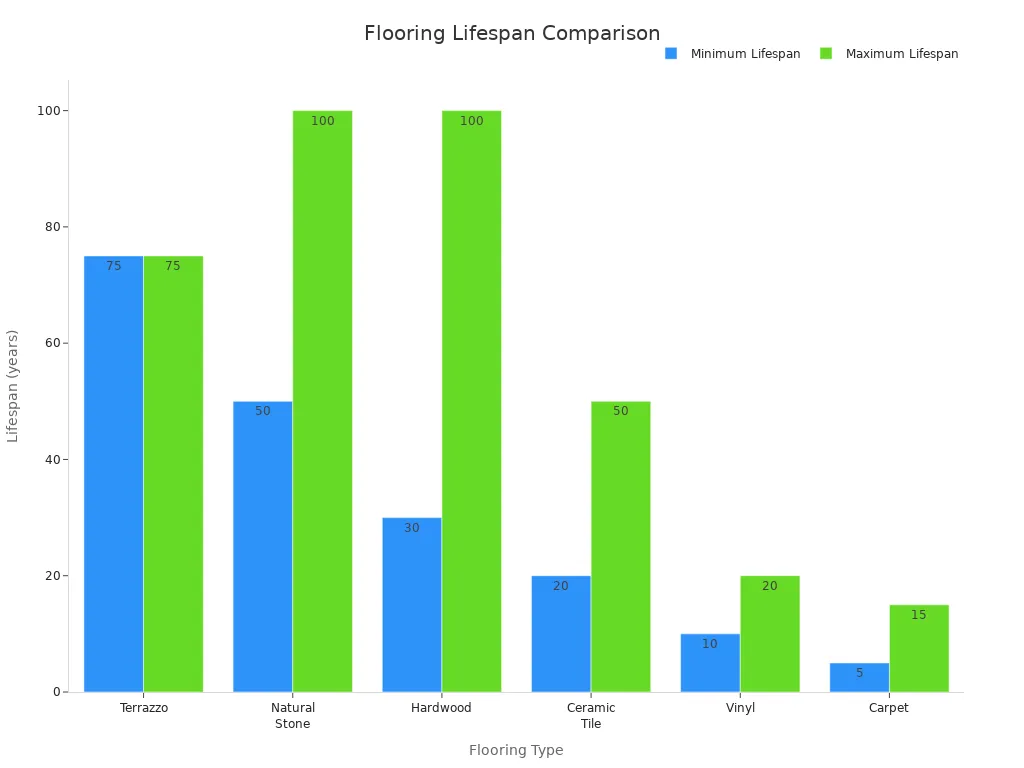
You don’t have to worry about scratches or dents as much as you would with hardwood. Ceramic tile can crack, but terrazzo stays strong. If you want a floor that keeps looking good for years, terrazzo flooring is hard to beat.
Design Versatility
Terrazzo gives you endless ways to show off your style. You can pick from many colors, patterns, and chip sizes. Want a classic look? Choose soft colors and small chips. Want something bold? Go for bright colors and big chips. You can even create custom patterns or add your own logo. Terrazzo works for modern, classic, or even playful designs. Here’s what you can do with terrazzo:
- Mix different colors and materials for a unique look.
- Create custom shapes, curves, or even art pieces.
- Use poured terrazzo for smooth, seamless floors.
- Try precast terrazzo tiles for easy installation and matching designs.
- Choose from polished, matte, or textured finishes.
You can use terrazzo in almost any room. It fits well in kitchens, bathrooms, entryways, and even as an accent wall. If you want your interior to stand out, terrazzo gives you the freedom to get creative.
Sustainability Of Terrazzo
If you care about the planet, terrazzo is a great pick. Many terrazzo products use recycled glass or stone, which helps reduce waste. Some terrazzo can have up to 75% recycled content. You can also find terrazzo that uses local materials, which cuts down on shipping and lowers the carbon footprint. Many brands make terrazzo with zero VOCs, so you get better indoor air quality. Here’s a quick look at some eco-friendly features:
| Certification/Feature | Description |
|---|---|
| GREENGUARD Certification | Low chemical emissions for healthier air. |
| LEED-NC Credits | Points for building reuse, recycled content, and local sourcing. |
| Recycled Content | Up to 75% recycled glass or stone. |
| Local Sourcing | Materials from nearby, reducing carbon footprint. |
| Zero VOCs | No harmful chemicals released into your home. |
You can feel good about choosing terrazzo flooring. It’s strong, stylish, and kind to the environment.
Maintenance Needs
You want a floor that looks good and stays that way with little effort. Terrazzo makes this possible. You only need to sweep or mop it daily to keep dust away. Sometimes, you might need a deeper clean, but you do not have to worry about tough stains or scratches as much as with other floors. If you see a scratch or stain, you can fix it with a quick polish or reseal.
Take a look at how terrazzo compares to other flooring types:
| Flooring Type | Maintenance Requirements | Comparison to Terrazzo |
|---|---|---|
| Terrazzo | Daily cleaning, periodic deep cleaning, addressing scratches and stains, resealing. | Requires less maintenance due to durability and resistance to wear. |
| Hardwood | Regular refinishing, more susceptible to scratches. | Requires more maintenance than terrazzo. |
| Laminate | Basic cleaning, less durable, no refinishing needed. | Lacks long-term durability compared to terrazzo. |
| Tile | Regular cleaning, may crack or chip. | More prone to damage under heavy impact than terrazzo. |
| Vinyl | Low-cost, basic cleaning, shorter lifespan. | Cannot sustain heavy traffic like terrazzo can. |
You can see that terrazzo stands out for its durability and easy care. You do not need to refinish it often. You just keep it clean and reseal it when needed. This makes terrazzo a smart choice for busy homes or places with lots of foot traffic.
Cost Factors
When you plan your terrazzo project, you should know what affects the price. Several things can change how much you pay:
- Material quality matters. High-end chips and fancy finishes cost more.
- The condition of your current floor can add to the price if it needs extra work.
- Bigger rooms need more materials and labor, which raises costs.
- Complex designs or patterns take more time and skill, so they cost more.
- Labor rates change depending on where you live.
- Special features like inlays or custom art will add to your total.
If you want to save money, keep your design simple and choose standard materials. If you want a one-of-a-kind look, be ready to invest more.
Installation Challenges
Installing terrazzo is not a simple weekend project. You need a flat, dry base—usually concrete—for the best results. If the floor is not level or has moisture, you could have problems later. You also need to think about expansion joints and underlayment. These help stop cracks, especially in places where the temperature changes a lot.
Terrazzo installation takes skill. Experts mix and pour the terrazzo, then grind it smooth. If you try to do it yourself, you might run into delays or extra costs. It is best to hire pros who know how to handle terrazzo. This way, you get a floor that looks great and lasts for years.
Tip: Always ask your installer about their experience with terrazzo. A skilled team makes a big difference in the final look and performance.
Where To Use Terrazzo Floor Tiles
High-Traffic Areas
Entryways
Your entryway sets the tone for your whole home. You want something that looks great and stands up to muddy shoes, wet umbrellas, and heavy bags. Terrazzo works perfectly here. It handles extreme foot traffic and shrugs off dirt and grit. Many old buildings still have their original terrazzo floors, and they look amazing after decades of use. You can sweep or mop the surface, and it will keep its shine. If you want a stylish welcome that lasts, terrazzo floor tiles make a smart choice.
Hallways
Hallways see a lot of action every day. Kids run through, pets scamper, and guests pass by. Terrazzo stands up to all this movement. You do not have to worry about scratches or dents. The surface resists stains, so spills from backpacks or shoes clean up fast. You can choose from many colors and patterns to match your style. If you want a hallway that stays beautiful year after year, terrazzo delivers.
Wet Spaces
Bathrooms
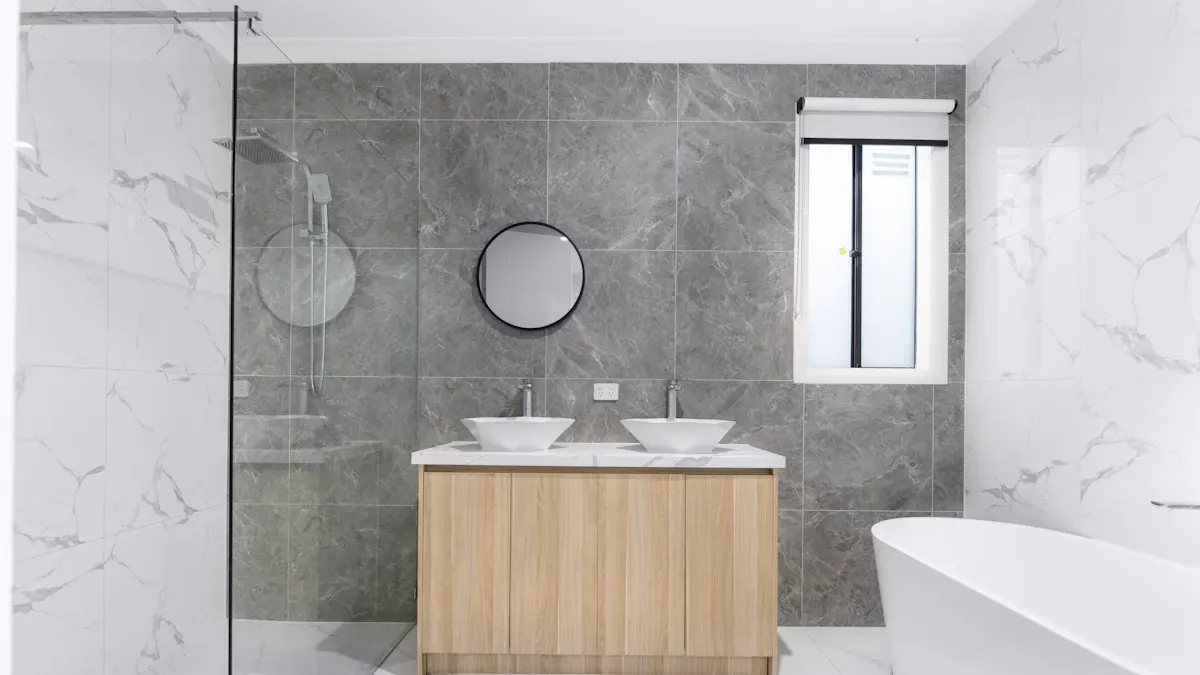
Bathrooms need a floor that handles water, soap, and steam. Terrazzo does all that and more. The surface resists moisture and mold, so you get a safe and clean space. You can use terrazzo for the floor, shower enclosure, or even a bathroom vanity. The seamless look makes your bathroom feel bigger and brighter. For best results, make sure the base is dry and level before you install the tiles. Seal the joints well to keep water out. Clean with mild soap and water, and avoid harsh cleaners. Your bathroom will stay fresh and stylish.
Laundry Rooms
Laundry rooms can get messy with water, detergent, and dropped clothes. Terrazzo keeps up with the mess. The nonporous surface resists stains and water damage. You can mop up spills without worry. Make sure you use a waterproof membrane under the tiles and seal them well. This keeps your floor looking new. Regular cleaning with gentle products will help your terrazzo last for years.
Living & Dining Rooms
You spend a lot of time in your living and dining rooms. These spaces need a floor that looks good and feels comfortable. Terrazzo gives you both. You can pick a classic pattern for a cozy vibe or go bold with bright chips for a modern look. The surface feels smooth underfoot and stays cool in summer. If you want to match your kitchen worktop or create a flow between rooms, terrazzo makes it easy. You can even use the same material for accent walls or furniture inlays. With terrazzo, your living and dining rooms become the heart of your home.
Tip: Terrazzo tiles work well in kitchens too. They resist heat, stains, and scratches, so you can cook and entertain without worry.
Outdoor Applications
You might think terrazzo only belongs inside, but it shines outdoors too. If you want a patio or pool area that stands out, terrazzo floor tiles can handle the job. They look stylish and last for years, even with sun, rain, and lots of foot traffic.
Patios
A patio is where you relax, host friends, or enjoy a sunny day. Terrazzo makes your patio pop with color and pattern. You can pick colors that match your garden or outdoor furniture. Some people choose chips like crushed glass or seashells for a cool, beachy vibe. Want your patio to look unique? Try a herringbone or random tile layout.
Before you install terrazzo outside, you need to get the basics right:
- Make sure the ground is flat and strong enough for the tiles.
- Use a weather-resistant adhesive so the tiles stay put through hot and cold days.
- Grout and seal the tiles well to keep out water and stains.
Once your patio is ready, keep it looking fresh. Sweep away leaves and dirt, and wash with mild soap. If you spill something, clean it up fast. Reseal the tiles when needed to protect them from weather.
Pool Surrounds
Terrazzo works great around pools. It feels cool under your feet and resists water. You can pick slip-resistant chips for extra safety. Choose colors that blend with your pool or garden. Terrazzo can even connect your indoor and outdoor spaces, making everything flow together.
When you install terrazzo by the pool, follow the same steps as for patios. Make sure the surface is solid, use the right glue, and seal everything well. Clean up splashes and sunscreen spills quickly. Reseal the tiles as your installer suggests.
Creative Uses
Terrazzo isn’t just for floors. You can use it in fun and creative ways all over your home.
Accent Walls
Want a wall that grabs attention? Try terrazzo. You can go for a minimal look with small chips on a light background or pick bold colors and big chips for a dramatic effect. Accent walls work in living rooms, bathrooms, or even outside.
Staircases
Staircases get a lot of use, so you need something tough. Terrazzo stands up to heavy traffic and looks amazing. You can match the stairs to your floor or pick a different pattern for a special touch. Many designers use terrazzo on stairs in public places because it lasts and always looks fresh.
Furniture Inlays
You can add terrazzo to tables, benches, or countertops. It brings color and texture to your furniture. Some collections, like Medley by Ergon, mix different terrazzo styles for a modern twist. You can match your inlays to your floors or create a one-of-a-kind piece.
Here’s a quick look at popular terrazzo styles for creative projects:
| Style | Description |
|---|---|
| Minimal and contemporary | Small, regular chips on a neutral background for a clean look. |
| Modern | Mixed-size chips and color accents for a lively feel. |
| Mediterranean | Warm backgrounds and earthy chips, often paired with wood or stone. |
| Creative | Large, bold fragments on dark or bright backgrounds for a dramatic statement. |
Tip: Terrazzo-look porcelain tiles can also work outside, helping you create a seamless look from indoors to your patio or pool.
Guide To Terrazzo Tile Selection
Define Room Purpose
Start by thinking about where you want to use terrazzo. Every room in your home has a different job. The right tiles make a big difference.
- Terrazzo works well in busy places like hallways and entryways because it is tough and handles lots of foot traffic.
- Bathrooms and kitchens need tiles that resist water and stains. Terrazzo does this because it is non-porous.
- You can use terrazzo on floors, walls, and even backsplashes. It fits many parts of your interior.
Ask yourself, “Will this room get wet? Will people walk here a lot? Do I want a bold look or something simple?” Your answers help you pick the best terrazzo for each space.
Choose Terrazzo Style & Color
You have many choices when it comes to style and color. Terrazzo lets you show off your taste and match your interior.
Classic Vs. Modern
Classic terrazzo uses soft colors and small chips. It feels timeless and works well in older homes or spaces with a vintage vibe. Modern terrazzo uses bright colors, bold patterns, and bigger chips. It feels fresh and fun. In 2026, you will see a mix of both. Designers love the nostalgia of classic terrazzo but also want the clean look of modern styles. New resins make terrazzo even stronger and less likely to stain or crack.
Color Palettes
You can pick almost any color for your terrazzo. Soft whites, creams, and grays look calm and classic. Blues, greens, and pinks add a playful touch. Some people choose earthy tones for a warm, natural feel. In 2026, many people want eco-friendly terrazzo with colors that remind them of nature. You can match your tiles to your cabinets, walls, or even your favorite chair.
Patterns & Designs
Terrazzo gives you endless design options. You can choose simple, even patterns for a clean look. You can also pick wild, random chips for a bold statement. Some people like to mix chip sizes or add special shapes. You can even create custom designs with logos or art. Terrazzo floor tiles let you get creative and make your home stand out.
Select Tile Size & Chip Size
Tile size and chip size change how your room looks and feels. Think about the mood you want and the size of your space.
Visual Impact
- Large chips look fancy and elegant. They make a room feel calm and open.
- Small chips add energy and a retro feel. They can make a space feel busy or cozy.
- The size of the tile matters too. Big tiles have fewer lines between them, so your floor looks smooth and wide.
“Large format tile is a growing trend to pair with open concept, ‘blurred boundaries’ design. Visual continuity due to fewer grout joints creates a more cohesive look throughout the space.”
Room Scale
Pick tile and chip sizes that match your room. Big rooms look great with large tiles and big chips. Small rooms can feel bigger with medium or large tiles, but small chips add detail and interest. Always think about how the tiles will look with your furniture and walls. The right choice makes your interior feel just right.
You now know how to match terrazzo to your room’s purpose, style, and size. This step helps you create a space that is both beautiful and practical.
Pick Tile Type
You have two main choices for terrazzo tile types: cement-based and resin-based (also called epoxy terrazzo). Each type has its own strengths. Let’s break them down so you can pick what works best for your space.
Cement-Based
Cement-based terrazzo gives you a classic look. You see this style in many historic buildings. It uses cement mixed with marble, granite, or glass chips. Cement terrazzo works well in big rooms and areas with lots of foot traffic.
Here’s what you get with cement-based terrazzo:
- Warm, earthy colors that feel timeless.
- A surface that feels solid and sturdy under your feet.
- Good performance in both indoor and outdoor spaces.
But you should know a few things before you choose cement terrazzo:
- It needs regular sealing to keep stains away.
- It takes longer to install because cement needs time to cure.
- It can crack if not installed carefully or if the floor underneath moves.
- The cost usually ranges from $15 to $50 per square foot, but you might pay more for maintenance over time.
Resin-Based
Resin-based terrazzo, or epoxy terrazzo, is a modern choice. It uses a resin binder instead of cement. This type gives you more color options and lets you create bold designs.
Why pick resin-based terrazzo?
- You get a huge range of colors and chip sizes.
- The surface resists stains and handles heavy foot traffic.
- It cures quickly, so your project finishes faster.
- It’s lighter and thinner than cement terrazzo, which works well for renovations.
Keep these points in mind:
- Resin-based terrazzo is best for indoor use.
- It costs more, usually $25 to $90 per square foot, but you save on maintenance.
- It’s less likely to crack and stands up to busy spaces.
Here’s a quick comparison to help you decide:
| Feature | Resin-Based Terrazzo (Epoxy) | Cement-Based Terrazzo |
|---|---|---|
| Color Options | Wide range, bright and bold | Mostly earthy, classic tones |
| Durability | Very high, resists stains and cracks | Strong, but needs sealing |
| Installation Time | Fast curing | Slow curing |
| Maintenance | Easy, less sealing needed | Needs regular sealing |
| Cost (per sq. ft.) | $25–$90 | $15–$50 (plus maintenance) |
| Best Use | Indoors, custom designs | Indoors and outdoors, classic looks |
Tip: If you want a floor with lots of color and a modern vibe, go with resin-based terrazzo. If you love a traditional look and need something for outdoors, cement-based terrazzo is a solid pick.
Decide On Finish
The finish you choose changes how your terrazzo floor looks and feels. You have three main options: polished, honed, and matte. Each finish has its own style and benefits.
Polished
Polished terrazzo shines and reflects light. It makes rooms feel bigger and brighter. This finish works well in living rooms, entryways, and places where you want a touch of luxury. Polished surfaces are easy to clean, but they can get slippery when wet. If you want a show-stopping floor, polished terrazzo is a great choice.
Honed
Honed terrazzo has a smooth, satin feel. It does not shine as much as polished terrazzo, but it still looks elegant. This finish hides scratches and smudges better. It works well in busy areas like kitchens, hallways, and bathrooms. Honed terrazzo gives you a soft look that feels modern and relaxed.
Matte
Matte terrazzo has a flat, non-reflective surface. It feels natural and understated. This finish is perfect for outdoor spaces, patios, or anywhere you want extra slip resistance. Matte terrazzo hides dirt and marks well. It’s a smart pick for families with kids or pets.
Note: The finish you choose affects cleaning and safety. Polished floors need more care to keep their shine. Matte and honed finishes are easier to maintain and safer in wet areas.
Assess Durability & Maintenance
You want your terrazzo floor to last for years. Durability and maintenance matter a lot. Here’s what you should look for:
Wear Resistance
Terrazzo tiles last a long time—over 75 years if you care for them. Resin-based terrazzo handles heavy traffic and resists stains better than cement-based terrazzo. Cement terrazzo is tough but needs sealing to stay strong. Both types can crack if the floor underneath moves or if something heavy drops on them. Resin-based terrazzo is less likely to crack and works well in busy homes.
Cleaning Needs
Terrazzo is easy to clean. You just sweep or mop to keep dust away. Resin-based terrazzo needs less sealing, so it’s even easier to care for. Cement terrazzo needs regular sealing, especially in wet or humid rooms. If you see a crack or chip, call a pro to fix it. Quick repairs stop moisture from getting in and causing more damage.
Here’s a quick checklist for terrazzo care:
- Sweep or mop often to keep floors clean.
- Reseal cement terrazzo as needed.
- Wipe up spills right away.
- Fix cracks or chips quickly to prevent bigger problems.
Tip: In bathrooms, kitchens, or laundry rooms, make sure your terrazzo is sealed well. This keeps out water and stops stains.
Terrazzo gives you a floor that looks good and stays strong with simple care. Pick the right type and finish, and you’ll enjoy your floor for decades.
Consider Sustainability
When you choose terrazzo tiles, you help the Earth. Many terrazzo tiles use materials that are good for nature. These materials come from things people already used or from natural places. You get a floor that looks nice and helps the planet.
Eco-Friendly Materials
Terrazzo uses both natural and recycled materials. You might see marble, granite, or glass chips in your tiles. These chips often come from leftover pieces at factories or from things people throw away. The binder holds the chips together and is usually cement or epoxy. About one-fourth of each tile is binder. The rest is made of these natural or recycled chips.
Here are some eco-friendly materials you might find in terrazzo:
- Stone and mineral chips from nature
- Recycled glass from bottles, mirrors, or containers
- Recycled porcelain from old sinks or tiles
- Recycled concrete from building sites
- Recycled plastic chips, sometimes up to 20% of the tile
Tip: If you want the most eco-friendly tiles, ask your supplier about how much recycled content is in their terrazzo tiles.
Recycled Content
You can see how terrazzo makers use recycled materials in this table:
| Material Type | Source Description |
|---|---|
| Recycled Glass | Post-consumer sources such as mirror, bottles, containers |
| Marble and Granite | Post-industrial chips from quarries |
| Recycled Porcelain | Sourced from construction waste |
| Recycled Concrete | Sourced from construction waste |
| Plastic Chips | Contains up to 20% recycled plastic material |
Picking terrazzo with recycled content helps keep trash out of landfills. You also use fewer new resources. Some terrazzo tiles have up to 75% recycled material. That makes them a smart choice if you care about the environment.
Budget Planning
You want a nice floor, but you also want to save money. Terrazzo tiles can fit many budgets. You just need to plan ahead and know what to expect.
Tile Costs
Tile prices can change a lot. The cost depends on the type of terrazzo, the size of the tile, and the materials inside. Resin-based terrazzo usually costs more than cement-based terrazzo. Custom colors or special chips can also make the price go up.
Here’s a quick look at what you might pay:
| Tile Type | Price Range (per sq. ft.) |
|---|---|
| Cement-Based | $15 – $50 |
| Resin-Based (Epoxy) | $25 – $90 |
If you want to save money, pick standard colors and sizes. Custom designs and rare materials will cost more.
Installation Costs
Putting in terrazzo tiles takes skill. You need a flat, dry surface. The installer must lay the tiles, grout them, and sometimes polish or seal them. Labor costs depend on where you live and how tricky your design is.
- Simple patterns cost less to install.
- Complex designs or custom inlays cost more.
- Outdoor or wet areas may need extra prep work.
On average, you might pay $10 to $30 per square foot for installation. Always ask for a full quote before you start.
Maintenance Costs
Terrazzo floors are easy to care for, but you should plan for some upkeep. Cement-based terrazzo needs sealing every few years. Resin-based terrazzo needs less sealing. Both types need regular cleaning with gentle soap and water.
- Sweeping and mopping: Low cost, just your time and basic supplies.
- Sealing (cement terrazzo): Every 2–5 years, about $1–$3 per square foot.
- Repairs: Fixing chips or cracks costs extra, but it is rare if you care for your floor.
Note: Spending a little on maintenance helps your terrazzo floor last for decades. That saves you money in the long run.
If you plan your budget for tiles, installation, and care, you can enjoy a beautiful terrazzo floor without surprises.
Terrazzo Flooring Trends For 2026
Popular Colors & Patterns
You will see terrazzo everywhere in 2026. Designers love to play with bold colors and unique patterns. Many people choose big, chunky chips for a dramatic look. Others like micro-terrazzo styles, which use tiny pieces for a smooth, modern feel. You can pick soft pastels, deep greens, or even bright blues. Some homeowners mix different colors to create a one-of-a-kind floor.
Here are some trends you might notice:
- Large, colorful marble or glass chips for a statement floor
- Minimalist designs with small, even chips for a calm space
- Earthy tones and nature-inspired colors for a cozy vibe
- Custom patterns that match your style or even your favorite art
You can also find terrazzo with recycled glass and marble fragments. This adds sparkle and helps the planet at the same time.
Sustainable Innovations
Sustainability is a big deal in terrazzo flooring right now. You want a floor that looks good and does good. Terrazzo started as a way to reuse leftover materials. That tradition continues today. Many tiles use recycled glass, plastic, or stone. Some even have up to 75% recycled content.
Manufacturers now use zero-VOC resins, which means your air stays clean. You do not have to worry about harsh chemicals. Precast terrazzo techniques have also improved. Factories pour mixtures into molds and cure them in special rooms. This makes the tiles stronger and easier to install. You get a beautiful floor with less waste and fewer problems.
Terrazzo flooring is one of the most eco-friendly choices you can make. It lasts for decades, needs little care, and helps keep trash out of landfills.
Tip: If you want the greenest option, ask about recycled content and zero-VOC materials before you buy.
Technology In Terrazzo Manufacturing
Technology is changing how terrazzo looks and works. You can now find terrazzo with LED lights built right in. These floors glow at night or light up walkways for safety. It is a fun way to add style and function to your home.
Factories use better machines to mix and pour terrazzo. This means you get tiles with perfect color and texture every time. New tools help workers cut and shape tiles for custom designs. You can even order terrazzo with your own logo or artwork.
Here’s a quick look at what’s new:
| Innovation | What It Means for You |
|---|---|
| Embedded LED components | Floors that light up for safety or fun |
| Advanced mixing machines | More color choices and smoother tiles |
| Custom cutting tools | Unique shapes and patterns |
You get more choices and better quality than ever before. Terrazzo flooring in 2026 is smart, stylish, and built to last.
Customization Options
You want your home to feel unique. Terrazzo flooring gives you lots of ways to make your space stand out. In 2026, customization is easier than ever. You can pick colors, patterns, and even shapes that match your style. Many brands let you design your own terrazzo tiles. You can choose the size of the chips, the mix of materials, and the finish.
Here are some ways you can customize terrazzo:
- Color Choices: Pick from soft pastels, bold brights, or earthy tones. You can match your tiles to your walls or furniture.
- Chip Size and Shape: Go for tiny chips for a smooth look or big chunks for a dramatic effect. Some companies offer custom shapes like triangles or hexagons.
- Patterns: Create stripes, waves, or even your own logo. You can mix different colors and chip sizes for a one-of-a-kind floor.
- Finish: Choose polished for shine, honed for a soft look, or matte for a natural feel.
Tip: Ask your supplier if they offer sample tiles. You can see how your custom design looks before you order.
Many homeowners now use terrazzo for more than just floors. You can add it to walls, stairs, or even furniture. Some designers use terrazzo in kitchen countertops or bathroom vanities. You can create a matching look throughout your home.
Here’s a quick table showing popular customization options:
| Custom Feature | What You Can Do |
|---|---|
| Color | Match or contrast with decor |
| Chip Size | Small, medium, large, custom |
| Pattern | Geometric, random, custom art |
| Finish | Polished, honed, matte |
| Shape | Square, rectangle, custom shapes |
You get to decide how your terrazzo looks. Customization lets you turn your ideas into reality. Your home becomes a true reflection of your personality.
Smart Home Integration
Smart homes are everywhere in 2026. Terrazzo flooring now connects with your smart devices. You can add sensors under the tiles. These sensors track temperature, humidity, or even footsteps. Some terrazzo tiles have built-in LED lights. You control the lights with your phone or voice. The floor can glow at night or change colors for parties.
You can use terrazzo with smart heating systems. The tiles warm up when you want. You set the temperature with an app. This makes your home cozy and saves energy. Some terrazzo floors work with smart cleaning robots. The smooth surface helps robots clean faster and better.
Here are some smart features you might see:
- LED Lighting: Tiles light up for safety or style.
- Sensors: Track air quality or movement.
- Smart Heating: Warm floors on demand.
- Robot-Friendly: Easy for cleaning robots to move.
Note: If you want smart features, talk to your installer. Make sure your terrazzo tiles work with your home’s technology.
Smart terrazzo flooring makes life easier. You get comfort, safety, and style all in one. Your home feels modern and ready for the future.
Terrazzo Floor Tiles Cost Guide
Tile Price Ranges
You probably wonder how much terrazzo tiles cost. Prices can change depending on the type you pick and the look you want. Most terrazzo tiles fall between $15 and $90 per square foot. Cement-based tiles usually cost less, while resin-based tiles can be more expensive. Custom colors or special chip mixes push the price higher. If you stick with standard sizes and colors, you can save money. Want a unique pattern or rare materials? You will pay more.
Here’s a quick tip: Ask your supplier for a price list before you decide. This helps you plan your budget and avoid surprises.
Installation Expenses
Installing terrazzo flooring takes skill and time. You need a flat surface and a pro who knows how to work with terrazzo. Installation costs range from $13.84 to $17.18 per square foot. The price depends on your location, the size of your room, and the complexity of your design. Simple patterns cost less. Custom inlays or tricky layouts cost more.
Take a look at this table for a clear breakdown:
| Flooring Type | Installation Cost (Per Sq. Ft.) | Annual Maintenance Cost (Per Sq. Ft.) | Total Cost Over 10 Years | Replacement Cost (Per Sq. Ft.) |
|---|---|---|---|---|
| Epoxy Terrazzo | $14.50 | $0.43 | $18.85 | $0.00 |
| Sand Cushion Terrazzo | $16.11 | $0.52 | $21.35 | $0.00 |
| Monolithic Terrazzo | $9.70 | $0.61 | $19.01 | $0.00 |
You can see that epoxy terrazzo costs about $14.50 per square foot to install. Sand cushion terrazzo is a bit higher. Monolithic terrazzo is the lowest in this group. These prices include labor and materials.
Tip: Always ask for a full quote before you start. This way, you know exactly what you will pay.
Maintenance Value
Terrazzo flooring gives you great value over time. You do not need to replace it often. Routine maintenance costs are low. Epoxy terrazzo costs about $0.43 per square foot each year for cleaning and care. Sand cushion terrazzo costs $0.52 per square foot. Monolithic terrazzo costs $0.61 per square foot. Over ten years, the total cost for epoxy terrazzo is around $18.85 per square foot.
You only need to sweep or mop regularly. Sometimes, you reseal the tiles to keep them looking fresh. Repairs are rare if you take care of your floor. Terrazzo lasts for decades, so you save money in the long run.
- Installation costs range from $13.84 to $17.18 per square foot.
- Annual maintenance is less than $1 per square foot.
- You do not need to replace terrazzo flooring often.
If you want a floor that looks good and saves money over time, terrazzo is a smart choice.
Budgeting Tips
You want a beautiful terrazzo floor, but you also want to stick to your budget. Good news—you can do both! Here are some smart tips to help you plan your spending and avoid surprises:
- Measure Your Space First
Grab a tape measure and check the size of your room. Write down the length and width. Multiply them to get the total square footage. This number helps you figure out how many tiles you need. - Set a Realistic Budget
Decide how much you want to spend before you start shopping. Include the cost of tiles, installation, and maintenance. Don’t forget to add a little extra for unexpected costs. - Compare Tile Types
Cement-based terrazzo usually costs less than resin-based. Standard colors and sizes are more affordable than custom designs. Ask for price lists from different suppliers. - Ask About Installation Fees
Installation can be a big part of your budget. Get quotes from at least two or three pros. Make sure the price includes everything—labor, materials, and any prep work. - Plan for Maintenance
Terrazzo floors last a long time, but they need care. Add a small amount to your budget for cleaning supplies and resealing, especially if you pick cement-based tiles. - Look for Deals and Leftovers
Some suppliers offer discounts on overstock or discontinued tiles. You might find a great deal if you’re flexible with color or pattern.
Tip: Always buy a few extra tiles. If you need repairs later, you’ll have matching pieces ready.
Here’s a simple table to help you organize your terrazzo budget:
| Item | Estimated Cost (per sq. ft.) |
|---|---|
| Tiles | $15 – $90 |
| Installation | $13.84 – $17.18 |
| Maintenance (yearly) | $0.43 – $0.61 |
| Extras (repairs) | Varies |
Where To Save Or Splurge
You don’t have to spend top dollar everywhere. Here’s how you can make smart choices:
- Save On:
- Standard Colors and Sizes: These cost less and still look great.
- Simple Patterns: Fancy designs take more time and money.
- DIY Prep Work: You can move furniture or clean the space yourself before the installers arrive.
- Splurge On:
- High-Traffic Areas: Spend more on durable, high-quality tiles where people walk the most.
- Custom Designs: If you want a unique look, invest in custom colors or patterns for entryways or feature walls.
- Professional Installation: A skilled installer makes your floor last longer and look better.
Note: Saving on installation can lead to problems later. It’s worth paying for a pro who knows terrazzo.
You can mix and match your choices. Pick standard tiles for most rooms and splurge on a custom entryway. This way, you get style and value without breaking the bank.
Terrazzo Buying Checklist
Set Priorities
You want to make sure your new terrazzo tiles fit your needs and style. Start by thinking about what matters most to you. Do you want a calm space or something bold? Are you looking for easy cleaning or a unique design? Write down your top goals for your project. Maybe you want tiles that match your furniture and lighting. You might care about durability if you have kids or pets. Some people focus on budget, while others want a custom look.
Here’s a simple way to set your priorities:
- Decide if you want classic or modern style.
- Pick colors that make your room feel right.
- Think about how much maintenance you can handle.
- Set a budget for tiles, installation, and upkeep.
- Choose between cement and resin base for your tiles.
Tip: If you’re not sure what matters most, ask yourself how you want your space to feel and how much time you want to spend caring for your flooring.
Research Options
Now that you know your priorities, it’s time to explore what’s out there. Terrazzo tiles come in many shapes, sizes, and colors. You can find options for every room and style. Look at different brands and suppliers. Check their reviews and see what other homeowners say. Compare cement-based and resin-based tiles. Cement tiles are thicker and need sealing. Resin tiles are lighter and resist moisture.
Here’s a quick table to help you compare:
| Feature | Cement-Based Tiles | Resin-Based Tiles |
|---|---|---|
| Thickness | Thicker | Thinner |
| Maintenance | Needs sealing | Easy to clean |
| Color Choices | Earthy tones | Bright colors |
| Best Use | Indoors/Outdoors | Indoors |
You should also look at chip size and tile size. Large tiles make rooms feel bigger. Small tiles work well for curves or tight spaces. Tiny chips give a soothing look, while big chips add drama.
Note: Don’t forget to check how the tiles will look with your furniture and lighting. You want everything to work together.
Request Samples
You don’t want to guess how your tiles will look in your home. Request samples from your supplier. Place them in your room and see how they look in different lighting. Touch the surface and check how easy it is to clean. Move the samples next to your furniture and walls. This helps you see if the colors and patterns match your style.
Here’s what you can do with samples:
- Test the color in daylight and at night.
- Check how the tile feels underfoot.
- See if the chip size fits your design.
- Try cleaning the sample to see how easy it is.
- Compare samples from different brands.
Tip: Always ask for at least two or three samples. You might be surprised by how different they look in your space.
You make better choices when you see and touch the tiles before you buy. Samples help you feel confident about your terrazzo flooring decision.
Consult Experts
You’ve done your homework. You’ve looked at samples and compared options. Now, it’s time to talk to the pros. Consulting experts helps you avoid mistakes and get the best results for your terrazzo project.
You might feel confident about your choices, but experts see things you might miss. They know how terrazzo works in real homes. They can spot problems before they happen. You get advice that saves you money and time.
Here’s how you can make the most of expert help:
- Find the Right People
Look for installers, designers, or suppliers who specialize in terrazzo. Ask friends or neighbors for recommendations. Check online reviews and ratings. You want someone with real experience. - Prepare Your Questions
Write down what you want to know. Ask about tile types, installation steps, and maintenance tips. Don’t be shy. Experts expect questions. Here are some good ones:- Which tile type works best for my room?
- How long does installation take?
- What’s the best way to clean terrazzo?
- Can you help with custom designs?
- What’s your warranty policy?
- Share Your Ideas
Bring your samples and photos. Show the expert your style and color choices. Explain your priorities. The more details you share, the better advice you get. - Ask for a Site Visit
Invite the expert to your home. They can check your floors, measure the space, and spot any issues. You get a clear plan and a realistic quote. - Get Written Estimates
Ask for a detailed quote. Make sure it lists tile costs, installation fees, and any extras. Compare estimates from at least two experts.
Tip: If you’re unsure about anything, ask for clarification. A good expert explains things in simple terms.
Here’s a quick table to help you organize your expert consultations:
| What to Ask | Why It Matters |
|---|---|
| Tile recommendations | Matches your needs and style |
| Installation process | Helps you plan and prepare |
| Maintenance advice | Keeps your floor looking great |
| Custom options | Makes your space unique |
| Warranty details | Protects your investment |
You don’t have to do everything alone. Experts guide you through the tricky parts. They help you make smart choices and avoid costly mistakes. You get peace of mind and a floor you’ll love for years.
Remember: The best terrazzo projects start with good advice. Reach out to experts and ask for help. You’ll feel more confident and ready to move forward.
You now know how to pick the right terrazzo tiles for your home. Focus on your style, check durability, plan for easy cleaning, and set your budget. Use the checklist and tips to make a smart choice. If you follow these steps, you will enjoy a floor that looks great and lasts for years.
Ready to start? Bring your ideas to life and let your space shine!
FAQ
How do I clean terrazzo tiles?
You can sweep or vacuum every day. Mop with warm water and a gentle cleaner. Avoid harsh chemicals. If you spill something, wipe it up fast. For tough stains, use a soft cloth and ask your installer for advice.
Can I use terrazzo tiles in my bathroom?
Yes! Terrazzo works well in bathrooms. It resists water and stains. Just make sure you seal the tiles and grout. This keeps water out and helps your floor last longer.
Are terrazzo tiles slippery?
Polished terrazzo can feel slippery when wet. You can pick a honed or matte finish for better grip. Ask your supplier about slip-resistant options, especially for bathrooms or outdoor spaces.
How long do terrazzo floors last?
Terrazzo floors can last over 75 years if you care for them. They resist scratches and stains. You just need to clean and reseal them sometimes. Many old buildings still have their original terrazzo floors!
Do terrazzo tiles crack easily?
No, terrazzo tiles are strong. Cracks can happen if the floor underneath moves or if something heavy drops. You can prevent cracks by hiring a skilled installer and keeping the base solid.
Is terrazzo eco-friendly?
Yes, terrazzo is a green choice. Many tiles use recycled glass, stone, or plastic. You help the planet by picking terrazzo with high recycled content. Ask your supplier about eco-friendly options.
Can I install terrazzo tiles myself?
It’s best to hire a pro. Terrazzo needs a flat, dry base and careful installation. Mistakes can lead to cracks or stains. A skilled installer makes sure your floor looks great and lasts for years.
What colors and patterns can I choose?
You have many choices! Pick from soft neutrals, bold colors, or even custom designs. You can mix chip sizes and shapes. Ask for samples to see what looks best in your space.