
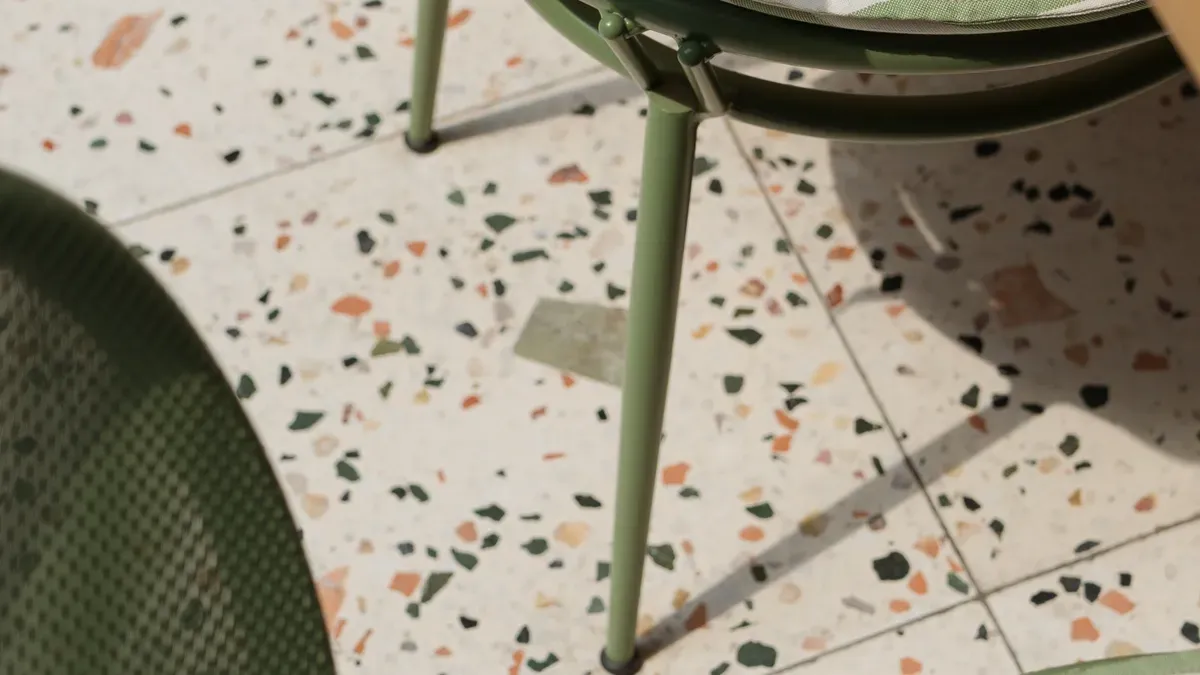
Thin-set epoxy terrazzo combines a 3/8-inch profile with a 100% solids epoxy resin matrix. As designers, you gain incredible design flexibility for vibrant commercial spaces. This lightweight system weighs only 4.5 pounds per square foot. Fast cure times deliver seamless, hygienic flooring in busy facilities. You must evaluate substrate readiness and aggregate options carefully to maximize life-cycle performance. Use this architectural guide to master your next terrazzo project.
Key Takeaways
- Thin-set epoxy terrazzo adds minimal weight to floors with its thin 3/8-inch profile.
- Epoxy terrazzo cures within 24 hours to speed up construction schedules.
- A non-porous epoxy surface prevents bacteria growth and resists harsh chemical stains.
- Designers create custom floor patterns easily using colorful aggregates and metal divider strips.
- Proper concrete subfloor preparation prevents surface cracking and ensures permanent adhesion.
- Zero-VOC epoxy matrices improve indoor air quality and earn valuable LEED credits.
- Low lifetime maintenance costs make epoxy terrazzo a smart financial choice for buildings.
Understanding Epoxy Terrazzo Systems
When you select a floor material for high-traffic environments, you must evaluate mechanical performance and project schedules. Thin-set epoxy terrazzo offers superior technical advantages over traditional cement terrazzo.
Epoxy vs. Cementitious Systems
Thickness Profile and Weight Loadings
Thin-set epoxy requires only a 3/8-inch (6 to 10 mm) thickness profile. You can apply poured-in-place terrazzo directly over concrete slabs without deep recessed slabs. Traditional cement terrazzo requires a thickness of 2.5 inches. In contrast, thick cement terrazzo adds substantial dead weight to your building design. This thin profile reduces structural weight loadings to just 4.5 pounds per square foot.
Tensile and Compressive Strength
Resin formulations grant remarkable tensile and compressive strength to your surface. The epoxy binder yields high flexural strength that withstands heavy impact and structural deflection. Heavy traffic easily cracks cement terrazzo, but a thin-set system resists mechanical stress.
Installation Speed and Cure Schedules
You achieve rapid project turnaround using modern resin formulations. Epoxy resin systems achieve the fastest pour-to-grind turnaround, fully curing in 24 hours or less.
| Performance Metric | Epoxy Terrazzo Binders | Traditional Cementitious Binders |
|---|---|---|
| Cure Speed | Cures rapidly within 24 to 48 hours | Requires a longer curing period of 7 or more days |
| Flexural Strength | Exceeds 15 MPa, significantly outperforming alternative system choices | Lower flexural strength compared to resin-based systems |
Fast curing lets you schedule grinding early. A slow cement terrazzo project delays subsequent trades for weeks. Proper installation efficiency minimizes building downtime during renovation projects.
Core Technical Performance
Non-Porous Surface and Hygiene Standards
A 100% solids epoxy matrix creates an entirely non-porous surface. Liquids, bacteria, and harsh chemicals cannot penetrate the dense matrix. Hospitals and schools specify this system for maximum sanitary compliance. Unlike porous cement terrazzo, resin surfaces prohibit mold growth and simplify daily maintenance routines. You avoid the staining risks common to cement terrazzo.
Seamless Continuity and Joint Stability
You can design continuous poured-in-place terrazzo layouts without standard grout lines. Seamless execution prevents dirt accumulation and enhances structural continuity. While traditional cement terrazzo requires frequent movement joints to prevent cracking, thin-set resin applications accommodate structural movement with proper divider strip placement.
G·ONE High-Clarity Resin Matrix Properties
Specify G·ONE high-clarity resin matrices as your baseline standard to prevent UV discoloration and ensure long-term color fidelity.
This premium resin matrix delivers unmatched durability and crystal-clear transparency. A smooth terrazzo installation ensures long-lasting visual appeal across commercial applications. Choosing this poured-in-place terrazzo solution ensures high clarity and non-yellowing elegance for decades.
Designing Custom Terrazzo Aesthetics
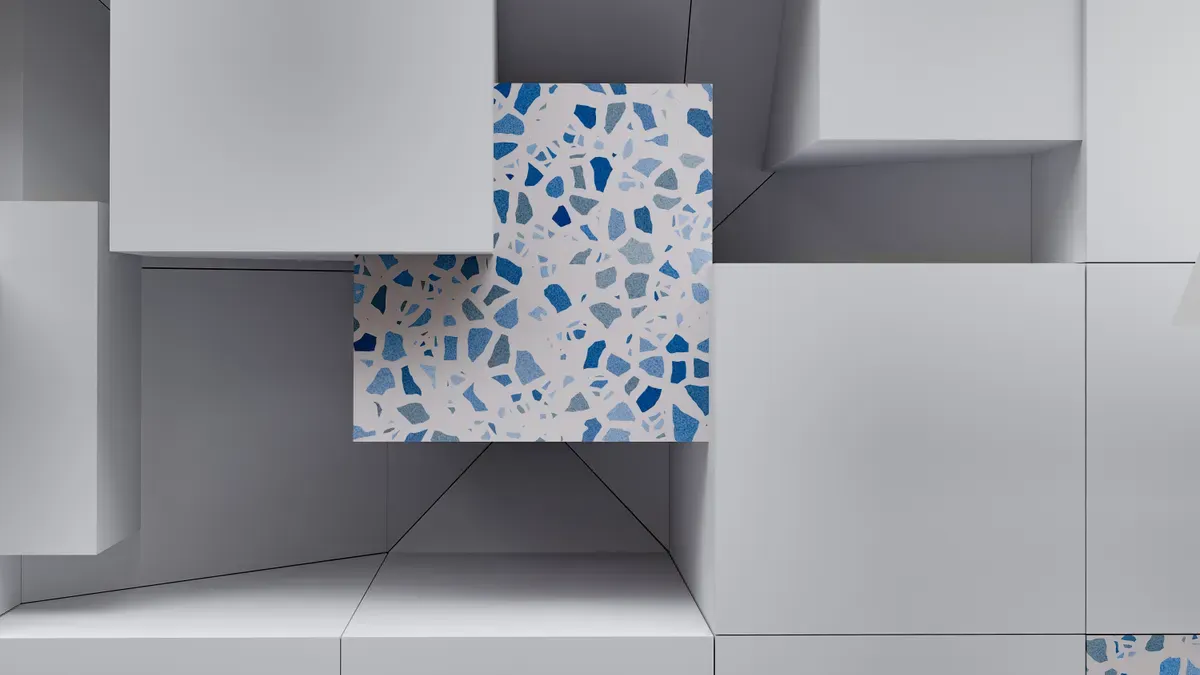
You unlock endless creativity when crafting a custom floor. Modern materials give designers total freedom over color, pattern, and aggregate distribution. You elevate overall floor design effortlessly.
Aggregate Types and Characteristics
Marble Chips and Geological Hardness
Marble chips provide traditional beauty and excellent mechanical performance. You select marble for its soft geological composition. Grinding machines polish marble easily during installation.
Post-Consumer Recycled Glass and Mirrors
Recycled glass and mirror chips elevate your terrazzo project with brilliant reflectivity. These chips add sustainable flair while expanding your design possibilities.
Synthetic and Exotic Aggregate Inlays
You can incorporate mother-of-pearl, brass chips, or synthetic aggregates into your mix. These exotic materials transform basic surfaces into stunning focal points. You control every design detail.
Granite and Quartz Aggregate Blends
Granite and quartz chips offer supreme hardness and stain resistance. You choose these dense stone blends for extreme durability in heavy traffic zones.
Aggregate Sizing and Layout Scale
Aggregate selection dictates the visual scale of your terrazzo design. The National Terrazzo and Mosaic Association (NTMA) establishes standard sizing scales:
| Aggregate Category | NTMA Size Number | Dimension / Diameter Range |
|---|---|---|
| Micro-Terrazzo | #0 through #2 | 1/16″ to 3/8″ |
| Standard Terrazzo | #0 through #2 | 1/16″ to 3/8″ |
| Venetian Terrazzo | #3 / #4 through #8 | Up to 1-1/8″ |
Standard Micro Aggregates
Micro aggregates create smooth terrazzo surfaces with subtle texture. You achieve a seamless design across large spaces.
Standard Size Aggregate Matrix Blends
Standard matrix blends combine traditional chip sizes for classic balance. This approach gives designers maximum design flexibility across commercial interiors.
Venetian and Large-Scale Macro Aggregates
Venetian aggregates feature larger stone chips up to 1-1/8 inches. You create bold visual impact and dramatic layouts with macro-sized stones.
Resin Matrix Customization
Custom Pigmentation and Palette Matching
Liquid epoxy matrices accept custom color pigments easily. You match any paint system code or corporate brand identity perfectly.
Formulating Proprietary Blends with G·ONE Labs
G·ONE Labs formulates high-clarity clear epoxy resins for demanding environments. Strict laboratory testing protocols validate resin clarity and non-yellowing resistance under intense light exposure:
| Standard | Primary Light / Radiation Source | Simulated Environment & Scope |
|---|---|---|
| ASTM G154 | Fluorescent UV lamps (UVA-340 / UVB-313) | Accelerated outdoor sunlight exposure paired with moisture condensation cycles |
| ISO 4892-3 | Fluorescent UV lamps | Standardized framework for UV aging assessment with customizable irradiance |
| ASTM D4459 | Xenon arc or fluorescent lamps | Prolonged indoor environmental lighting conditions at lower UV intensity levels |
Standard QUV protocols confirm optical performance under 340 nm UV-A exposure:
- Irradiance Level: Maintained precisely at 0.76 ± 0.02 W/m² nm.
- Cyclic Test Conditions: Involves sequential phases of 8 hours of dry exposure, 0.25 hours of water spray, and 3.75 hours of condensation.
- Thermal Control: Black panel temperature is continuously set to 50 ± 3 °C.
This scientific precision expands your terrazzo design options while delivering vast design possibilities for any modern building with a durable terrazzo floor.
Architectural Selection Guide and Specification Checklist
You manage several critical phases when specifying thin-set epoxy terrazzo. Navigating project planning, design development, construction documentation, and contractor bidding requires systematic decisions. Follow this structured protocol to turn your vision into an enduring floor surface.
Design Development Protocol
Material Selection and Sample Approval
You guide your client through systematic material choices during early planning. First, you select matrix colors and aggregate blends for your terrazzo floor. You must draft a complete terrazzo specification to secure accurate cost estimates from suppliers. Sample approval forms an essential part of the project specification.
Request physical 6×6-inch sample slabs from certified manufacturers during design development. Evaluating physical samples lets you inspect aggregate distribution, matrix color accuracy, and surface clarity directly.
Specification Tip: Require manufacturers to submit sample slabs with your selected top sealer already applied. Sealers alter surface sheen and influence final color perception under ambient lighting.
Custom Pattern Layouts and Color Transitions
Modern poured-in-place terrazzo grants you exceptional visual freedom across expansive floor plates. You create distinct color fields and geometric shapes using metal divider strips. Your detailed terrazzo specification must show exact strip placement for every pattern change. Turn your creative design concept into clear plans before field installation begins.
Construction Documentation Standards
CSI MasterFormat Section 09 66 23 Editing
Construction documents protect your design intent and establish enforceable quality standards. You edit Section 09 66 23 to create a technical specification for bidding trades. Your project specification establishes clear chemical resistance standards, performance thresholds, and subfloor preparation steps.
Review every specification clause before releasing construction documents to suppliers. Your comprehensive terrazzo specification defines critical substrate tolerances, while aligning your project with NTMA guidelines for terrazzo work:
| Project Phase | Primary Technical Focus | Key Quality Deliverable |
|---|---|---|
| Design Development | Aesthetic verification and mix formulation | Approved 6×6-inch material samples |
| Construction Documents | CSI Section 09 66 23 customization | Comprehensive performance standards |
| Contractor Bidding | Qualification verification | NTMA contractor membership proof |
| Pre-Construction | Onsite quality benchmark | Signed 4×4-foot field mockup |
Detailing Expansion Joints and Transitions
You must detail movement joints correctly to preserve surface integrity over time. Concrete subfloors naturally expand and contract due to temperature changes and structural loading. Subfloor control joints require mirror-placement divider strips in the finished epoxy terrazzo surface.
A clear terrazzo specification outlines exact transition details at doorways and adjacent flooring materials. Proper joint placement protects your continuous floor surface against stress cracks.
Contractor Bidding and Quality Assurance
Evaluating each bidding contractor requires clear qualification standards. System performance depends heavily on skilled field craftsmanship during pouring, grinding, and sealing.
Applicator Qualifications and Certifications
Mandate strict experience requirements for the trade contractor in your documents. A certified terrazzo contractor brings specialized surface preparation equipment and skilled tradespeople to your job site. A qualified contractor delivers superior surface quality throughout the building.
Specify that every bidding terrazzo contractor must maintain active membership in the National Terrazzo and Mosaic Association. Qualified workers ensure your poured-in-place terrazzo achieves maximum mechanical strength and seamless visual appeal.
Field Mockup Inspections and Finishing Approvals
Include a mandatory field mockup clause in your terrazzo specification. Require the primary terrazzo contractor to pour a full-scale 4×4-foot mockup onsite before primary pouring begins. Inspect chip density across the terrazzo sample to confirm aggregate distribution. The selected contractor must demonstrate expert finishing skills on this test panel.
Your formal sign-off on the mockup sets the quality baseline for the whole building. Writing a rigorous terrazzo specification protects your client’s long-term capital investment effectively.
Substrate Preparation for Terrazzo Floors
A high-performing terrazzo floor demands an flawless subfloor foundation. You must inspect and prepare the concrete substrate thoroughly before starting your epoxy terrazzo installation. Proper subfloor preparation prevents structural bonding failures, surface cracking, and costly premature repairs.
Concrete Substrate Requirements
International Concrete Repair Institute Surface Profile Standards
You must prepare the concrete slab to a mechanical profile that guarantees permanent adhesion. The International Concrete Repair Institute (ICRI) establishes specific concrete surface profile (CSP) ratings for thin-set systems.
Technical Requirement: Shot-blast or diamond-grind concrete slabs to achieve a target rating between CSP 3 and CSP 5 before applying epoxy primers.
Floor Flatness and Levelness Tolerances
Poured-in-place epoxy systems follow the underlying slab contours precisely. You need a flat concrete base to achieve an even 3/8-inch thickness profile across the entire surface. Specify maximum floor flatness (FF) and floor levelness (FL) values in your contract documents. Concrete contractors must deliver a slab tolerance of 1/8 inch variation over 10 feet to support standard installation procedures.
Moisture Vapor Mitigation
Uncontrolled moisture in concrete slabs causes adhesive delamination and pinhole bubbling. You must test every slab for excess water vapor prior to pouring epoxy layers.
Moisture Vapor Emission Rate Testing Protocols
Industry standards mandate two core moisture testing protocols to evaluate concrete dryness:
- Calcium Chloride Testing (ASTM F1869): Measures the moisture vapor emission rate across the slab surface.
- In-situ Relative Humidity Probe Testing (ASTM F2170): Evaluates the internal relative humidity inside deep concrete cores.
- Concrete Moisture Preparation (ASTM F710): Establishes acceptable moisture thresholds and surface readiness criteria before resin application.
Epoxy Moisture Barriers and Primers
When test values exceed standard limits, you must specify a high-performance moisture vapor mitigation system. Specialized epoxy primers seal concrete pores effectively and block rising moisture vapor. This proactive moisture barrier secures long-term bond strength under high vapor drive.
Crack Isolation and Joint Detailing
Concrete slabs move continuously due to thermal changes and structural loading. You must engineer crack isolation strategies to protect the finished terrazzo surface.
Membrane Selection and Full-Coverage Application
Apply flexible crack isolation membranes over non-structural slab cracks. Full-coverage membrane applications absorb mechanical stresses from the subfloor and prevent reflective cracking in finished terrazzo floors.
Structural and Control Joint Movement Detailing
Never bridge active expansion joints or structural movement joints with rigid epoxy materials. You must mirror every concrete joint directly through the terrazzo system using back-to-back metal divider strips. Proper joint placement protects your terrazzo floors against structural stress and maintains long-term surface beauty.
Divider Strip Selection and Architectural Placement
Divider strips serve as structural movement controls and key architectural elements in your layout. You rely on these metal or plastic strips to form precise geometric patterns and control material expansion across expansive spaces.
Divider Strip Materials
You must select the right strip material based on your project budget, environment, and aesthetic vision. Different metals and synthetics react uniquely with resin matrices.
Zinc Alloy Strips for Standard Commercial Projects
Zinc alloy provides a clean silver finish for modern commercial spaces. This cost-effective material offers excellent corrosion resistance and bonds tightly with resin formulations. You can easily specify standard 1/8-inch or 1/4-inch heavy-top zinc strips for high-traffic corridors.
Solid Brass Strips for Aesthetic Accents
Solid brass brings warm, golden accents to your custom design layout. You can incorporate brass divider strips to elevate luxury retail spaces or historic restorations. Brass reacts slightly with ambient humidity, developing a rich patina over time that enhances your floor designs.
Plastic and Aluminum Specialty Strips
Plastic strips offer vibrant color options for custom matrix matching. However, you should avoid using aluminum strips with epoxy terrazzo. Aluminum reacts chemically with epoxy curing agents, causing gas bubbles and bond failures along the strip edges.
| Strip Material | Primary Application | Aesthetic Finish |
|---|---|---|
| Zinc Alloy | High-traffic commercial interiors | Bright silver metallic |
| Solid Brass | Decorative patterns and premium accents | Warm golden tone |
| Colored Plastic | Color-matched grid separations | Custom solid colors |
Layout and Functional Rules
Proper strip placement guarantees structural longevity and visual appeal. You maintain a durable terrazzo surface while managing structural subfloor stresses effectively.
Color-Change Separation Details
Divider strips act as physical dams during installation. You must place a strip at every line where resin matrix colors change. These physical barriers keep distinct poured-in-place terrazzo mixtures separate until the binder cures completely.
Pattern Scale and Grid Control
Scale dictates the visual impact of your finished surface. You should design grid layouts with panel sizes between 16 and 64 square feet. Keep your panel dimensions reasonably square. Long, narrow panel ratios increase internal stress and risk hairline cracks across beautiful terrazzo floors.
Alignment with Concrete Substrate Joints
Always align your surface divider strips directly over underlying concrete movement joints. You must install back-to-back metal strips filled with flexible sealant above active subfloor joints. This technique prevents subfloor concrete movement from cracking your poured-in-place terrazzo installation.
Precast Terrazzo and Vertical Details
You can extend seamless flooring aesthetics onto walls, stairs, and millwork. Offsite manufacturing allows precise control over complex dimensional shapes. Precast components streamline field installation schedules while matching your poured epoxy terrazzo floor matrix perfectly.
Precast Structural Elements
Self-Supporting Stair Treads and Risers
Factory-cast stair components offer extreme durability and precise quality control. Fabricators produce tread and riser units under controlled environment conditions. You can specify monolithic tread-and-riser combinations or independent flat units. Precast treads feature abrasive strips or sandblasted inserts to enhance slip resistance.
Radiused and Sanitary Cove Bases
Sanitary cove bases eliminate hard ninety-degree floor-to-wall transitions. You prevent dirt accumulation by specifying radiused cove profiles in healthcare facilities and school corridors.
Design Tip: Specify precast cove bases with a 3/8-inch shoulder to match the thickness of your poured epoxy terrazzo floor system seamlessly.
Custom Countertops and Wall Caps
Precast manufacturing creates custom reception desks, vanity tops, and window sills. Skilled fabricators cast dense slabs using flexible molds. Workers grind and polish these architectural elements before delivery to your project site.
| Element Type | Standard Height / Profile | Primary Structural Purpose |
|---|---|---|
| Sanitary Cove Base | 4-inch or 6-inch height | Prevents liquid penetration at wall joints |
| Self-Supporting Tread | 1.5-inch or 2-inch thickness | Resists heavy foot traffic impact on staircases |
| Architectural Wall Cap | Custom width with drip edges | Protects low walls and adds visual accents |
Vertical Wall Cladding
Vertical terrazzo surfaces transform plain lobby walls into striking architectural features. You can choose between direct vertical application or shop-fabricated precast wall panels.
Thin-Set Vertical Application Techniques
Workers apply thixotropic epoxy matrix mixtures directly onto vertical drywall or concrete masonry walls. Installers trowel specialized resin blends containing light micro aggregates up to standard wainscot heights. This direct installation method requires skilled hand-troweling and lightweight vertical grinding equipment.
Precast Wall Panels and G·ONE Anchoring Systems
Large vertical surfaces benefit from shop-fabricated precast panels. Fabricators produce thin precast panels to reduce weight loads on structural walls.
You can anchor heavy wall panels securely using G·ONE mechanical clip systems. Installers anchor stainless steel clips directly into structural backing framing. Mechanical anchors support heavy panel weight, ensuring safety across high-rise building applications. This precast system provides flawless color consistency and speeds up interior finish work across demanding commercial projects.
Sustainability and Life Cycle Performance

You make a powerful environmental choice when you specify thin-set epoxy terrazzo for sustainable building projects. This modern flooring system delivers outstanding eco-friendly properties while reducing overall building impacts over decades.
LEED Credits and Environmental Metrics
Zero-VOC Emissions and Air Quality
Your indoor air quality remains clean during and after installation. 100% solids epoxy terrazzo matrices contain zero volatile organic compounds. You earn valuable points under LEED v4.1 Low-Emitting Materials standards by choosing non-gassing resins.
Recycled Aggregates and Local Sourcing
You can easily incorporate post-consumer recycled glass, porcelain, and reclaimed marble chips into your floor. Sourcing aggregates locally reduces transportation emissions. These material choices strengthen your overall project sustainability profile.
Environmental Product Declarations
Manufacturers provide detailed Environmental Product Declarations to verify total supply chain impacts. You gain transparent data regarding raw material extraction, chemical processing, and life cycle performance.
Institutional Facility Suitability
High-Traffic Durability in Schools and Hospitals
Schools and healthcare facilities require extreme floor resilience. A seamless epoxy terrazzo floor prevents deep scratch damage and eliminates dirt-trapping grout joints. Staff clean these surfaces quickly using standard neutral pH cleaners, avoiding harsh sanitizing chemicals.
Wear Resistance in Airports and Public Transit
Busy transportation hubs handle non-stop foot traffic and heavy rolling luggage. Poured epoxy terrazzo outperforms competing flooring types in standardized Taber abrasion resistance tests.
| Flooring Type | Taber Abrasion Resistance (Cycles) |
|---|---|
| Poured Epoxy Terrazzo | 20,000+ |
| Terrazzo-Look Porcelain Tile | 10,000+ |
| Polished Concrete | 5,000 to 12,000 |
Superior durability keeps high-traffic areas beautiful for decades. Unlike fragile tile options, your terrazzo surfaces resist severe mechanical impact without cracking.
Lifecycle Cost Analysis of a Terrazzo Floor
Initial Capital Expenditure versus Lifetime Maintenance
You must evaluate total ownership costs rather than initial purchase price alone. While standard cement terrazzo and epoxy terrazzo require upfront capital, low maintenance offsets the initial expense.
+-----------------------------------------------------------------------+
|  Low Annualized Cost Breakdown over 40 Years                           |
|  - Average Initial Installation Cost : $14.50 / sq. ft.               |
|  - 40-Year Annualized Lifecycle Cost : $0.80 / sq. ft.                |
+-----------------------------------------------------------------------+
| Metric | Cost (Per Sq. Ft.) |
|---|---|
| Average Initial Installation Cost | $14.50 |
| 40-Year Annualized Lifecycle Cost | $0.80 |
Forty-Year Flooring System Cost Comparisons
Traditional cement terrazzo often suffers from higher repair rates and longer installation delays. Epoxy terrazzo floors last the entire lifespan of your building without requiring full replacement. Alternative soft flooring options require complete replacement every seven to ten years. You achieve maximum financial return while enjoying permanent architectural elegance with terrazzo floors.
Thin-set epoxy terrazzo provides a premier flooring solution for modern commercial spaces. Your technical specification must address subfloor preparation, moisture mitigation, divider strip placement, and aggregate sizes. A detailed design specification guarantees decision clarity and flawless execution on all terrazzo floors. We invite designers to request sample kits and consult our technical representatives during early planning. Your project specification should include a high-performance G·ONE epoxy matrix system. Furthermore, designers can protect all terrazzo floors by implementing proper maintenance:
| Maintenance Practice | Operational Procedure | Impact on Longevity & Aesthetics |
|---|---|---|
| Routine Surface Cleaning | Clear loose debris via sweeping/vacuuming; mop using a diluted neutral pH cleaner, scrub lightly, and perform a complete clean-water rinse before drying. | Prepares the surface properly, avoids chemical damage, and keeps the surface free from embedded dirt. |
| Application of Protective Sealers | Apply a specialized sealer over the surface after polishing steps are completed. | Forms a non-porous barrier against liquid penetration, averts permanent staining, and simplifies routine care. |
| Polishing & Refinishing | Perform regular polishing treatments to smooth and protect the top layer. | Increases resistance to cracks, scratches, and wear while preserving high visual shine and reducing major repair costs. |
| Simplified Care Routine | Conduct basic, continuous upkeep through regular sweeping and light damp mopping. | Preserves the polished aesthetic seamlessly over time with minimal friction and abrasion. |
FAQ
What is the standard thickness of thin-set epoxy terrazzo?
Thin-set epoxy terrazzo requires a standard thickness profile of only 3/8-inch (9.5 mm). This low profile minimizes building dead load while maintaining high compressive strength.
How fast can you allow foot traffic after installation?
You can allow light foot traffic within 24 hours after pouring. The matrix cures rapidly, enabling fast grinding and minimal project downtime for your job site.
💡 Pro Tip: Always verify surface hardness with your installation team before moving heavy equipment across newly cured floors.
Can you apply terrazzo over existing concrete subfloors?
Yes, you can apply systems directly over existing concrete slabs. You must shot-blast the slab to a CSP 3-5 profile and apply moisture mitigation barriers first.
| Substrate Preparation Step | Key Requirement | | : | : | | Surface Profile | ICRI CSP 3 to CSP 5 | | Moisture Limit | ASTM F2170 Probe Testing |
Why should you choose zinc or brass divider strips over aluminum?
You choose zinc or brass because aluminum reacts chemically with curing agents. This chemical reaction causes severe gas bubbling and bond failure along strip edges.
How do you clean and maintain seamless terrazzo floors daily?
You maintain your floor using simple daily care routines:
- Sweep loose dirt and debris regularly.
- Damp-mop surfaces with neutral pH cleaners.
- Avoid harsh acidic or alkaline chemicals.
What LEED v4.1 credits can your project earn?
Your design earns points under Low-Emitting Materials due to zero-VOC resin matrices. You also gain credits through recycled glass aggregates and regional material sourcing.