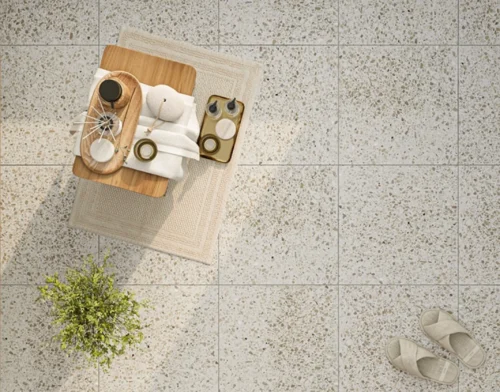

What is terrazzo?Terrazzo is a durable composite material used for floors, countertops, walls, stairs, and furniture. It has a distinctive speckled appearance created by embedding small chips of stone or other materials into a binder, then polishing the surface smooth.

Terrazzo is typically created by mixing marble, granite, quartz, glass, shells, or other suitable materials into a terrazzo base. Naturally, these “other materials” include recycled options—such as waste items like lighter casings, plastics, shells, wood, coffee grounds, tiles, and ceramics.
Terrazzo bases are typically categorized into organic and inorganic materials: the organic material is epoxy resin, while the inorganic material is silicate cement.
The origins of terrazzo can be traced back centuries to the Venice region of Italy; it is a traditional flooring technique born from the concept of repurposing waste materials.
- Origins: Ingenuity from Venice, Italy
Around the 15th century, artisans in Venice, Italy, generated large quantities of marble chips and offcuts while constructing luxurious buildings. Deeming it wasteful to discard these expensive stone scraps, they devised a solution: laying the marble fragments on the floor, binding them with a cementing agent, and then repeatedly grinding and polishing the surface to create a durable, aesthetically pleasing new flooring material.
This technique was originally named “Terrazzo”—derived from the Italian word for “terrace”—because it was initially used primarily for paving courtyards and terraces. - The Evolution of Traditional Terrazzo
Early terrazzo was composed mainly of marble chips bound by lime or cement. It was laid, compacted, and ground by hand. In the absence of modern machinery, artisans used manual tools to painstakingly grind the surface until it became smooth and level. The technique was subsequently widely adopted in Venetian palaces, churches, aristocratic residences, and public buildings, as it offered both high durability and a premium finish resembling natural stone. - From Traditional to Modern Terrazzo
Technological advancements have led terrazzo through several stages of evolution:
Traditional Cement-Based Terrazzo: Using cement as a binder results in a thicker floor suitable for large areas, while offering the texture and feel of natural stone.
Modern Epoxy Terrazzo: Using epoxy resin as a binder allows for a richer color palette and the inclusion of materials such as glass, metal, and seashells. It features a thinner profile and faster installation, making it ideal for commercial spaces and interior design. - Why Is Terrazzo Making a Comeback?
While terrazzo was once viewed merely as an “ordinary flooring material,” shifting design trends in recent years have propelled it back into the realm of high-end architecture. Reasons for its popularity include the look of natural stone at a more manageable price point, customizable colors and patterns, alignment with eco-friendly and sustainable design principles, and suitability for modern minimalist, luxurious, and artistic styles. Today, terrazzo is frequently used as a design highlight in spaces such as hotels, shopping malls, airports, designer residences, and high-end restaurants.

In short, terrazzo originated in Venice, Italy, as an eco-friendly technique created by artisans using marble scraps. Having evolved over centuries—from traditional stone flooring to the high-end decorative material of today that incorporates modern resin technology—terrazzo has become a design material that combines durability, artistry, and sustainability.