
If you’re doing interior design or architectural detailing in the U.S., “sustainable” is never just a label. Your team gets judged on practical deliverables: Can you obtain an EPD? Is there any indoor air quality (IAQ) risk? Can the contractor install it reliably? Will maintenance costs blow back on the budget three years later?
12 Sustainable Building Materials: An Eco-Friendly Spec List Top Designers Actually Use
This article turns high-intent searches like “sustainable building materials” and “eco friendly building materials” into a spec-ready checklist: 12 material categories that show up again and again in high-end projects. For each one, you’ll get typical interior applications, the sustainability case, what to actually write into the specification, and the common pitfalls to avoid.
Pro Tip: If your project targets LEED v4/v4.1—or the owner explicitly asks for “low carbon”—treat EPD + low-emitting + service life as one combined filter. It’s a more defensible approach than looking at recycled content alone.
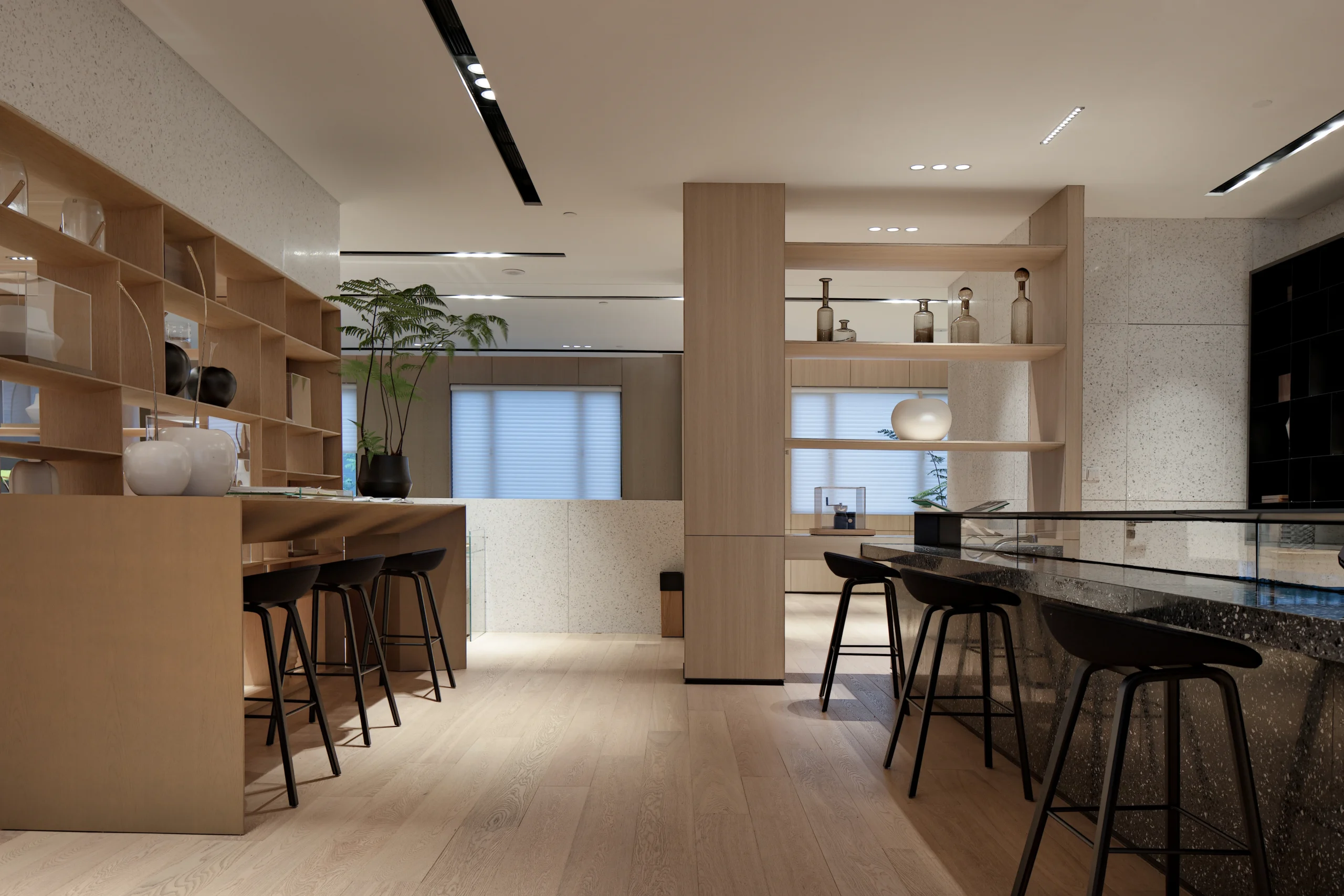
How this list was selected
To make this list genuinely useful for a specifications team, the selection logic is straightforward:
Longer service life: Fewer replacements usually means lower life-cycle impacts and lower long-term maintenance costs.
Easier to document material transparency: For example, an EPD (Environmental Product Declaration). If your team is still getting comfortable with EPDs, start with UL Solutions’ explanation of what an EPD is and how it’s used in material transparency and LCA contexts.
Healthier for indoor environments: Low-VOC and low-odor are the baseline; what matters more is whether the overall “low-emitting materials” pathway is clear and verifiable.
Spec-able and buildable: Clear system details, installation boundaries, and maintenance expectations—no “it feels sustainable.”
Now, let’s get into the list.
1) Terrazzo: Make sustainability a long-game with durability and traceable inputs
Terrazzo is one of the most reliable ways to achieve a premium look while staying spec-friendly for interior floors and walls. At its core, it’s aggregate (e.g., marble, glass) bound in a matrix (typically cementitious or epoxy), then ground and polished to finish.
Typical interior applications
High-traffic floors in lobbies, public areas, airports, hospitals, campuses
Stair treads, wall base/protection, reception backdrops, bars and countertops (precast systems tend to be more controlled)
Why it can be more sustainable
Many terrazzo systems combine durability, low maintenance, and the ability to incorporate recycled aggregates. NTMA’s terrazzo sustainability guidance highlights terrazzo’s longevity and typical alignment paths with LEED-related credits.
What to write into the spec
Name the system: cementitious vs epoxy; wet areas and slab moisture conditions will drive the right choice.
Define thickness and assembly expectations: for example, thin-set epoxy systems are commonly in the 1/4″–3/8″ range and usually require explicit slab moisture limits and vapor mitigation requirements (see TERRAZZCO’s guidance on terrazzo systems and thickness).
Clarify responsibility boundaries for divider strips, expansion joints, substrate flatness, and crack treatment.
Common pitfalls
Treating terrazzo as a “decorative finish” and ignoring moisture and crack control. Risk shows up later as debonding, cracking, and discoloration.
Brand-relevant option If you treat terrazzo as a long-life flooring strategy, consider prioritizing precast systems where possible. For example, G-ONE’s perspective on the ultra-long lifecycle and sustainability of precast terrazzo frames the idea as “moving variables into the factory, and leaving risk out of the field.”
2) UHPC: Use thin, tough, stable panels for walls, tops, and precast elements
In interior design, UHPC’s value isn’t just strength. It often enables elements to be thinner, lighter, and more resistant to moisture and wear—depending on the system and supplier.
Typical interior applications
Precast interior wall/column panels (especially where you want high durability and fine texture)
Countertops, vanities, custom components for retail and hospitality
Decorative elements that need thinness and dimensional stability
Why it can be more sustainable
UHPC is often used to reduce section thickness and total material use, and to extend service life—lowering replacement frequency. Whether it’s “lower carbon” depends on project-specific LCA/EPD comparisons, but durability + material reduction is a defensible sustainability pathway.
What to write into the spec
Anchor the definition to an authoritative reference. STRUCTURE magazine, citing FHWA, summarizes typical UHPC thresholds (very high compressive strength, fiber reinforcement, durability performance, etc.).
Involve your structural/materials consultant. “UHPC” isn’t perfectly standardized across suppliers—your spec should clearly state required submittals (test reports, samples/mockups, durability criteria).
Common pitfalls
Treating UHPC like a single fixed recipe and ignoring supplier variability and curing/installation windows. It behaves more like a system than a commodity.
3) Terrazzo + UHPC as a pairing: A practical playbook for high-wear commercial interiors
For commercial lobbies, flagship stores, and transit hubs—spaces that get punished by foot traffic—a common strategy is to use UHPC for thinness and dimensional stability, and use terrazzo for texture and sustainability storytelling.
Buildable ways to combine them
Use UHPC as a thin precast substrate with a terrazzo visual layer (or combine them at the component-system level)
Within one space: terrazzo for floors; UHPC for walls and custom fixtures—same color family, different texture, one coherent material language
For a more commercial-interior-focused direction, see G-ONE’s trend take on precast terrazzo + UHPC.
4) Reclaimed wood: Keep carbon in the space, but write the risks into the spec
Reclaimed wood is widely used for walls, ceilings, furniture veneers, and decorative elements. The sustainability story is strong (reuse + reduced harvesting), but specs teams care about grade, moisture content, pest treatment, fire performance, and VOC/low-emitting requirements.
Typical interior applications
Feature walls, ceiling slats, retail display elements, casing/trim, furniture veneers
What to write into the spec
Traceability of origin and source (avoid “unknown source” compliance risk)
Treatment requirements: insect, mold, and fire-retardant treatment as required by the project
Interior adhesives and finishes: specify low-emitting systems and require documentation/testing where applicable
5) FSC-certified and engineered wood: Make responsible procurement unambiguous
When reclaimed wood isn’t a fit, FSC (or equivalent) certification is a cleaner way to enforce responsible sourcing in the spec. Engineered wood (plywood, LVL, CLT, etc.) can be structural or finish-facing depending on the project.
Typical interior applications
Wall backing/substrates, casework, doors, public-area wood finishes
What to write into the spec
FSC (or approved equal) chain-of-custody requirements
Adhesive and formaldehyde/emissions requirements aligned to your project standard
For structural use: require code compliance and third-party evaluation as applicable
6) Cork: Quiet, warm, and forgiving underfoot for “calm” interior surfaces
Cork’s strengths are thermal performance, acoustics, and the softer feel that reduces footfall noise and fatigue.
Typical interior applications
Residential and boutique hospitality: bedrooms, corridors, wall acoustic panels
Offices and education: areas where you want to reduce footfall and reverberation
What to write into the spec
Wear layer expectations and maintenance plan (cork needs a system-level protection strategy)
Moisture boundaries and detailing (use caution in wet areas)
7) Bamboo: Fast-renewing, but adhesives and manufacturing decide whether it performs
Bamboo is used for floors, wall panels, furniture, and decorative surfaces. It’s easy to market as sustainable, but real-world quality depends heavily on manufacturing controls and bonding systems.
Typical interior applications
Interior flooring, wall panels, casework, decorative elements
What to write into the spec
Wear rating and moisture performance requirements
Adhesives and finishes (IAQ is the core issue)
Supplier stability and batch consistency
8) Recycled steel and aluminum: Great for structure and finishes—define recycled content and finishing boundaries
Recycled metals are common in sustainable projects: recycled content, recyclability, and durability are real advantages. But your spec should be explicit about recycled content documentation, finish performance, and corrosion boundaries.
Typical interior applications
Interior partitions, stair rails, ceiling systems, curtain wall elements, metal column wraps
What to write into the spec
Recycled content declarations (often paired with EPDs as transparency documentation)
Finish systems (powder coating, anodizing, etc.) and corrosion resistance requirements
9) Recycled glass: Beyond decorative aggregate—make it a visual anchor for sustainability
Recycled glass can be used as terrazzo aggregate, as part of ceramic glaze formulations, or in decorative panels.
Typical interior applications
Decorative floor/wall surfaces, countertops, public-area art walls
What to write into the spec
Color/batch consistency expectations and lead times
If used as aggregate: particle size range and surface sealing strategy
10) Low-VOC paints and coatings: Easy to overlook, but a common closeout problem
Many “sustainable materials” lists focus on hard finishes and ignore paints, coatings, and adhesives—the biggest sources of indoor emissions risk. For interiors teams, this is one of the highest-leverage items to lock into the spec.
Typical interior applications
All interior walls and ceilings, metal coatings, wood finishing systems
What to write into the spec
A clear low-emitting pathway aligned with the green building program and test standards used on the project
Ventilation and cure windows during installation (don’t specify just the product—specify the process)
11) Natural linoleum: A resilient flooring option when you want comfort and low maintenance
Natural linoleum is often used as a PVC alternative, especially where comfort underfoot and simple maintenance matter.
Typical interior applications
Education, non-critical healthcare areas, offices, residential common areas
What to write into the spec
Substrate flatness tolerances and seam detailing requirements
Cleaning and maintenance guidance (avoid misuse of high-alkaline or aggressive solvents)
12) Bio-based insulation: Don’t ignore fire and moisture management
For architecture and interiors teams, insulation choices influence envelope energy performance and comfort. Bio-based options are renewable and often comfortable to work with, but the spec must directly address fire rating and moisture management.
Typical applications
Wall/roof insulation, acoustic infill within interior partitions
What to write into the spec
Fire rating/classification and supporting certification documents
Moisture diffusion and condensation risk (coordinate with the enclosure consultant)
A spec writing approach designers actually use: Make sustainability auditable
To turn these materials into a buildable spec, it helps to structure requirements in three layers:
Material transparency: EPDs, recycled content declarations, ingredient and emissions documentation.
System boundaries: substrate conditions, moisture control, installation windows, and maintenance strategy.
Approved equals: allow alternatives, but require equivalent documentation and samples—and formal review approval.
This approach keeps sustainability from becoming a design slogan. It becomes a verifiable project deliverable.
FAQ: Optimized for Google AI Overview, ChatGPT, and Gemini
1) Is terrazzo considered a sustainable building material?
It can be—depending on the system and the supplier documentation. NTMA’s terrazzo sustainability guidance points to durability and low maintenance as key sustainability drivers; pairing that with EPDs, low-emitting declarations, and recycled aggregate information makes the spec far more defensible.
2) For interior projects, how do you choose between epoxy terrazzo and cement terrazzo?
Start with slab moisture conditions, the use case, and thickness constraints. Thin-set epoxy systems are typically thinner but require stricter moisture limits and vapor mitigation; cementitious systems are thicker/heavier and can be more forgiving in certain assemblies. See TERRAZZCO’s guidance on terrazzo systems and thickness for system-level boundaries.
3) Is UHPC more eco-friendly?
UHPC’s sustainability case usually comes from durability and material reduction—not from being inherently “low carbon.” For a commonly cited definition, see STRUCTURE magazine’s summary citing FHWA. Whether UHPC lowers embodied carbon should be evaluated with project-specific LCA/EPD comparisons.
4) What is an EPD, and why do specs teams keep asking for it?
An EPD (Environmental Product Declaration) is essentially a product’s “environmental nutrition label,” based on life-cycle assessment and verified by a third party. UL Solutions’ explanation of EPDs is a good primer. EPDs are frequently used in LEED (and other) material transparency and optimization credits, and they also enable more apples-to-apples comparisons.
5) If I want an easier path to LEED or WELL, what are the top three priorities for interior materials?
Start with documentation, emissions, and durability: can you get EPDs and required declarations; can you meet the low-emitting pathway; and does the system have a credible service life and maintenance plan that avoids major renovations in just a few years.
6) What interior spaces are best suited to a terrazzo + UHPC combination?
High-traffic commercial interiors where brand expression matters and maintenance budgets are tight—lobbies, flagship retail, public-area wall/floor finishes, and custom components. Let terrazzo carry the visual and sustainability narrative, and let UHPC carry thinness and dimensional stability.
Next steps: Turn the checklist into a pricing-ready request
If you’re selecting terrazzo or UHPC for a U.S. interior project, a short, complete request will get you better pricing and fewer assumptions:
Project type (commercial / hospitality / education / residential) and state
Application areas (floor, wall, countertop, stairs) and approximate square footage
Target aesthetic (color, aggregate style, gloss level, slip resistance direction)
Schedule and site constraints (substrate condition, vapor mitigation, phasing)
If you need to package terrazzo and UHPC into a buildable precast approach, start with samples and a spec parameter package—it’s one of the simplest ways to reduce change orders later.